What does John 7:3 mean?
“His brethren therefore said unto him, Depart hence, and go into Judæa, that thy disciples also may see the works that thou doest.” — John 7:3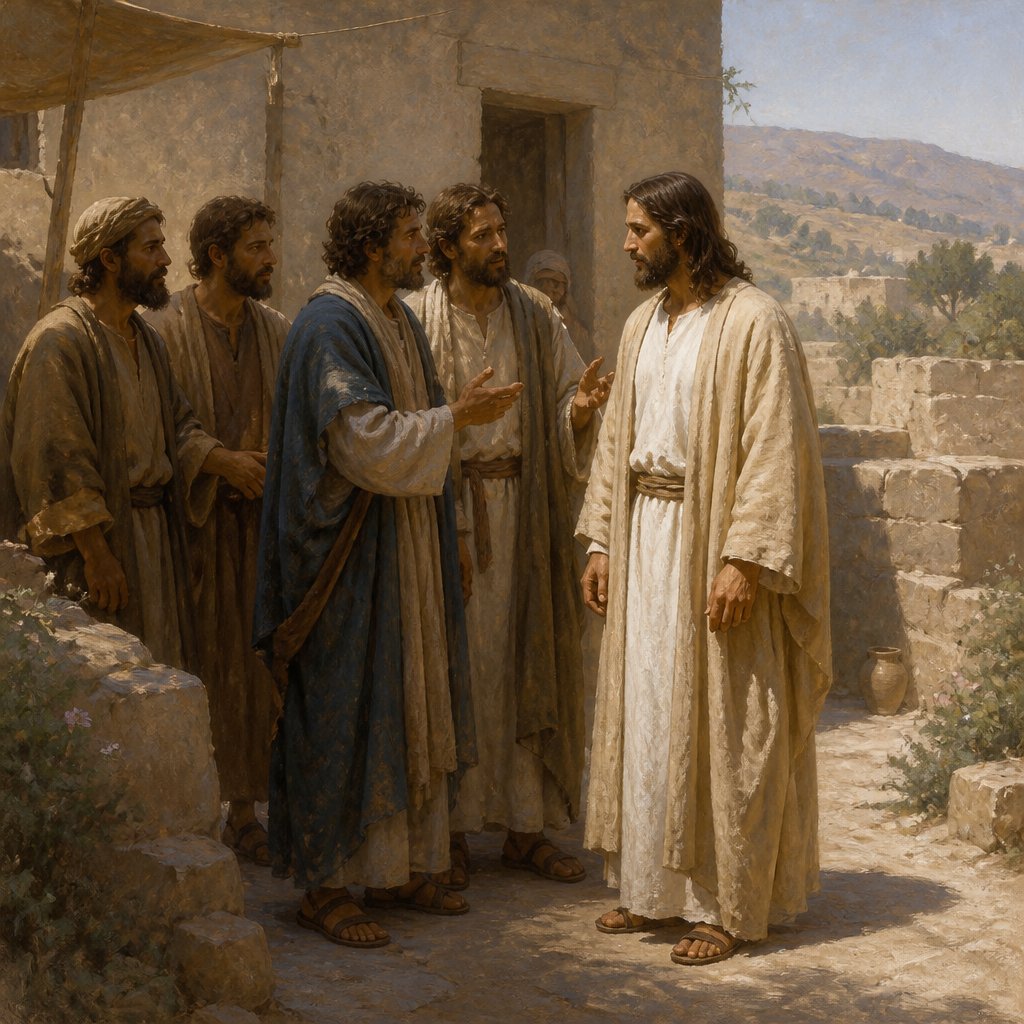
John 7:3 (KJV) states, "His brethren therefore said unto him, Depart hence, and go into Judaea, that thy disciples also may see the works that thou doest." This verse is from the Book of John in the New Testament and is part of a larger narrative featuring Jesus and his family. In this verse, Jesus' brothers are urging him to go to Judaea to show his works to his disciples.
To understand the deeper meaning and commentary on this verse, it is important to look at the context in which it is situated. The verse is part of a larger passage in which Jesus' brothers are challenging him to prove himself by performing miracles publicly. They did not believe in him and were questioning his claims to be the Messiah. Their suggestion to go to Judaea was not one of encouragement or support, but rather a challenge for Jesus to demonstrate his powers in a more public setting.
The larger theme present in this verse is the skepticism and lack of belief in Jesus from those closest to him. Despite growing up with him and witnessing his actions, his brothers still did not fully understand or accept his identity as the Son of God. This lack of faith from his own family serves as a reminder of the difficulties and challenges Jesus faced in his earthly ministry.
The verse also serves as a commentary on the expectations and pressures placed on Jesus as the Messiah. His brothers' urging him to go to Judaea and perform miracles for his disciples reflects the common desire for tangible proof and spectacle. However, Jesus did not succumb to these pressures, but instead continued to carry out his ministry in a way that aligned with God's will and timing.
Symbolically, this verse can be seen as a representation of the conflict between earthly expectations and divine purpose. Jesus' brothers, like many others at the time, were seeking a Messiah who would conform to their preconceived notions of power and authority. However, Jesus' mission was not to fit into these expectations, but to fulfill the divine plan for salvation.
In interpreting this verse, it is important to consider the broader themes present in the Book of John. Throughout the gospel, John emphasizes the importance of belief and faith in Jesus as the Son of God. The skepticism of Jesus' family members serves as a contrast to the belief and understanding that is ultimately required of his followers.
Additionally, the verse can be seen as a reflection of the themes of obedience and submission to God's will. Despite the pressures and challenges from his family, Jesus remained steadfast in his commitment to carry out God's plan. This serves as a powerful example of obedience and trust in the face of doubt and opposition.
In conclusion, John 7:3 (KJV) offers a poignant reflection on the skepticism and earthly pressures faced by Jesus during his ministry. The verse carries important themes of belief, obedience, and the conflict between earthly expectations and divine purpose. It serves as a reminder of the challenges Jesus faced and the unwavering commitment he had to fulfilling God's will. Ultimately, this verse encourages us to reflect on our own beliefs and trust in God's plan, even in the face of doubt and opposition.
Get our apps


Artwork for John 7:3

John 7:3 - "His brethren therefore said unto him, Depart hence, and go into Judaea, that thy disciples also may see the works that thou doest."
"His brethren therefore said unto him, Depart hence, and go into Judaea, that thy disciples also may see the works that thou doest." - John 7:3

John 3:7 - "Marvel not that I said unto thee, Ye must be born again."

3 John 1:7 - "Because that for his name's sake they went forth, taking nothing of the Gentiles."

1 John 3:7 - "Little children, let no man deceive you: he that doeth righteousness is righteous, even as he is righteous."

"Marvel not that I said unto thee, Ye must be born again." - John 3:7

"Because that for his name's sake they went forth, taking nothing of the Gentiles." - 3 John 1:7

John 3:3

John 7:38

John 15:7

John 7:38

John 3:24 - "For John was not yet cast into prison."

John 15:7

John 7:38

John 7:38

John 7:17-18

John 7:37-39

John 7:17-18

John 7:37-39

John 3:3-8

John 7:17-18

John 7:17-18

John 7:38

John 3

1 John 3:1-3

John 7:38

John 7:38

"Little children, let no man deceive you: he that doeth righteousness is righteous, even as he is righteous." - 1 John 3:7

John 3:16
John 3:16