What does John 7:45 mean?
“Then came the officers to the chief priests and Pharisees; and they said unto them, Why have ye not brought him?” — John 7:45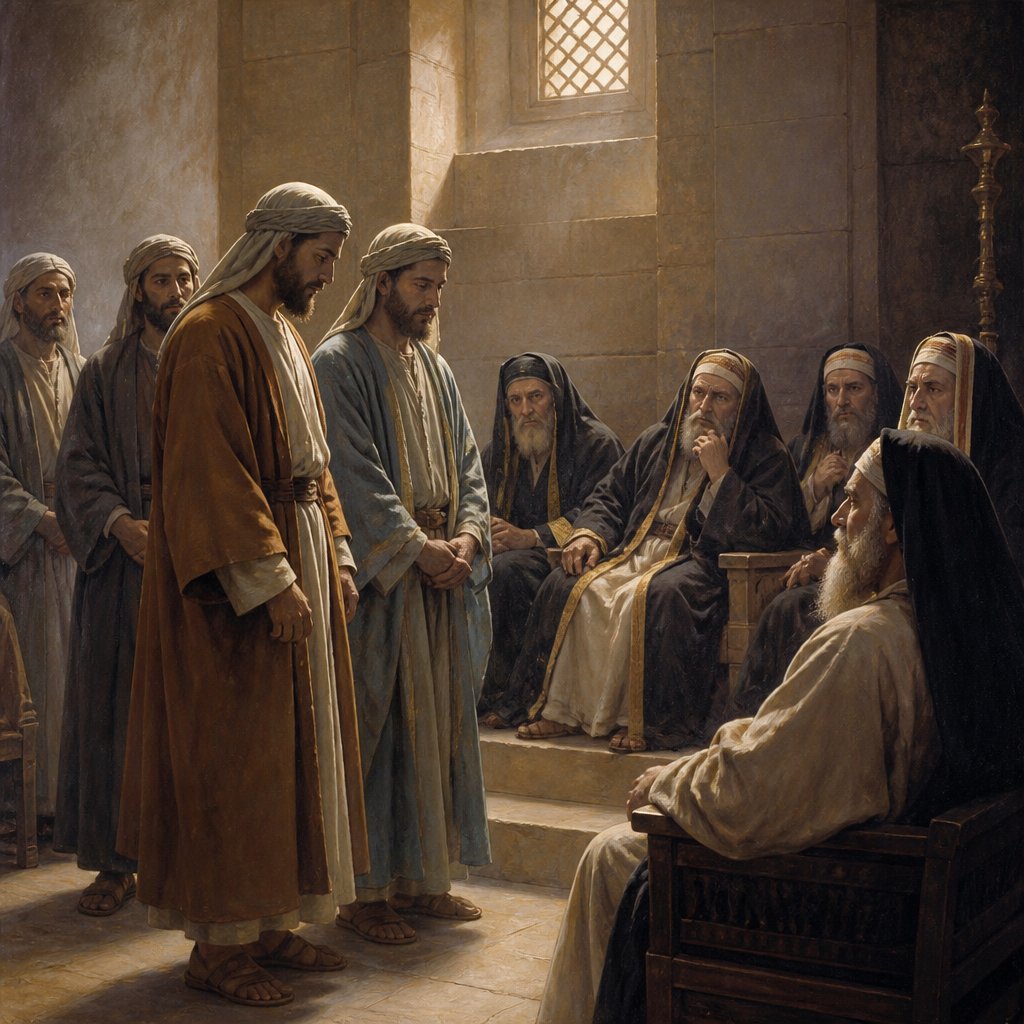
John 7:45 (KJV) reads: "Then the officers came to the chief priests and Pharisees; and they said unto them, Why have ye not brought him?"
This verse is part of the larger narrative of the Gospel of John, which is one of the four canonical gospels in the New Testament of the Christian Bible. The Gospel of John is unique compared to the other gospels in its focus on the divinity of Jesus and his identity as the Son of God. John 7:45 comes at a crucial point in the narrative, as it describes a confrontation between the religious authorities and the officers who were sent to arrest Jesus.
The context of this verse is important to understand its meaning and significance. In the preceding verses, Jesus had been teaching in the temple during the Feast of Tabernacles. His teaching caused a division among the people, with some believing in him and others seeking to arrest him. The Pharisees and chief priests, who were threatened by Jesus' teachings and popularity, sent officers to arrest him. However, the officers returned without Jesus, leading the religious leaders to question them in John 7:45.
The verse reveals a few important themes that are central to the Gospel of John. One of the key themes is the rejection of Jesus by the religious authorities. Throughout the Gospel, there is a tension between those who accept Jesus as the Messiah and those who oppose him. The religious leaders, represented by the chief priests and Pharisees, are frequently depicted as being hostile to Jesus and his teachings. Their questioning of the officers in this verse reflects their determination to suppress Jesus and his message.
Another theme in this verse is the fulfillment of prophecy. The rejection and persecution of Jesus by the religious authorities were foreshadowed by the prophets of the Old Testament. Their failure to recognize Jesus as the fulfillment of their scriptures is a recurring theme in the New Testament, and John 7:45 is another example of this. The chief priests and Pharisees were so blinded by their own power and pride that they could not see the truth of who Jesus was.
The symbolism in John 7:45 lies in the interaction between the officers and the religious leaders. The officers represent the secular authority that was complicit in the persecution of Jesus, while the chief priests and Pharisees represent the religious establishment. This interaction serves as a microcosm of the larger conflict between the earthly powers and the kingdom of God that is central to the Gospel of John.
In summary, John 7:45 is a verse that encapsulates some of the central themes of the Gospel of John. It highlights the rejection of Jesus by the religious authorities, the fulfillment of prophecy, and the conflict between earthly powers and the kingdom of God. It reminds readers of the tendency of human beings to reject the truth in favor of their own agendas, and the consequences of failing to recognize the divine presence in their midst.
Get our apps


Artwork for John 7:45
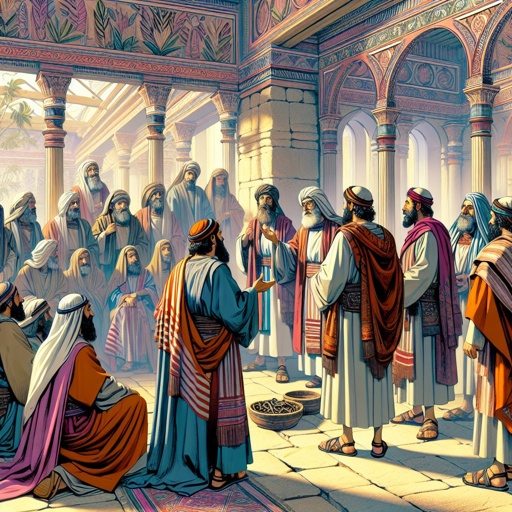
John 7:45 - "¶ Then came the officers to the chief priests and Pharisees; and they said unto them, Why have ye not brought him?"
"¶ Then came the officers to the chief priests and Pharisees; and they said unto them, Why have ye not brought him?" - John 7:45

John 12:45 - "And he that seeth me seeth him that sent me."

John 8:45 - "And because I tell you the truth, ye believe me not."

John 11:45 - "Then many of the Jews which came to Mary, and had seen the things which Jesus did, believed on him."

John 5:45 - "Do not think that I will accuse you to the Father: there is one that accuseth you, even Moses, in whom ye trust."
"And he that seeth me seeth him that sent me." - John 12:45

Numbers 7:45 - "One young bullock, one ram, one lamb of the first year, for a burnt offering:"

John 6:45 - "It is written in the prophets, And they shall be all taught of God. Every man therefore that hath heard, and hath learned of the Father, cometh unto me."
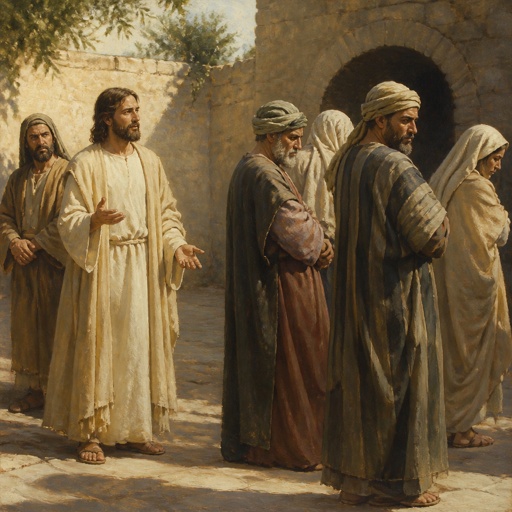
"And because I tell you the truth, ye believe me not." - John 8:45

John 4:45 - "Then when he was come into Galilee, the Galilaeans received him, having seen all the things that he did at Jerusalem at the feast: for they also went unto the feast."

Luke 7:45 - "Thou gavest me no kiss: but this woman since the time I came in hath not ceased to kiss my feet."

Mark 10:35-45

John 1:45 - "Philip findeth Nathanael, and saith unto him, We have found him, of whom Moses in the law, and the prophets, did write, Jesus of Nazareth, the son of Joseph."

Isaiah 45:7 - "I form the light, and create darkness: I make peace, and create evil: I the LORD do all these things."

Genesis 45:7 - "And God sent me before you to preserve you a posterity in the earth, and to save your lives by a great deliverance."
Nehemiah 7:45 - "¶ The porters: the children of Shallum, the children of Ater, the children of Talmon, the children of Akkub, the children of Hatita, the children of Shobai, an hundred thirty and eight."

1 Kings 7:45 - "And the pots, and the shovels, and the basons: and all these vessels, which Hiram made to king Solomon for the house of the LORD, were of bright brass."

Mark 10:35-45

Psalms 45:7 - "Thou lovest righteousness, and hatest wickedness: therefore God, thy God, hath anointed thee with the oil of gladness above thy fellows."
John 7:38

John 15:7

John 7:38

John 15:7

John 7:38

John 7:38

John 7:17-18

John 7:37-39

John 7:17-18

John 7:37-39