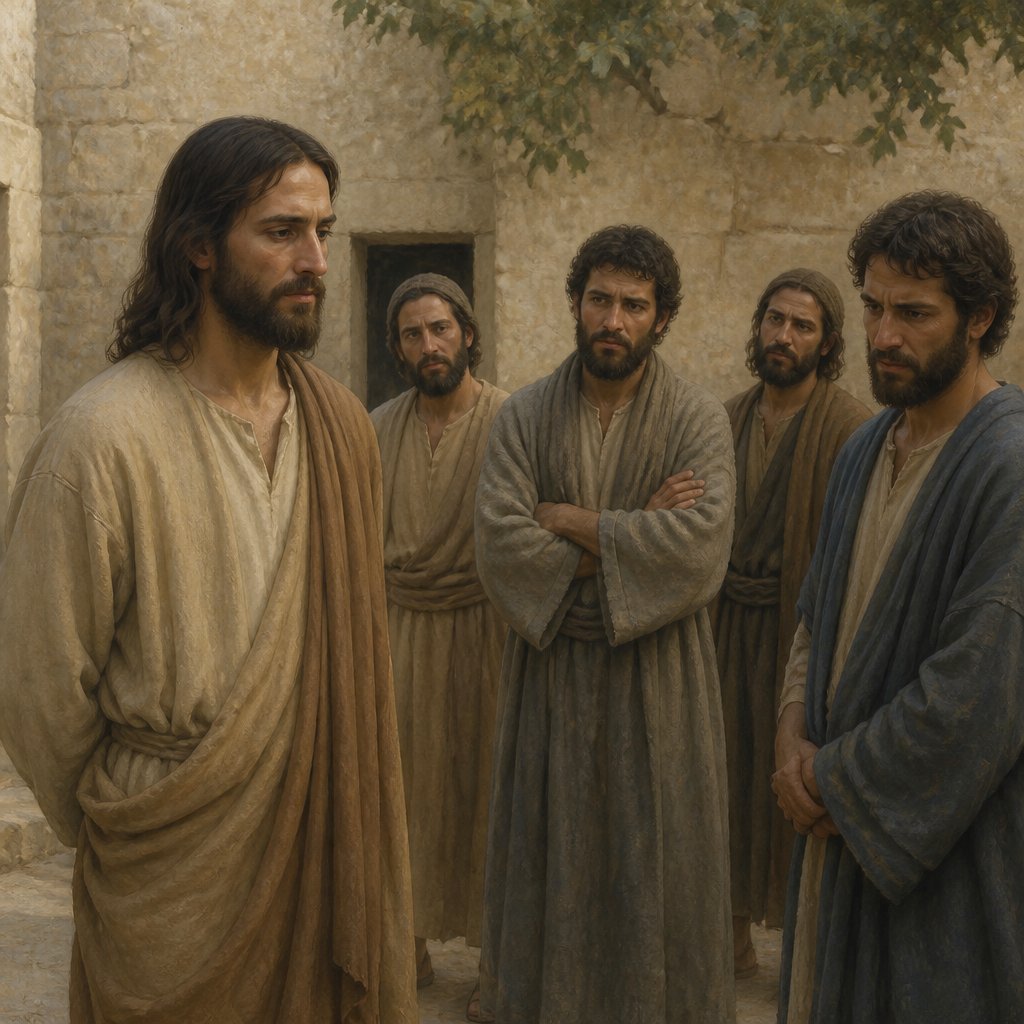
John 7:5 (KJV) states, "For neither did his brethren believe in him." This verse is a small but significant detail in the larger narrative of the life of Jesus Christ. In this verse, the "brethren" refers to Jesus' siblings, who did not believe in him as the Messiah.
The context of this verse is essential to understanding its significance. In the preceding verses, Jesus' brothers encourage him to go to the Feast of Tabernacles in Jerusalem and perform miracles to prove his divinity. However, they do so with a skeptical, disbelieving attitude. They do not believe in their brother's claims to be the Son of God.
The theme of disbelief and doubt among Jesus' immediate family is a common thread throughout the Gospels. It underscores the rejection and opposition Jesus faced, even from those closest to him. The disbelief of his brothers serves to highlight the contrast between their skepticism and the faith of those who do believe in him.
The symbolism in this verse lies in the contrast between biological family and spiritual family. By showing that Jesus' own brothers did not believe in him, the verse emphasizes the idea that faith in Jesus as the Son of God is not based on human relationships or conventional understanding. Rather, it is a matter of spiritual discernment and acceptance of divine truth.
In a broader sense, this verse also speaks to the universal struggle of disbelief and doubt that many people face when confronted with the claims of Jesus. It serves as a reminder that faith in Christ is not always easy or automatic, even for those who are close to him. The example of Jesus' brothers serves as a cautionary tale, warning against the dangers of allowing familiarity and human reasoning to blind one to the truth of Christ.
Ultimately, this verse contributes to the development of the overarching narrative of Jesus' life and ministry, highlighting the rejection and opposition he faced, even from within his own family. It also sets the stage for the ongoing tension and conflict that will culminate in his crucifixion.
In conclusion, John 7:5 (KJV) holds a significant place in the larger story of Jesus, emphasizing the theme of disbelief and doubt, and the contrast between biological and spiritual family. The verse serves as a cautionary tale to readers, warning against the dangers of allowing familiarity and human reasoning to blind one to the truth of Christ. While a small detail in the larger narrative, the disbelief of Jesus' brothers carries deep thematic and symbolic significance, contributing to the rich and complex portrayal of Jesus and his mission in the Gospels.
Get our apps


Artwork for John 7:5

John 7:5 - "For neither did his brethren believe in him."

"For neither did his brethren believe in him." - John 7:5

1 John 5:7 - "For there are three that bear record in heaven, the Father, the Word, and the Holy Ghost: and these three are one."

1 John 5:7 For there are three that bear witness in heaven: the Father, the Word, and the Holy Spirit; and these three are one.

John 5:7 - "The impotent man answered him, Sir, I have no man, when the water is troubled, to put me into the pool: but while I am coming, another steppeth down before me."

"For there are three that bear record in heaven, the Father, the Word, and the Holy Ghost: and these three are one." - 1 John 5:7
John 7:38

John 15:7

John 7:38

John 15:7

John 7:38

John 7:38

John 7:17-18

John 7:37-39

John 7:17-18

John 7:37-39

John 7:17-18

John 7:17-18

John 15:5

John 5:2

John 15:5

John 5:33 - "Ye sent unto John, and he bare witness unto the truth."

John 7:38

John 5:5 - "And a certain man was there, which had an infirmity thirty and eight years."

John 5:28

John 5:28

John 5:28

John 7:38

John 7:38

1 John 5:5 - "Who is he that overcometh the world, but he that believeth that Jesus is the Son of God?"