What does Jonah 2:9 mean?
“But I will sacrifice unto thee with the voice of thanksgiving; I will pay that that I have vowed. Salvation is of the LORD.” — Jonah 2:9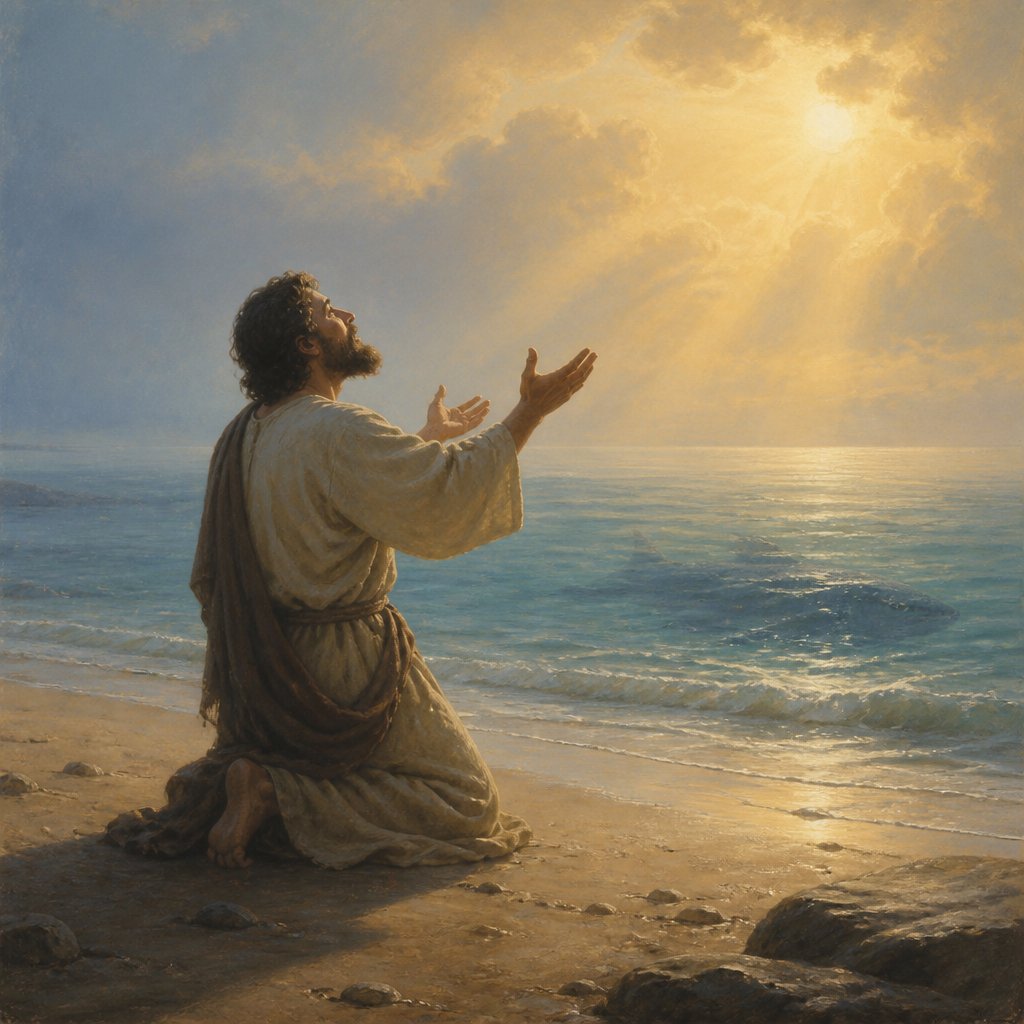
The Bible verse Jonah 2:9 in the King James Version (KJV) reads, "But I will sacrifice unto thee with the voice of thanksgiving; I will pay that that I have vowed. Salvation is of the Lord."
This verse comes from the Book of Jonah in the Old Testament, and it is a part of the prayer that Jonah offers while he is in the belly of the great fish. To understand the full meaning and commentary of this verse, it is important to consider the context in which it is found.
The Book of Jonah tells the story of the prophet Jonah, who is called by God to go to the city of Nineveh and warn its inhabitants of their wickedness. However, Jonah tries to flee from God's command and boards a ship going in the opposite direction. God sends a great storm, and the sailors throw Jonah overboard to calm the sea. Jonah is then swallowed by a great fish and remains in its belly for three days and three nights. It is during this time that Jonah offers up a prayer to God, expressing his repentance and his trust in God's salvation.
The verse Jonah 2:9 is the closing statement of Jonah's prayer, and it holds deep and profound theological truths. In this verse, Jonah declares his commitment to sacrifice and offer thanksgiving to God, fulfilling the vows that he has made. This reflects his recognition of God's sovereignty and his desire to honor and worship the Lord.
The first part of the verse, "But I will sacrifice unto thee with the voice of thanksgiving," underscores the importance of gratitude and praise in the act of sacrifice. In the Old Testament, sacrifices were a central part of Israelite worship, and they were offered as a means of atonement for sins and as an expression of dedication and thanksgiving to God. However, what God ultimately desires is not merely the outward ritual of sacrifice, but the sincere and grateful heart of the worshipper. Jonah's declaration of sacrificing with the voice of thanksgiving emphasizes the need for genuine and heartfelt worship, rooted in a spirit of gratitude and praise.
The second part of the verse, "I will pay that that I have vowed," reflects Jonah's commitment to fulfill the vows he has made to God. Vows were solemn promises made to God, and they were taken very seriously in the Israelite tradition. By vowing to pay what he has promised, Jonah acknowledges his obligation to God and his intention to fulfill his commitments. This speaks to the importance of keeping one's word and honoring the promises made to God.
The verse concludes with the powerful declaration, "Salvation is of the Lord." This statement encapsulates the central theme of the Book of Jonah and indeed the entire Bible – the sovereignty and power of God in the salvation of humanity. Jonah's prayer and his experience in the belly of the fish ultimately lead him to a profound realization of God's saving grace. Despite his disobedience and attempts to flee from God's call, Jonah comes to understand that true salvation comes from the Lord alone. This statement underscores the fundamental truth that redemption and deliverance are not achieved through human efforts or merit, but through God's mercy, power, and divine intervention.
The Book of Jonah offers a rich tapestry of themes, including repentance, obedience, God's sovereignty, mercy, and the universal scope of God's saving work. Jonah's prayer in the belly of the fish serves as a powerful testimony to the transformative power of God's grace and the significance of genuine worship and dedication to the Lord.
In addition to these themes, the verse Jonah 2:9 also carries profound symbolism, particularly in the context of Jonah's experience in the belly of the fish. The belly of the fish serves as a metaphor for the depths of despair, hopelessness, and isolation. Jonah's prayer from this place of darkness and confinement reflects the universal human experience of grappling with adversity and seeking deliverance. The fish also serves as a symbol of protection and preservation, as it becomes the means through which Jonah experiences God's deliverance and restoration.
Overall, Jonah 2:9 is a testament to the transformative power of God's grace, the importance of genuine worship and gratitude, and the foundational truth that salvation ultimately rests in the hands of the Lord. It is a verse that speaks to the depths of the human experience, the necessity of repentance and obedience, and the unwavering sovereignty of God.
Get our apps


Artwork for Jonah 2:9

Jonah 2:9 - "But I will sacrifice unto thee with the voice of thanksgiving; I will pay that that I have vowed. Salvation is of the LORD."

"But I will sacrifice unto thee with the voice of thanksgiving; I will pay that that I have vowed. Salvation is of the LORD." - Jonah 2:9

Jonah 2:2-9 Jonah praying in the belly of the fish.

Jonah 4:9 - "And God said to Jonah, Doest thou well to be angry for the gourd? And he said, I do well to be angry, even unto death."

Jonah 2:1 - "Then Jonah prayed unto the LORD his God out of the fish's belly,"

Jonah 2:10 - "¶ And the LORD spake unto the fish, and it vomited out Jonah upon the dry land."

Jonah 2:2

Jonah 2:2-6 Jonah sinking down in the deep blue water, with the whale about to swallow him.

Jonah 2:2-8 Jonah praying in the belly if the fish - myst be realistic, no skeletons, weird teeth, etc.

Jonah 2:8

jonah 2:10 abstract

"Then Jonah prayed unto the LORD his God out of the fish's belly," - Jonah 2:1

Jonah 2:4 Ship fit for the period in which Jonah lived. In daytime, great tempest, big waves, strong winds

"¶ And the LORD spake unto the fish, and it vomited out Jonah upon the dry land." - Jonah 2:10

Jonah 2:8 - "They that observe lying vanities forsake their own mercy."

Jonah 3:9 - "Who can tell if God will turn and repent, and turn away from his fierce anger, that we perish not?"

"And God said to Jonah, Doest thou well to be angry for the gourd? And he said, I do well to be angry, even unto death." - Jonah 4:9

Jonah 1:9 - "And he said unto them, I am an Hebrew; and I fear the LORD, the God of heaven, which hath made the sea and the dry land."

Jonah 3:2 - "Arise, go unto Nineveh, that great city, and preach unto it the preaching that I bid thee."

Jonah 1:2 - "Arise, go to Nineveh, that great city, and cry against it; for their wickedness is come up before me."

Jonah 2:10 the fish vonits him out on the dry kand

Jonah 2:2 - "And said, I cried by reason of mine affliction unto the LORD, and he heard me; out of the belly of hell cried I, and thou heardest my voice."

"They that observe lying vanities forsake their own mercy." - Jonah 2:8

Jonah 2:4 - "Then I said, I am cast out of thy sight; yet I will look again toward thy holy temple."

Jonah 2:7 - "When my soul fainted within me I remembered the LORD: and my prayer came in unto thee, into thine holy temple."

Jonah 2:5 - "The waters compassed me about, even to the soul: the depth closed me round about, the weeds were wrapped about my head."

Jonah 2:3 - "For thou hadst cast me into the deep, in the midst of the seas; and the floods compassed me about: all thy billows and thy waves passed over me."

"For thou hadst cast me into the deep, in the midst of the seas; and the floods compassed me about: all thy billows and thy waves passed over me." - Jonah 2:3

"Who can tell if God will turn and repent, and turn away from his fierce anger, that we perish not?" - Jonah 3:9

Jonah 2:6 - "I went down to the bottoms of the mountains; the earth with her bars was about me for ever: yet hast thou brought up my life from corruption, O LORD my God."