What does Joshua 13:26 mean?
“And from Heshbon unto Ramath-mizpeh, and Betonim; and from Mahanaim unto the border of Debir;” — Joshua 13:26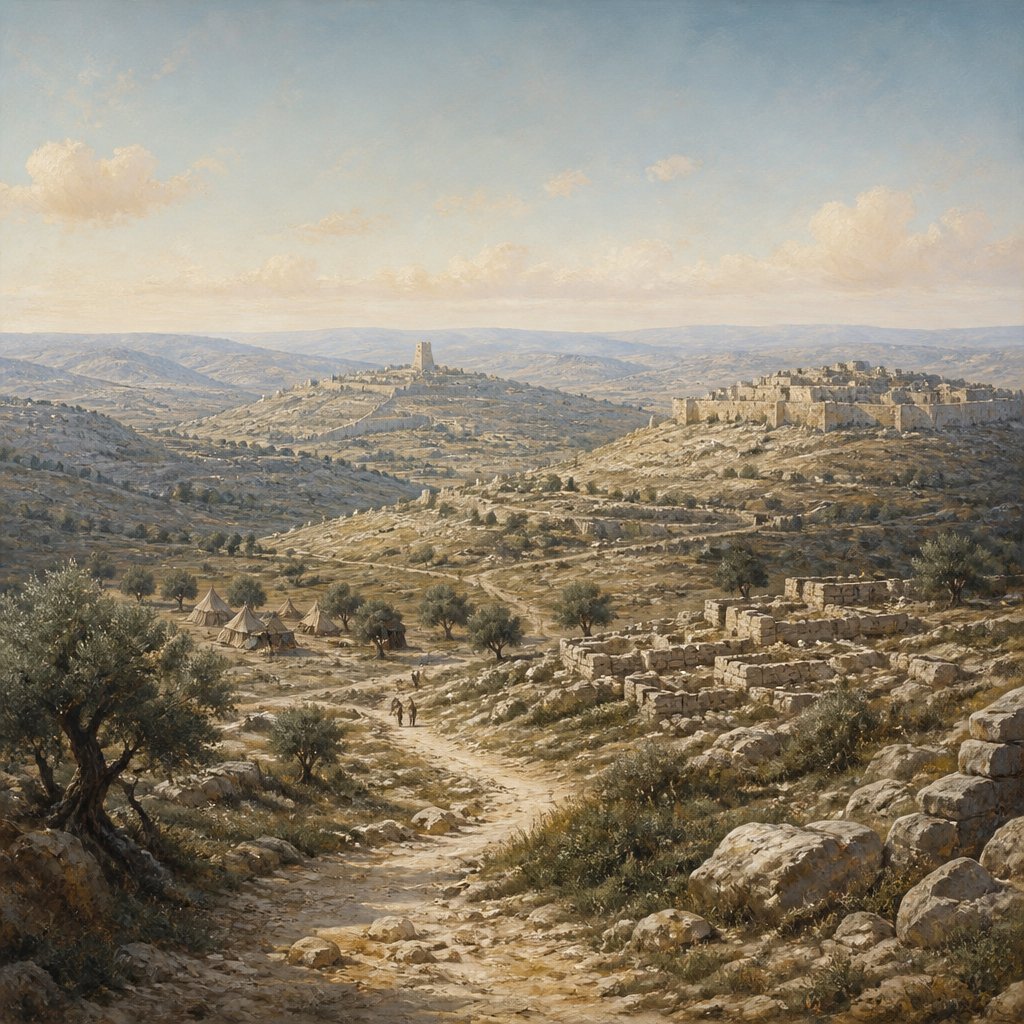
Joshua 13:26 (KJV) - "And from Heshbon unto Ramath-mizpeh, and Betonim; and from Mahanaim unto the border of Debir;"
The book of Joshua is the sixth book in the Old Testament of the Bible and details the conquering and dividing of the Promised Land among the twelve tribes of Israel. The verse in question, Joshua 13:26, is part of a larger passage where the boundaries of the territory given to the tribes of Gad and Reuben are being described. It may seem like a simple list of locations, but digging deeper reveals a wealth of meaning and significance.
The context of this verse is the division of the land of Canaan among the Israelite tribes. After the death of Moses, Joshua led the Israelites into the Promised Land. The book of Joshua chronicles the conquest and apportioning of the territory among the twelve tribes. This verse specifically details the borders of the territory given to the tribe of Gad, which was situated east of the Jordan River.
One of the key themes in the book of Joshua is the fulfillment of God's promises. Throughout their journey, God had assured the Israelites of the land He would give them. Joshua 21:43-45 states, "And the Lord gave unto Israel all the land which he sware to give unto their fathers; and they possessed it, and dwelt therein. And the Lord gave them rest round about, according to all that he sware unto their fathers: and there stood not a man of all their enemies before them; the Lord delivered all their enemies into their hand. There failed not aught of any good thing which the Lord had spoken unto the house of Israel; all came to pass." The specific details of the borders and territories in verses like Joshua 13:26 serve as a demonstration of God's faithfulness in fulfilling His promises to His people.
Furthermore, the verse reflects the meticulous nature of God's provision and sovereignty. The mention of specific locations and borders emphasizes the precision with which God allocates land and fulfills His word. It also serves as a reminder of the importance of boundaries and territories in the Old Testament as a representation of God's protection and provision for His people.
Symbolically, the dividing of the land holds spiritual significance for believers today. The Promised Land can be seen as a symbol of the abundant life that God wants to give his people. It represents the blessings, spiritual inheritance, and promises of God that believers can claim through faith and obedience. Just as each tribe received their specific portion of land, God has unique plans and provisions for each of His children. Additionally, the borders and boundaries represent the limits and protections that God sets for His people. They remind us that, while God's blessings are abundant, they are also specific and defined according to His perfect will.
In conclusion, while on the surface Joshua 13:26 may appear to be a mundane description of territories, it holds deep spiritual meaning. It serves as a reminder of God's faithfulness in fulfilling His promises, His detailed provision and sovereignty, and the symbolism of the Promised Land and its division as a representation of the abundant life and unique blessings God has for His people. This verse is a testament to the meticulous care and love that God has for His children and the importance of trusting in His perfect plan and provision.
Get our apps


Artwork for Joshua 13:26

Joshua 13:26 - "And from Heshbon unto Ramath-mizpeh, and Betonim; and from Mahanaim unto the border of Debir;"
"And from Heshbon unto Ramath-mizpeh, and Betonim; and from Mahanaim unto the border of Debir;" - Joshua 13:26

Joshua 18:26 - "And Mizpeh, and Chephirah, and Mozah,"

Joshua 15:26 - "Amam, and Shema, and Moladah,"

Joshua 24:26 - "¶ And Joshua wrote these words in the book of the law of God, and took a great stone, and set it up there under an oak, that was by the sanctuary of the LORD."

Joshua 10:26 - "And afterward Joshua smote them, and slew them, and hanged them on five trees: and they were hanging upon the trees until the evening."

Joshua 8:26 - "For Joshua drew not his hand back, wherewith he stretched out the spear, until he had utterly destroyed all the inhabitants of Ai."

Joshua 14:13 - "And Joshua blessed him, and gave unto Caleb the son of Jephunneh Hebron for an inheritance."

"And Mizpeh, and Chephirah, and Mozah," - Joshua 18:26

"Amam, and Shema, and Moladah," - Joshua 15:26

Joshua 5:13

Joshua 19:26 - "And Alammelech, and Amad, and Misheal; and reacheth to Carmel westward, and to Shihor-libnath;"

Joshua 21:26 - "All the cities were ten with their suburbs for the families of the children of Kohath that remained."

Joshua 13:18 - "And Jahazah, and Kedemoth, and Mephaath,"

Joshua 11:13 - "But as for the cities that stood still in their strength, Israel burned none of them, save Hazor only; that did Joshua burn."

Joshua 5:13 (KJVA) 13 And it came to pass, when Joshua was by Jericho, that he lifted up his eyes and looked, and, behold, there stood a man over against him with his sword drawn in his hand: and Joshua went unto him, and said unto him, Art thou for us, or for our adversaries?

Joshua 8:13 - "And when they had set the people, even all the host that was on the north of the city, and their liers in wait on the west of the city, Joshua went that night into the midst of the valley."

Joshua 13:13 - "Nevertheless the children of Israel expelled not the Geshurites, nor the Maachathites: but the Geshurites and the Maachathites dwell among the Israelites until this day."

Joshua 13:20 - "And Beth-peor, and Ashdoth-pisgah, and Beth-jeshimoth,"

Joshua 12:13 - "The king of Debir, one; the king of Geder, one;"

Joshua 13:19 - "And Kirjathaim, and Sibmah, and Zareth-shahar in the mount of the valley,"

Joshua 9:26 - "And so did he unto them, and delivered them out of the hand of the children of Israel, that they slew them not."

Exodus 17:13 - "And Joshua discomfited Amalek and his people with the edge of the sword."

Joshua 13:28 - "This is the inheritance of the children of Gad after their families, the cities, and their villages."

Joshua 22:26 - "Therefore we said, Let us now prepare to build us an altar, not for burnt offering, nor for sacrifice:"

Joshua 6:26 - "¶ And Joshua adjured them at that time, saying, Cursed be the man before the LORD, that riseth up and buildeth this city Jericho: he shall lay the foundation thereof in his firstborn, and in his youngest son shall he set up the gates of it."

Joshua 13:1 - "Now Joshua was old and stricken in years; and the LORD said unto him, Thou art old and stricken in years, and there remaineth yet very much land to be possessed."

"And Jahazah, and Kedemoth, and Mephaath," - Joshua 13:18

Joshua 13:2 - "This is the land that yet remaineth: all the borders of the Philistines, and all Geshuri,"

Joshua 15:13 - "¶ And unto Caleb the son of Jephunneh he gave a part among the children of Judah, according to the commandment of the LORD to Joshua, even the city of Arba the father of Anak, which city is Hebron."