What does Joshua 17:3 mean?
“But Zelophehad, the son of Hepher, the son of Gilead, the son of Machir, the son of Manasseh, had no sons, but daughters: and these are the names of his daughters, Mahlah, and Noah, Hoglah, Milcah, and Tirzah.” — Joshua 17:3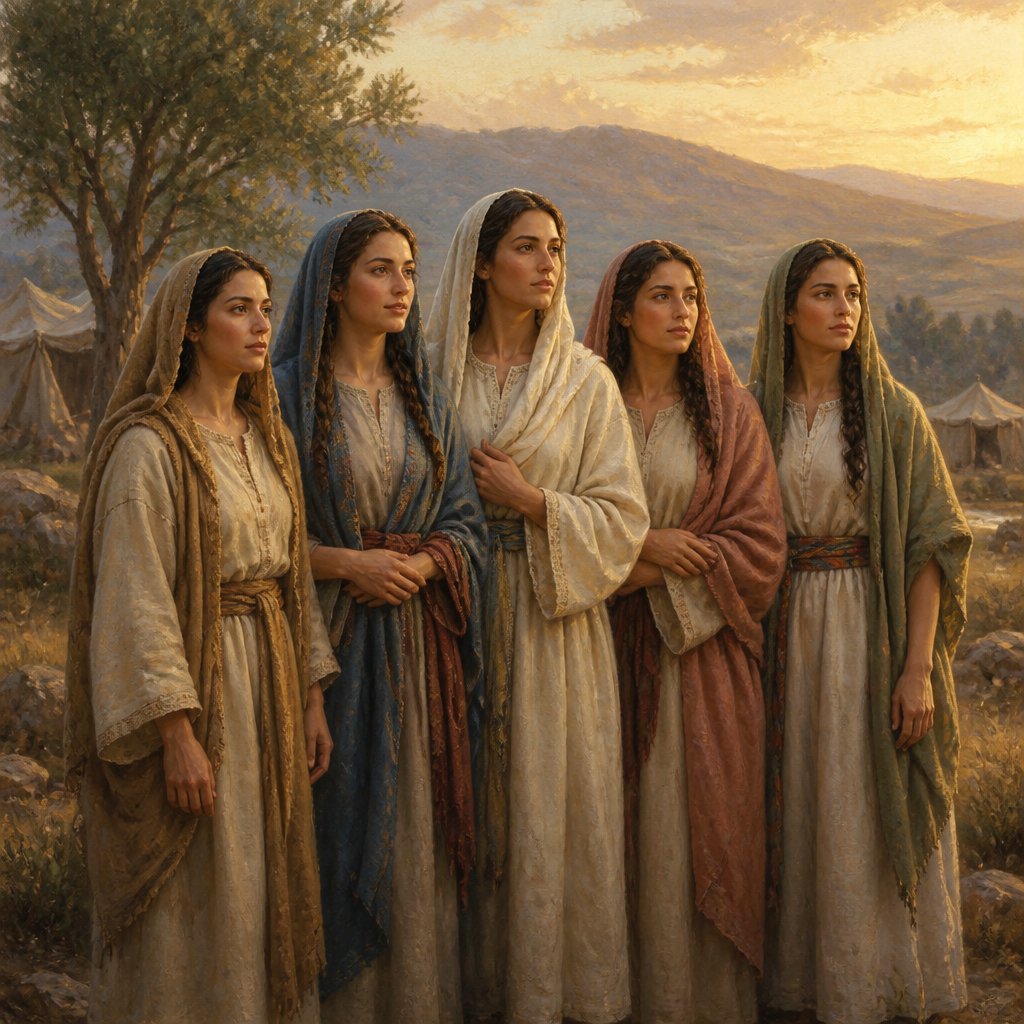
Joshua 17:3 (KJV) "But Zelophehad, the son of Hepher, the son of Gilead, the son of Machir, the son of Manasseh, had no sons, but daughters: and these are the names of his daughters, Mahlah, and Noah, Hoglah, Milcah, and Tirzah."
In this verse, we see a specific rule being addressed in the inheritance of land among the Israelites. The daughters of Zelophehad, a member of the tribe of Manasseh, are highlighted because they did not have any brothers to inherit their father's portion of the promised land. This situation presented a unique challenge within the cultural and legal framework of ancient Israel, and God, through Joshua, provided a solution to this dilemma.
The theme of inheritance is central to the Bible and particularly prominent in the Old Testament. In ancient Israel, the inheritance of land was a vital aspect of their societal structure, as it was seen as a means of God providing for His people. Land was passed down from one generation to the next, ensuring the continuation of the family and tribal identity. The case of Zelophehad's daughters raises questions about the distribution of land when there are no male heirs, and it underscores the importance of justice and fairness in God's plan for His people.
The context of this verse is important to understand the significance of Zelophehad's daughters' inheritance. The Israelites were about to enter and possess the promised land of Canaan, and the division of the land among the tribes was being determined. In this process, the daughters of Zelophehad brought their case before Moses, Eleazar the priest, the leaders, and the whole congregation at the entrance of the tent of meeting. They argued that their father had died in the wilderness because of his own sin, but he had not taken part in Korah's rebellion against the Lord. As a result, they felt that they should not be denied their inheritance simply because they were women.
Moses brought their case before the Lord, and God responded by affirming the daughters of Zelophehad's right to inherit their father's portion of the land. This decision was not only significant for Zelophehad's daughters but also for the broader understanding of inheritance laws and the rights of women within ancient Israelite society.
The symbolism in this verse speaks to the broader biblical themes of justice, equality, and the inclusivity of God's kingdom. The daughters of Zelophehad challenged the traditional understanding of inheritance, and God's response affirmed the value and worth of women in His eyes. This is consistent with other instances in the Bible where God elevates the status of women and includes them in His redemptive purposes.
Furthermore, the inclusion of the story of Zelophehad's daughters in the Bible serves as a reminder that God's justice is not bound by human limitations or societal norms. His concern for the disenfranchised and marginalized is evident, and He actively works to ensure that all His people are treated fairly and with dignity.
In conclusion, Joshua 17:3 presents a powerful message about the just and inclusive nature of God's kingdom. It challenges traditional norms and affirms the rights of women in the context of inheritance. This verse serves as a reminder that God's ways are higher than our ways, and His justice encompasses all people, regardless of gender or societal expectations. It is a testament to His unchanging character and His desire to see His people walking in equity and wholeness.
Get our apps


Artwork for Joshua 17:3
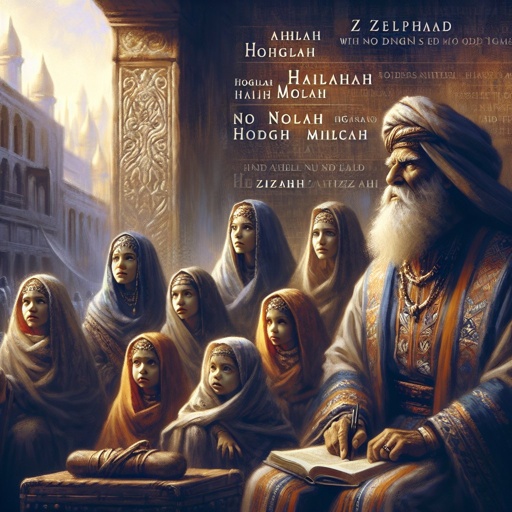
Joshua 17:3 - "¶ But Zelophehad, the son of Hepher, the son of Gilead, the son of Machir, the son of Manasseh, had no sons, but daughters: and these are the names of his daughters, Mahlah, and Noah, Hoglah, Milcah, and Tirzah."
"¶ But Zelophehad, the son of Hepher, the son of Gilead, the son of Machir, the son of Manasseh, had no sons, but daughters: and these are the names of his daughters, Mahlah, and Noah, Hoglah, Milcah, and Tirzah." - Joshua 17:3

Joshua 3:1-17

Joshua 3:17 – "The priests who carried the ark of the covenant of the Lord stood firm on dry ground in the middle of the Jordan."
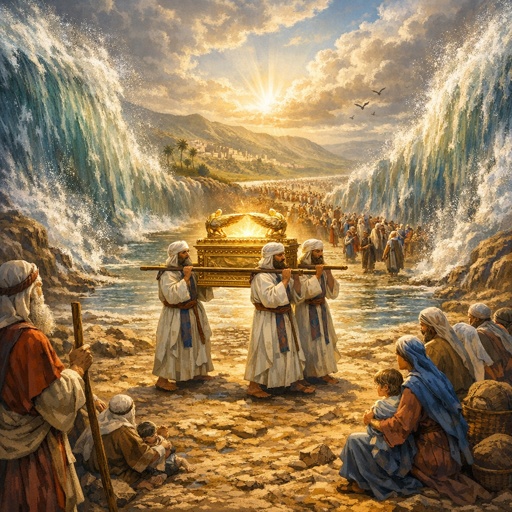
"And the priests that bare the ark of the covenant of the LORD stood firm on dry ground in the midst of Jordan, and all the Israelites passed over on dry ground, until all the people were passed clean over Jordan." - Joshua 3:17

Joshua 10:17 - "And it was told Joshua, saying, The five kings are found hid in a cave at Makkedah."

Joshua 3:17 - "And the priests that bare the ark of the covenant of the LORD stood firm on dry ground in the midst of Jordan, and all the Israelites passed over on dry ground, until all the people were passed clean over Jordan."

Joshua 17:17 - "And Joshua spake unto the house of Joseph, even to Ephraim and to Manasseh, saying, Thou art a great people, and hast great power: thou shalt not have one lot only:"

Joshua 24:17

Joshua 4:17 - "Joshua therefore commanded the priests, saying, Come ye up out of Jordan."

Joshua 24:17

Joshua 24:17

Joshua 6:17-25

Joshua 12:17 - "The king of Tappuah, one; the king of Hepher, one;"

Joshua 5:3 - "And Joshua made him sharp knives, and circumcised the children of Israel at the hill of the foreskins."

Exodus 17:13 - "And Joshua discomfited Amalek and his people with the edge of the sword."

Joshua 9:3 - "¶ And when the inhabitants of Gibeon heard what Joshua had done unto Jericho and to Ai,"

Joshua 3:4

Joshua 3:16

Joshua 3:14

Joshua 3:14

Joshua 1:3

Joshua 3:14

Joshua 3:14

Joshua 3:4

Joshua 3:5 - "And Joshua said unto the people, Sanctify yourselves: for to morrow the LORD will do wonders among you."

Joshua 3:9 - "¶ And Joshua said unto the children of Israel, Come hither, and hear the words of the LORD your God."

Zechariah 3:3 - "Now Joshua was clothed with filthy garments, and stood before the angel."

"And it was told Joshua, saying, The five kings are found hid in a cave at Makkedah." - Joshua 10:17

Joshua 8:3 - "¶ So Joshua arose, and all the people of war, to go up against Ai: and Joshua chose out thirty thousand mighty men of valour, and sent them away by night."