What does Joshua 19:35 mean?
“And the fenced cities are Ziddim, Zer, and Hammath, Rakkath, and Chinnereth,” — Joshua 19:35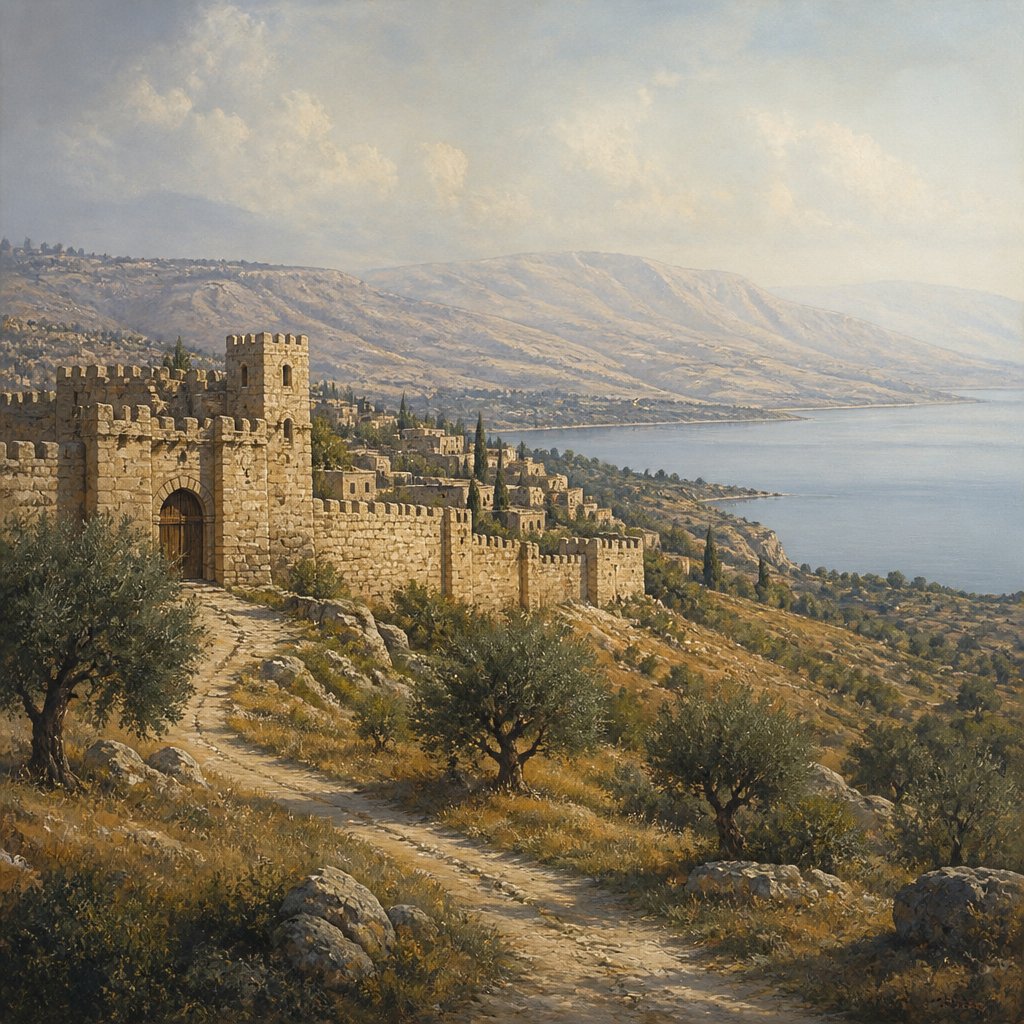
Joshua 19:35 in the King James Version of the Bible reads, "And the fenced cities are Ziddim, Zer, and Hammath, Rakkath, and Chinnereth." This verse is part of the description of the territory that was allotted to the tribe of Naphtali as their inheritance in the Promised Land.
To fully understand the significance of this verse, we must consider it in its broader context within the book of Joshua. The book of Joshua is focused on the fulfillment of God's promise to the Israelites to give them the land of Canaan. Joshua was appointed by God to lead the Israelites in the conquest of the Promised Land after the death of Moses. The book details the conquest and division of the land among the twelve tribes of Israel. Therefore, Joshua 19:35 represents a specific example of the fulfillment of God's promise to the Israelites and the establishment of their inheritance in the land.
The verse lists the fenced cities of Ziddim, Zer, Hammath, Rakkath, and Chinnereth, which were within the territory of Naphtali. The mention of these cities indicates the boundaries of the land that was given to the tribe of Naphtali. In ancient times, fenced cities were a source of protection and security, and they were strategically important for defense against enemies. Therefore, the reference to these cities highlights the provision of God for the tribe of Naphtali, ensuring that they had both fertile land for cultivation and fortified cities for their safety and security.
Furthermore, the names of the cities themselves may have symbolic significance. For example, the name "Ziddim" is thought to mean "side" or "turning." This could represent a turning point or new direction for the tribe of Naphtali as they entered into their inheritance in the Promised Land. "Zer" is believed to mean "enclosure," symbolizing the place of refuge and protection that the city provided for the tribe. "Hammath" may mean "hot springs," which could represent the blessings of provision and sustenance that God provided for the tribe. "Rakkath" is derived from a root meaning "trample," suggesting the conquest and dominion that the tribe would have over their enemies. Finally, "Chinnereth" is often associated with the Sea of Galilee, suggesting a plentiful and bountiful land for the tribe.
In a broader sense, this verse can also point to the faithfulness of God in fulfilling His promises to His people. Throughout the book of Joshua, we see how God remains true to His word and gives the Israelites the land He had promised to them. This theme of God's faithfulness and provision for His people is a recurring theme throughout the Bible, and it serves as a reminder to believers of God's steadfast love and trustworthiness.
In conclusion, Joshua 19:35 is a verse that may seem like a simple list of cities, but it carries deep significance within the broader context of the book of Joshua. It represents the fulfillment of God's promise to the tribe of Naphtali, providing them with an inheritance in the Promised Land that included both fertile land for cultivation and fortified cities for protection. The verse also serves as a reminder of God's faithfulness to His people and His provision for their needs. As believers, we can take comfort in the knowledge that God is dependable and trustworthy in fulfilling His promises to us.
Get our apps


Artwork for Joshua 19:35

Joshua 19:35 - "And the fenced cities are Ziddim, Zer, and Hammath, Rakkath, and Chinnereth,"
"And the fenced cities are Ziddim, Zer, and Hammath, Rakkath, and Chinnereth," - Joshua 19:35

Joshua 15:35 - "Jarmuth, and Adullam, Socoh, and Azekah,"

Joshua 21:35 - "Dimnah with her suburbs, Nahalal with her suburbs; four cities."

Joshua 8:35 - "There was not a word of all that Moses commanded, which Joshua read not before all the congregation of Israel, with the women, and the little ones, and the strangers that were conversant among them."

Joshua 19:19 - "And Haphraim, and Shion, and Anaharath,"

Genesis 19-35

"Jarmuth, and Adullam, Socoh, and Azekah," - Joshua 15:35

"And Haphraim, and Shion, and Anaharath," - Joshua 19:19

Joshua 19:4 - "And Eltolad, and Bethul, and Hormah,"

Joshua 19:42 - "And Shaalabbin, and Ajalon, and Jethlah,"

2 Chronicles 35:19 - "In the eighteenth year of the reign of Josiah was this passover kept."

Joshua 19:44 - "And Eltekeh, and Gibbethon, and Baalath,"

Joshua 19:43 - "And Elon, and Thimnathah, and Ekron,"

Joshua 19:36 - "And Adamah, and Ramah, and Hazor,"

Joshua 19:20 - "And Rabbith, and Kishion, and Abez,"

Joshua 19:37 - "And Kedesh, and Edrei, and En-hazor,"

Joshua 19:3 - "And Hazar-shual, and Balah, and Azem,"

Leviticus 19:35 - "¶ Ye shall do no unrighteousness in judgment, in meteyard, in weight, or in measure."

Genesis 35:19 - "And Rachel died, and was buried in the way to Ephrath, which is Beth-lehem."

Joshua 19:5 - "And Ziklag, and Beth-marcaboth, and Hazar-susah,"

Joshua 19:45 - "And Jehud, and Bene-berak, and Gath-rimmon,"

Joshua 19:25 - "And their border was Helkath, and Hali, and Beten, and Achshaph,"

Joshua 19:18 - "And their border was toward Jezreel, and Chesulloth, and Shunem,"
"Dimnah with her suburbs, Nahalal with her suburbs; four cities." - Joshua 21:35

Joshua 19:49 - "¶ When they had made an end of dividing the land for inheritance by their coasts, the children of Israel gave an inheritance to Joshua the son of Nun among them:"

Joshua 19:41 - "And the coast of their inheritance was Zorah, and Eshtaol, and Ir-shemesh,"

Joshua 19:2 - "And they had in their inheritance Beer-sheba, or Sheba, and Moladah,"

Joshua 19:46 - "And Me-jarkon, and Rakkon, with the border before Japho."

Joshua 12:19 - "The king of Madon, one; the king of Hazor, one;"