What does Joshua 20:6 mean?
“And he shall dwell in that city, until he stand before the congregation for judgment, and until the death of the high priest that shall be in those days: then shall the slayer return, and come unto his own city, and unto his own house, unto the city from whence he fled.” — Joshua 20:6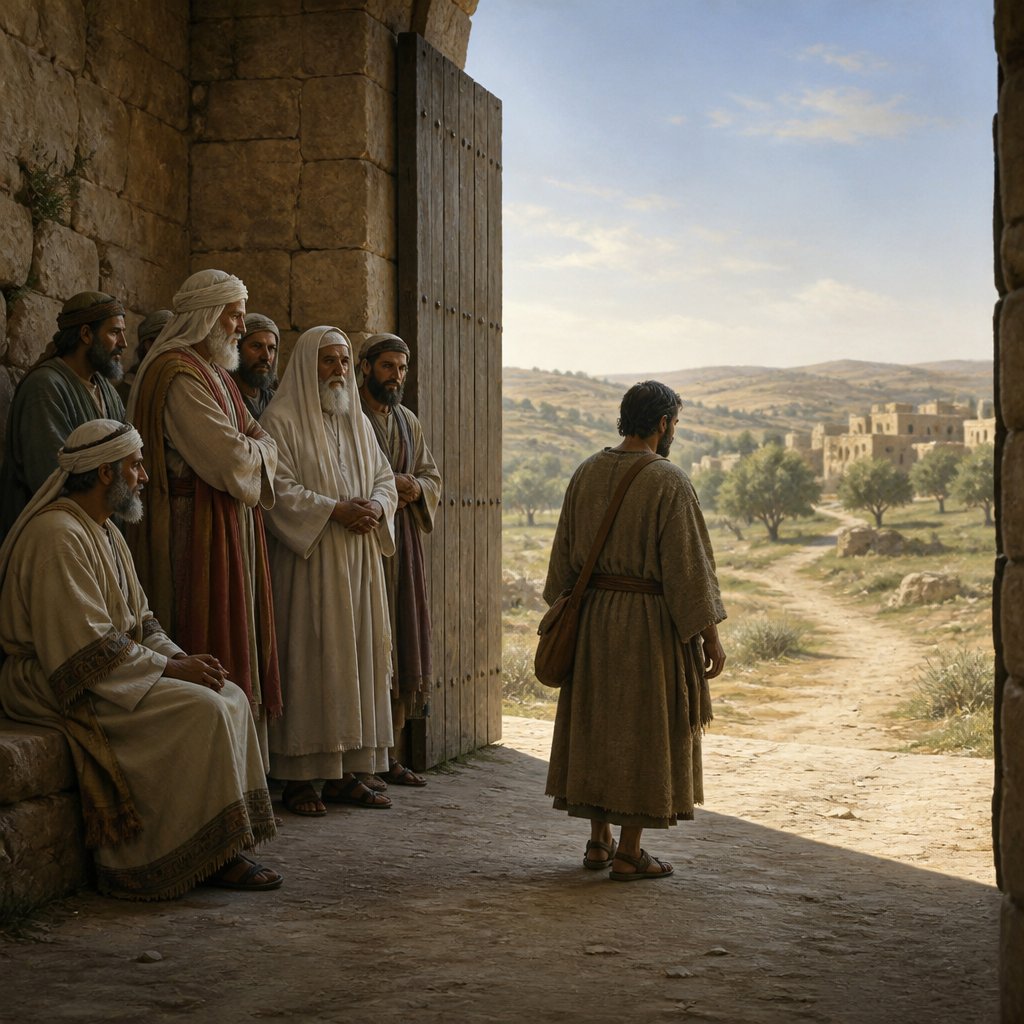
Joshua 20:6 (KJV) - And he shall dwell in that city, until he stand before the congregation for judgment, and until the death of the high priest that shall be in those days: then shall the slayer return, and come unto his own city, and unto his own house, unto the city from whence he fled.
The book of Joshua is the sixth book in the Bible and it tells the story of the Israelites' conquest of Canaan under the leadership of Joshua. The verse Joshua 20:6 comes from the section where the Lord is instructing Joshua to designate cities of refuge for those who unintentionally kill someone. In this verse, the Lord explains the conditions under which a person who has unintentionally killed another may leave the city of refuge and return home.
The verse begins, "And he shall dwell in that city, until he stand before the congregation for judgment," which sets the requirement that the person who has killed another must remain in the city of refuge until the matter is formally addressed before the congregation. This highlights the importance of justice in the community and indicates that the unintentional killing must be carefully considered and judged by the people.
The verse continues with, "and until the death of the high priest that shall be in those days." This condition is particularly significant as it indicates that the death of the high priest signifies the end of the period of refuge for the unintentional killer. This highlights the symbolic importance of the high priest as a mediator between God and the people. It also suggests that the death of the high priest atones for the unintentional sin committed by the individual in the city of refuge.
The verse concludes with, "then shall the slayer return, and come unto his own city, and unto his own house, unto the city from whence he fled." This final condition indicates that the unintentional killer may return to his own city and house once the high priest has passed away. This emphasizes the idea of redemption and restoration for the unintentional killer, who is now able to return to normal life.
Overall, Joshua 20:6 is a verse that deals with the themes of justice, atonement, and redemption. It highlights the importance of community judgment and the role of the high priest in mediating between the people and God. It also emphasizes the idea of restoring the unintentional killer to his normal life once the period of refuge has been fulfilled.
In a broader context, this verse serves as a reminder of the significance of justice and atonement in the Israelite community. It also points to the belief in the power of the high priest to facilitate atonement and redemption for the unintentional sins of the people. Furthermore, it underscores the importance of following the laws and regulations set forth by the Lord in order to maintain order and righteousness within the community.
Symbolically, the city of refuge can be seen as a representation of God's mercy and grace, providing a place of safety and protection for those who have unintentionally caused harm. The high priest symbolizes the mediator between God and the people, offering atonement and reconciliation. The return of the unintentional killer to his own city and house signifies restoration and renewal, reflecting the mercy and forgiveness of God.
In conclusion, Joshua 20:6 is a verse that conveys important themes of justice, atonement, and redemption within the context of the Israelite community. It underscores the significance of following the laws and seeking reconciliation for unintentional sins, while also symbolizing the mercy and grace of God in providing a place of refuge and restoration.
Get our apps


Artwork for Joshua 20:6

Joshua 20:6 - "And he shall dwell in that city, until he stand before the congregation for judgment, and until the death of the high priest that shall be in those days: then shall the slayer return, and come unto his own city, and unto his own house, unto the city from whence he fled."
"And he shall dwell in that city, until he stand before the congregation for judgment, and until the death of the high priest that shall be in those days: then shall the slayer return, and come unto his own city, and unto his own house, unto the city from whence he fled." - Joshua 20:6

Joshua 6:20

Joshua 6:20

Joshua 6:20 – "When the trumpets sounded, the army shouted, and at the sound of the trumpet, when the men gave a loud shout, the wall collapsed."

Joshua 20:1 - "The LORD also spake unto Joshua, saying,"

Joshua 4:20 - "And those twelve stones, which they took out of Jordan, did Joshua pitch in Gilgal."

Joshua 19:20 - "And Rabbith, and Kishion, and Abez,"

Joshua 6

"The LORD also spake unto Joshua, saying," - Joshua 20:1

Joshua 6:12 - "¶ And Joshua rose early in the morning, and the priests took up the ark of the LORD."

Joshua 6:27 - "So the LORD was with Joshua; and his fame was noised throughout all the country."

Joshua 22:6 - "So Joshua blessed them, and sent them away: and they went unto their tents."

Joshua 7:20 - "And Achan answered Joshua, and said, Indeed I have sinned against the LORD God of Israel, and thus and thus have I done:"

Joshua 13:20 - "And Beth-peor, and Ashdoth-pisgah, and Beth-jeshimoth,"

Joshua 15:20 - "This is the inheritance of the tribe of the children of Judah according to their families."

Joshua 6:6 - "¶ And Joshua the son of Nun called the priests, and said unto them, Take up the ark of the covenant, and let seven priests bear seven trumpets of rams' horns before the ark of the LORD."

Joshua 6:20 - "So the people shouted when the priests blew with the trumpets: and it came to pass, when the people heard the sound of the trumpet, and the people shouted with a great shout, that the wall fell down flat, so that the people went up into the city, every man straight before him, and they took the city."

Joshua 12:20 - "The king of Shimron-meron, one; the king of Achshaph, one;"

"And Rabbith, and Kishion, and Abez," - Joshua 19:20

Joshua 6:17-25

Joshua 6:2 - "And the LORD said unto Joshua, See, I have given into thine hand Jericho, and the king thereof, and the mighty men of valour."

Joshua 10:20 - "And it came to pass, when Joshua and the children of Israel had made an end of slaying them with a very great slaughter, till they were consumed, that the rest which remained of them entered into fenced cities."

Joshua 6:25 - "And Joshua saved Rahab the harlot alive, and her father's household, and all that she had; and she dwelleth in Israel even unto this day; because she hid the messengers, which Joshua sent to spy out Jericho."

Joshua 6:27 - "So the LORD was with Joshua; and his fame was noised throughout all the country."

Joshua 6:16 - "And it came to pass at the seventh time, when the priests blew with the trumpets, Joshua said unto the people, Shout; for the LORD hath given you the city."

Joshua 6:27 - "So the LORD was with Joshua; and his fame was noised throughout all the country."

Joshua 6:27 - "So the LORD was with Joshua; and his fame was noised throughout all the country."

"And those twelve stones, which they took out of Jordan, did Joshua pitch in Gilgal." - Joshua 4:20

Zechariah 3:6 - "And the angel of the LORD protested unto Joshua, saying,"