What does Joshua 21:19 mean?
“All the cities of the children of Aaron, the priests, were thirteen cities with their suburbs.” — Joshua 21:19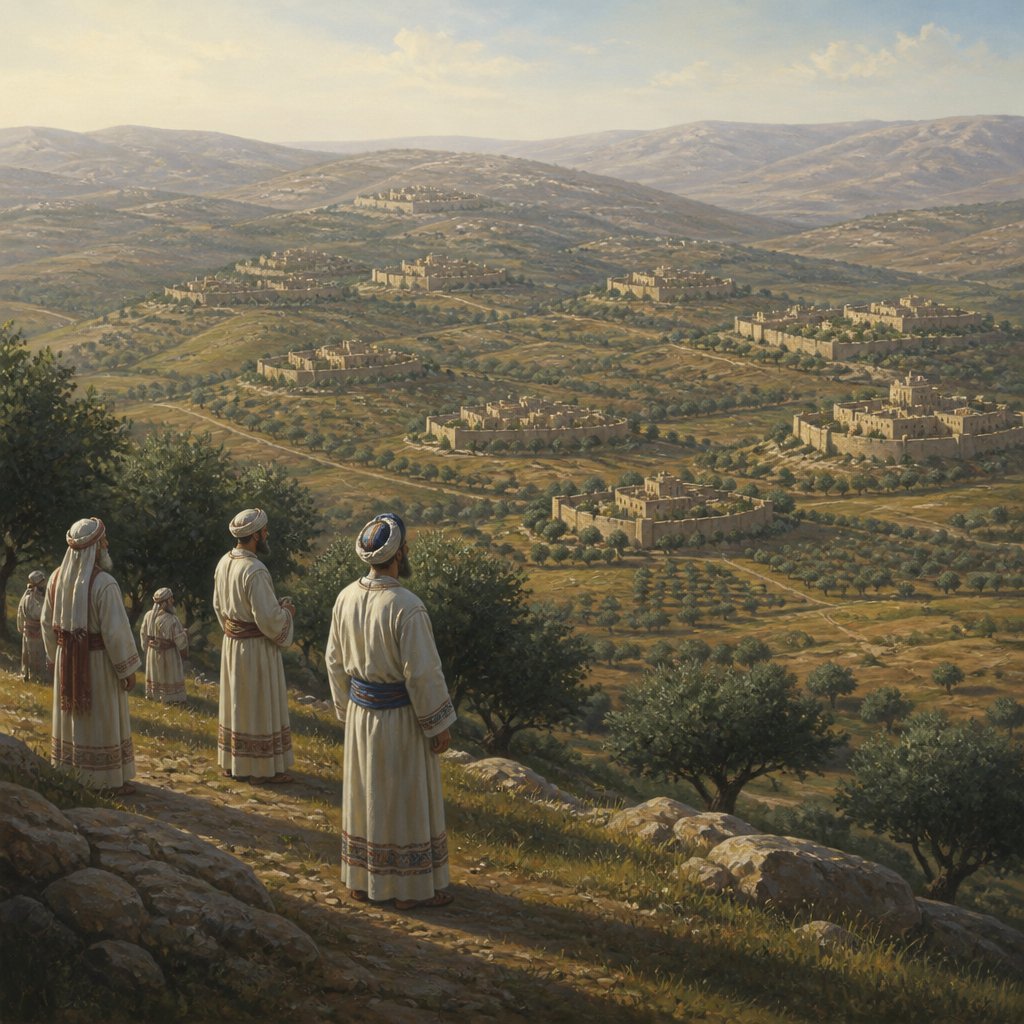
The verse Joshua 21:19 from the King James Version (KJV) of the Bible reads, "All the cities of the children of Aaron, the priests, were thirteen cities with their suburbs."
This verse is part of the book of Joshua, which tells the story of the Israelites' conquest of the land of Canaan under the leadership of Joshua. The specific chapter and verse focus on the cities that were allocated to the tribe of Levi, and in this case, to the descendants of Aaron, who were the priests of Israel.
In the context of the larger narrative, this verse comes as a part of the division of the land among the tribes of Israel. The Levites, as the tribe designated for priestly duties and religious leadership, were not given a specific territory like the other tribes. Instead, they were given cities scattered throughout the land in order to fulfill their role in offering sacrifices and teaching the law to the people.
The specific allocation of thirteen cities to the descendants of Aaron, the priests, is significant in several ways. Firstly, the number thirteen is symbolic in the Bible and can represent unity and blessing. It is a number often associated with divine order and government. By receiving thirteen cities, the priests were being set apart and given a significant portion of the land for their ministry and service to God.
Additionally, the allocation of cities with suburbs (or pasturelands) highlights the importance of provision and care for the priests as they carried out their duties. These cities were not just places of residence, but also provided for the priests' livelihood and sustenance. This demonstrates God's concern for the well-being of those who serve Him, as well as the importance of supporting and caring for those called to ministry.
Furthermore, the allocation of cities to the priests reflects the ideal of a society in which spiritual and secular authority are intertwined. By scattering the priestly cities throughout the land, the Levites were able to have a presence in every tribe, teaching the people and providing spiritual guidance. This served as a reminder that God's presence and authority should permeate every aspect of society, not just within the confines of a central religious institution.
In a broader sense, this verse highlights the theme of God's faithfulness in fulfilling His promises to His people. The division of the land among the tribes was a tangible manifestation of God's faithfulness in bringing the Israelites into the land He had promised to give them. The allocation of cities to the priests was a reminder of God's provision for those who serve Him, and a demonstration of His commitment to establishing a society rooted in His principles of justice and righteousness.
In conclusion, Joshua 21:19 is a verse that carries significance in its symbolism and representation of God's faithfulness, provision, and the intertwining of spiritual and secular authority. It serves as a reminder of the importance of caring for those called to minister and the necessity of infusing all aspects of society with the principles of God's kingdom.
Get our apps


Artwork for Joshua 21:19

Joshua 21:19 - "All the cities of the children of Aaron, the priests, were thirteen cities with their suburbs."

"All the cities of the children of Aaron, the priests, were thirteen cities with their suburbs." - Joshua 21:19

Joshua 19:21 - "And Remeth, and En-gannim, and En-haddah, and Beth-pazzez;"

"And Remeth, and En-gannim, and En-haddah, and Beth-pazzez;" - Joshua 19:21

Joshua 19:19 - "And Haphraim, and Shion, and Anaharath,"

Joshua 24:21 - "And the people said unto Joshua, Nay; but we will serve the LORD."

"And Haphraim, and Shion, and Anaharath," - Joshua 19:19

Revelation 19:19-21

Revelation 19:19-21

Revelation 19:19-21

Joshua 19:4 - "And Eltolad, and Bethul, and Hormah,"

Joshua 19:42 - "And Shaalabbin, and Ajalon, and Jethlah,"

Joshua 19:44 - "And Eltekeh, and Gibbethon, and Baalath,"

Joshua 19:43 - "And Elon, and Thimnathah, and Ekron,"

Joshua 19:36 - "And Adamah, and Ramah, and Hazor,"

Joshua 19:20 - "And Rabbith, and Kishion, and Abez,"

Joshua 19:37 - "And Kedesh, and Edrei, and En-hazor,"

Joshua 19:3 - "And Hazar-shual, and Balah, and Azem,"

Joshua 10:21 - "And all the people returned to the camp to Joshua at Makkedah in peace: none moved his tongue against any of the children of Israel."

Joshua 21:21 - "For they gave them Shechem with her suburbs in mount Ephraim, to be a city of refuge for the slayer; and Gezer with her suburbs,"

Joshua 19:5 - "And Ziklag, and Beth-marcaboth, and Hazar-susah,"

Joshua 19:45 - "And Jehud, and Bene-berak, and Gath-rimmon,"

Joshua 19:25 - "And their border was Helkath, and Hali, and Beten, and Achshaph,"

Joshua 8:21 - "And when Joshua and all Israel saw that the ambush had taken the city, and that the smoke of the city ascended, then they turned again, and slew the men of Ai."

Joshua 19:18 - "And their border was toward Jezreel, and Chesulloth, and Shunem,"

Joshua 12:21 - "The king of Taanach, one; the king of Megiddo, one;"

Joshua 21:14 - "And Jattir with her suburbs, and Eshtemoa with her suburbs,"

Joshua 21:15 - "And Holon with her suburbs, and Debir with her suburbs,"

Joshua 19:49 - "¶ When they had made an end of dividing the land for inheritance by their coasts, the children of Israel gave an inheritance to Joshua the son of Nun among them:"

Joshua 19:41 - "And the coast of their inheritance was Zorah, and Eshtaol, and Ir-shemesh,"