What does Judges 17:6 mean?
“In those days there was no king in Israel, but every man did that which was right in his own eyes.” — Judges 17:6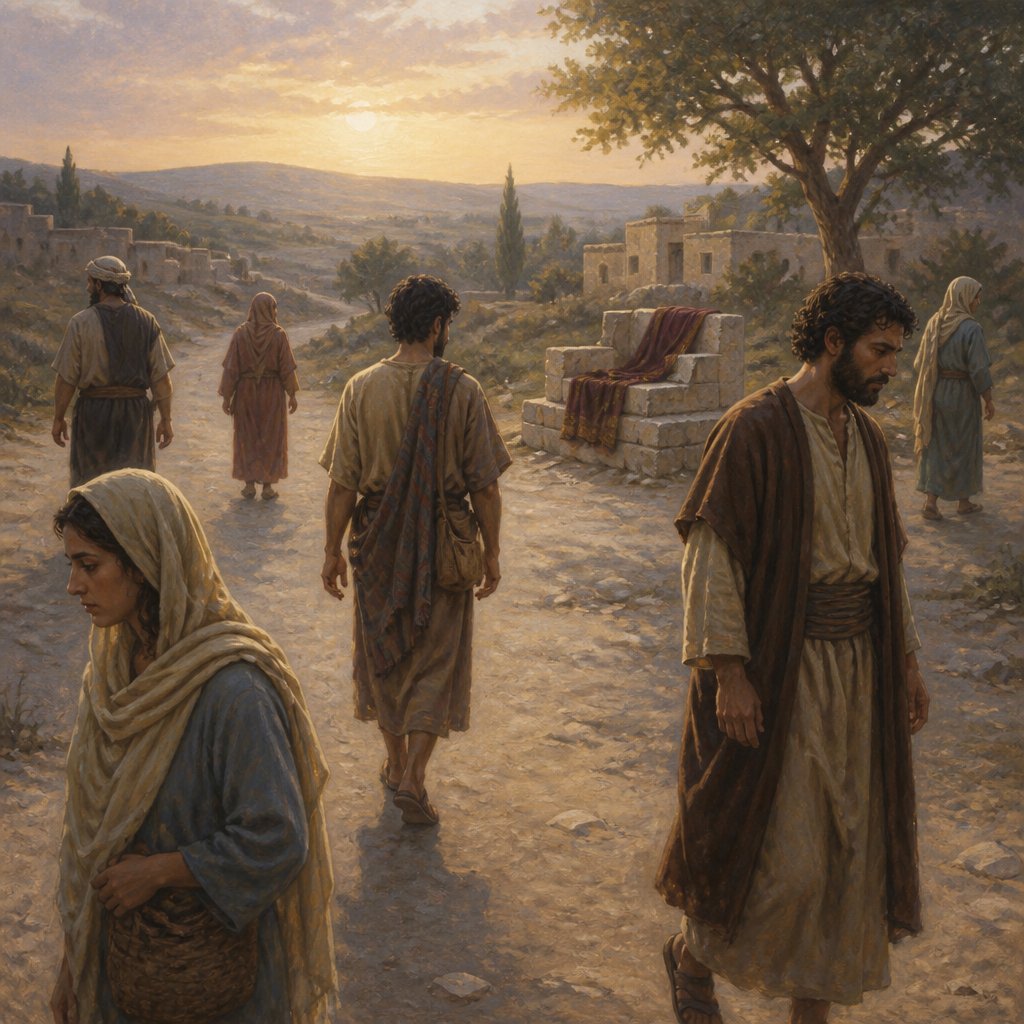
The Bible verse Judges 17:6 in the King James Version (KJV) states, "In those days there was no king in Israel, but every man did that which was right in his own eyes." This verse occurs in the Book of Judges, which tells the story of the Israelites' early settlement in the land of Canaan, following their exodus from Egypt. The period of the judges was a time of political and moral turmoil, as the Israelites struggled to establish themselves as a nation and maintain their devotion to God. This verse reflects the moral chaos that characterized this era and serves as a commentary on the consequences of living without a clear moral authority.
The theme of moral relativism is central to Judges 17:6. The verse describes a time when "every man did that which was right in his own eyes," indicating a lack of moral guidance or authority. In the absence of a king or leader to uphold and enforce moral standards, individuals were left to determine their own sense of right and wrong. This led to a society where people were guided by personal whims and desires rather than a shared sense of justice and morality. The verse presents this moral relativism as a negative state of affairs, suggesting that it results in disorder and societal decay.
The historical context of Judges 17:6 is important for understanding its significance. The verse takes place during a time when Israel was governed by a series of charismatic leaders known as judges, rather than by a centralized monarchy. These judges were meant to uphold justice and lead the people in accordance with God's law. However, the verse indicates that the Israelites had strayed from this ideal, living according to their own moral compasses rather than following the guidance of their appointed leaders or the teachings of their faith. This context emphasizes the importance of divine guidance and moral authority, as well as the dangers of individualism and moral relativism.
Symbolism plays a significant role in the interpretation of Judges 17:6. The absence of a king in Israel is symbolic of a lack of centralized authority and governance. In a broader sense, it can also be seen as representative of the absence of God's overarching moral authority in the lives of the Israelites. The phrase "every man did that which was right in his own eyes" symbolizes the individualistic and self-centered nature of the Israelites' behavior during this time. It suggests a society where personal desires and opinions take precedence over communal values and a shared moral code.
Overall, Judges 17:6 serves as a cautionary tale about the dangers of moral relativism and the absence of authoritative moral guidance. It highlights the societal and personal consequences of living without a clear moral compass, emphasizing the importance of divine guidance and communal moral standards. The verse's themes of moral relativism, historical context, and symbolic significance contribute to its enduring relevance as a commentary on the human condition and the need for moral direction.
Get our apps


Artwork for Judges 17:6

Judges 17:6 - "In those days there was no king in Israel, but every man did that which was right in his own eyes."

"In those days there was no king in Israel, but every man did that which was right in his own eyes." - Judges 17:6

Judges 6:17 - "And he said unto him, If now I have found grace in thy sight, then shew me a sign that thou talkest with me."

1 Chronicles 17:6 - "Wheresoever I have walked with all Israel, spake I a word to any of the judges of Israel, whom I commanded to feed my people, saying, Why have ye not built me an house of cedars?"

Judges 17:1 - "And there was a man of mount Ephraim, whose name was Micah."

Judges 6:6 - "And Israel was greatly impoverished because of the Midianites; and the children of Israel cried unto the LORD."

Job 12:17 - "He leadeth counsellors away spoiled, and maketh the judges fools."

Judges 8:17 - "And he beat down the tower of Penuel, and slew the men of the city."

"And he said unto him, If now I have found grace in thy sight, then shew me a sign that thou talkest with me." - Judges 6:17

Judges 21:17 - "And they said, There must be an inheritance for them that be escaped of Benjamin, that a tribe be not destroyed out of Israel."

Judges 17:12 - "And Micah consecrated the Levite; and the young man became his priest, and was in the house of Micah."

Judges 3:17 - "And he brought the present unto Eglon king of Moab: and Eglon was a very fat man."

Judges 17:11 - "And the Levite was content to dwell with the man; and the young man was unto him as one of his sons."

Judges 2:17 - "And yet they would not hearken unto their judges, but they went a whoring after other gods, and bowed themselves unto them: they turned quickly out of the way which their fathers walked in, obeying the commandments of the LORD; but they did not so."

1 Corinthians 6:2 - "Do ye not know that the saints shall judge the world? and if the world shall be judged by you, are ye unworthy to judge the smallest matters?"

Judges 17:7 - "¶ And there was a young man out of Beth-lehem-judah of the family of Judah, who was a Levite, and he sojourned there."

Judges 3:6 - "And they took their daughters to be their wives, and gave their daughters to their sons, and served their gods."

Luke 6:37 - "Judge not, and ye shall not be judged: condemn not, and ye shall not be condemned: forgive, and ye shall be forgiven:"

Judges 9:17 - "(For my father fought for you, and adventured his life far, and delivered you out of the hand of Midian:"

Judges 10:17 - "Then the children of Ammon were gathered together, and encamped in Gilead. And the children of Israel assembled themselves together, and encamped in Mizpeh."

"And there was a man of mount Ephraim, whose name was Micah." - Judges 17:1

Judges 6:36-40 – Gideon’s fleece test for dew.

Judges 6:7 - "¶ And it came to pass, when the children of Israel cried unto the LORD because of the Midianites,"

Psalms 141:6 - "When their judges are overthrown in stony places, they shall hear my words; for they are sweet."

2 Chronicles 19:6 - "And said to the judges, Take heed what ye do: for ye judge not for man, but for the LORD, who is with you in the judgment."

Judges 1:17 - "And Judah went with Simeon his brother, and they slew the Canaanites that inhabited Zephath, and utterly destroyed it. And the name of the city was called Hormah."

Judges 17:13 - "Then said Micah, Now know I that the LORD will do me good, seeing I have a Levite to my priest."

Judges 17:5 - "And the man Micah had an house of gods, and made an ephod, and teraphim, and consecrated one of his sons, who became his priest."

Judges 5:17 - "Gilead abode beyond Jordan: and why did Dan remain in ships? Asher continued on the sea shore, and abode in his breaches."

Deuteronomy 19:17 - "Then both the men, between whom the controversy is, shall stand before the LORD, before the priests and the judges, which shall be in those days;"