What does Judges 17:9 mean?
“And Micah said unto him, Whence comest thou? And he said unto him, I am a Levite of Beth-lehem-judah, and I go to sojourn where I may find a place.” — Judges 17:9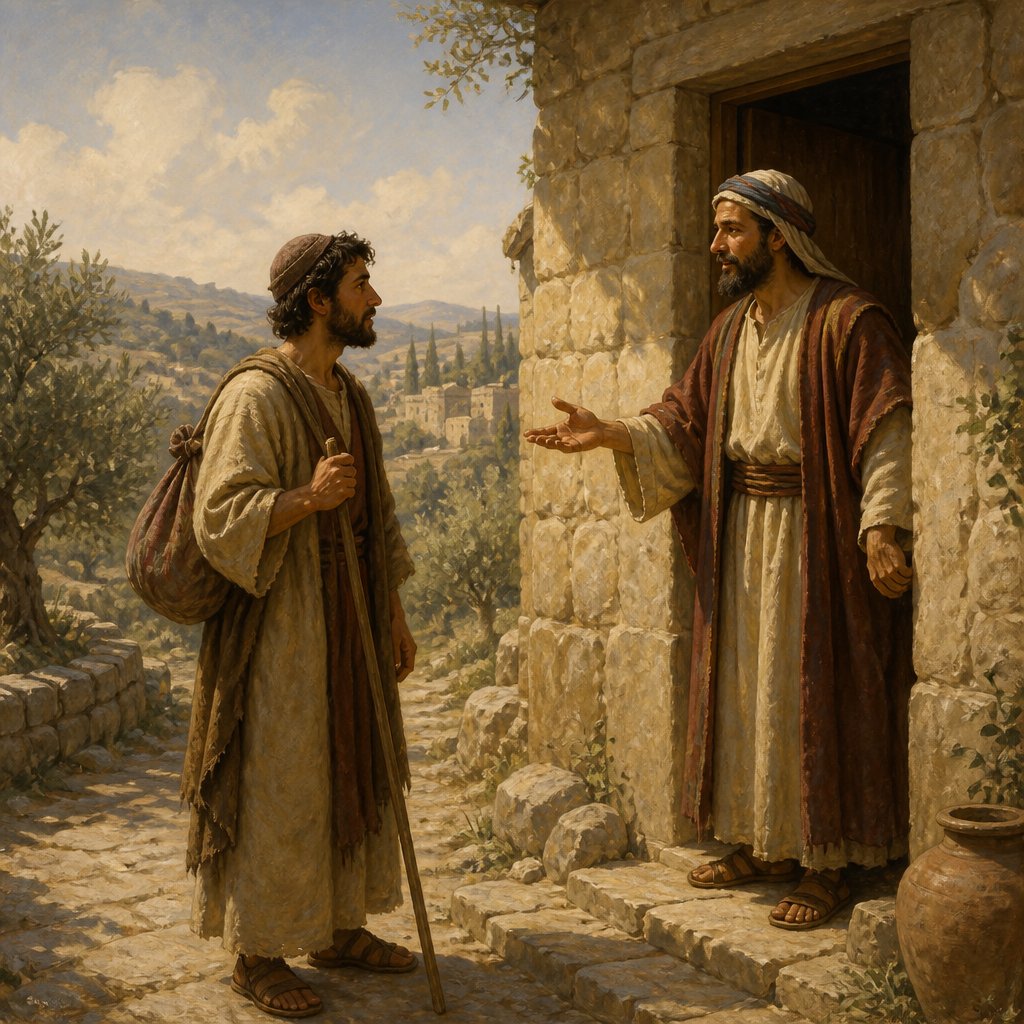
The Bible verse Judges 17:9 from the King James Version (KJV) reads: "And Micah said unto him, Whence comest thou? And he said unto him, I am a Levite of Bethlehemjudah, and I go to sojourn where I may find a place."
To fully understand the meaning and context of this verse, it is important to first provide some background on the book of Judges. The book of Judges is the seventh book of the Old Testament and it covers the period of time after the Israelites had settled in the Promised Land, but before the establishment of a monarchy. The book of Judges is filled with stories of Israel's repeated cycles of sin, oppression, repentance, and deliverance.
In this particular verse, we are introduced to Micah, a character who has established his own private sanctuary and set up his own household shrine with an idol. Micah encounters a Levite and invites him to become the priest for his shrine, offering him a salary and food in exchange for his services. The Levite accepts the offer and becomes the priest for Micah's household shrine.
The verse raises a number of important themes and issues that are prevalent throughout the book of Judges, as well as in the broader context of the Old Testament. One of the key themes is the lack of true devotion and faithfulness to God among the Israelites. Micah's actions in setting up his own shrine and idol reflect the general trend of moral and religious relativism that pervaded Israel during this time. The fact that Micah is willing to hire a Levite as a priest for his shrine also highlights the spiritual bankruptcy and lack of genuine religious leadership among the Israelites at this time.
Another important theme that is brought to the forefront in this verse is the issue of true worship and obedience to God's commandments. Throughout the book of Judges, there is a constant struggle between the Israelites' desire to worship and serve the one true God, and their tendency to mix in elements of pagan worship and idolatry. This verse serves as a poignant example of how the Israelites had strayed from God's intended way of worship and had instead adopted practices that were contrary to God's commandments.
The verse also raises questions about the role and responsibility of religious leaders within the community. The fact that the Levite is willing to accept a position as a priest for Micah's household shrine, with its associated salary and benefits, suggests a lack of integrity and commitment to God's calling. This reflects a broader issue of moral and spiritual compromise among the religious leaders of this time period, which ultimately had a negative impact on the spiritual welfare of the Israelite community.
Symbolism plays a significant role in this verse, particularly in relation to the significance of the Levite's identity and his decision to serve as a priest for Micah's shrine. The Levites were a tribe set apart for religious service and were given specific responsibilities within the community of Israel. The fact that the Levite in this verse is willing to compromise his identity and calling to serve in a idolatrous shrine represents a perversion of God's intended purpose for the Levites and highlights the broader issue of spiritual compromise and corruption within Israel during this time period.
In conclusion, the Bible verse Judges 17:9 from the King James Version offers important insights into the moral and spiritual landscape of Israel during the time of the judges. It raises important themes and issues related to true worship, religious leadership, and the perversion of God's intended plans for His people. The verse serves as a powerful reminder of the consequences of spiritual compromise and the importance of remaining faithful to God's commandments and His intended way of worship.
Get our apps


Artwork for Judges 17:9

Judges 17:9 - "And Micah said unto him, Whence comest thou? And he said unto him, I am a Levite of Beth-lehem-judah, and I go to sojourn where I may find a place."
"And Micah said unto him, Whence comest thou? And he said unto him, I am a Levite of Beth-lehem-judah, and I go to sojourn where I may find a place." - Judges 17:9

Judges 9:17 - "(For my father fought for you, and adventured his life far, and delivered you out of the hand of Midian:"

Deuteronomy 17:9 - "And thou shalt come unto the priests the Levites, and unto the judge that shall be in those days, and enquire; and they shall shew thee the sentence of judgment:"
"(For my father fought for you, and adventured his life far, and delivered you out of the hand of Midian:" - Judges 9:17

Judges 17:1 - "And there was a man of mount Ephraim, whose name was Micah."

Judges 9:8-15

Job 12:17 - "He leadeth counsellors away spoiled, and maketh the judges fools."

Judges 8:17 - "And he beat down the tower of Penuel, and slew the men of the city."
"And thou shalt come unto the priests the Levites, and unto the judge that shall be in those days, and enquire; and they shall shew thee the sentence of judgment:" - Deuteronomy 17:9

Judges 21:17 - "And they said, There must be an inheritance for them that be escaped of Benjamin, that a tribe be not destroyed out of Israel."

Judges 17:12 - "And Micah consecrated the Levite; and the young man became his priest, and was in the house of Micah."

Judges 3:17 - "And he brought the present unto Eglon king of Moab: and Eglon was a very fat man."

Judges 17:11 - "And the Levite was content to dwell with the man; and the young man was unto him as one of his sons."

Judges 9:50 - "¶ Then went Abimelech to Thebez, and encamped against Thebez, and took it."

Judges 2:17 - "And yet they would not hearken unto their judges, but they went a whoring after other gods, and bowed themselves unto them: they turned quickly out of the way which their fathers walked in, obeying the commandments of the LORD; but they did not so."

Judges 9:22 - "¶ When Abimelech had reigned three years over Israel,"

Judges 15:9 - "¶ Then the Philistines went up, and pitched in Judah, and spread themselves in Lehi."

Judges 17:7 - "¶ And there was a young man out of Beth-lehem-judah of the family of Judah, who was a Levite, and he sojourned there."

Judges 9:39 - "And Gaal went out before the men of Shechem, and fought with Abimelech."

Judges 21:9 - "For the people were numbered, and, behold, there were none of the inhabitants of Jabesh-gilead there."

Judges 17:6 - "In those days there was no king in Israel, but every man did that which was right in his own eyes."

Judges 9:42 - "And it came to pass on the morrow, that the people went out into the field; and they told Abimelech."

Judges 9:10 - "And the trees said to the fig tree, Come thou, and reign over us."

Judges 9:12 - "Then said the trees unto the vine, Come thou, and reign over us."

Judges 9:47 - "And it was told Abimelech, that all the men of the tower of Shechem were gathered together."

Psalms 98:9 - "Before the LORD; for he cometh to judge the earth: with righteousness shall he judge the world, and the people with equity."

Judges 9:9 - "But the olive tree said unto them, Should I leave my fatness, wherewith by me they honour God and man, and go to be promoted over the trees?"

Judges 9:32 - "Now therefore up by night, thou and the people that is with thee, and lie in wait in the field:"

Judges 9:14 - "Then said all the trees unto the bramble, Come thou, and reign over us."