What does Judges 1:12 mean?
“And Caleb said, He that smiteth Kirjath-sepher, and taketh it, to him will I give Achsah my daughter to wife.” — Judges 1:12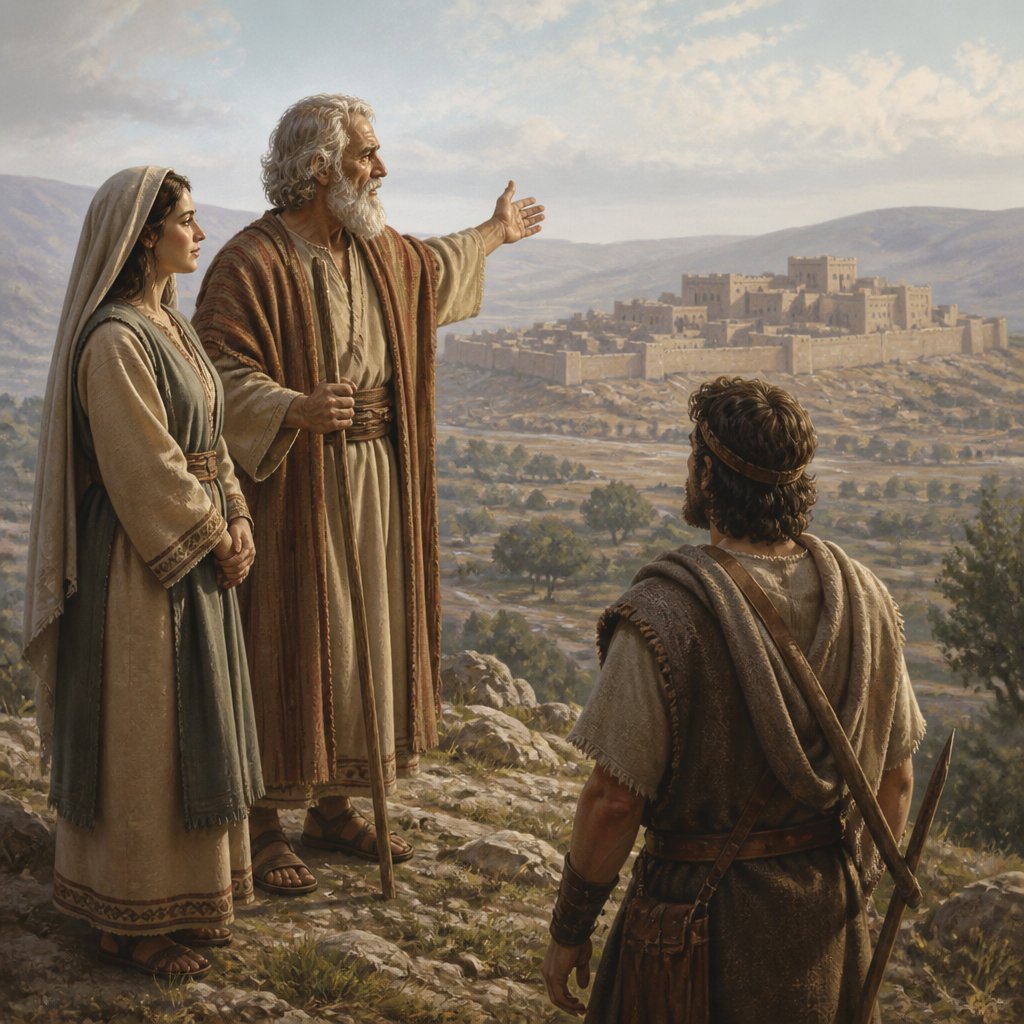
Judges 1:12 in the King James Version of the Bible reads, "And Caleb said, He that smiteth Kirjathsepher, and taketh it, to him will I give Achsah my daughter to wife."
This verse comes from the Book of Judges, which is the seventh book of the Hebrew Bible and the Christian Old Testament. The book is named after the judges who led the Israelites during a period of time after the death of Joshua and before the establishment of the monarchy. The Book of Judges depicts a chaotic time in Israel's history, characterized by cycles of sin, oppression, repentance, and deliverance.
The verse takes place during the Israelites' conquest of the Promised Land, following their exodus from Egypt and forty years of wandering in the wilderness. Caleb, whose name means "dog" in Hebrew, was one of the twelve spies sent by Moses to scout out the land of Canaan. He, along with Joshua, were the only two spies who remained faithful to God's promise that the Israelites would inherit the land. As a result, Caleb was granted the city of Hebron as his inheritance. He was known for his unwavering faith and trust in God, and he serves as a positive example of faithfulness and perseverance in the Bible.
In Judges 1:12, Caleb makes a bold offer to give his daughter Achsah in marriage to the man who captures the city of Kirjathsepher. This act reflects the cultural and social practices of the time, where marriages were often arranged by fathers and involved negotiations and exchanges as a way of solidifying alliances and establishing relationships between families.
From a thematic perspective, this verse highlights the importance of courage, conquest, and the inheritance of land. The conquest of cities and territories was a central aspect of the Israelites' occupation of the Promised Land, and it was a fulfillment of God's promise to give them the land as their inheritance. Caleb's offer demonstrates his confidence in the success of the conquest and his desire to reward the bravery and valor of the man who accomplishes the task.
Furthermore, the verse also emphasizes the value of family and the significance of marriage within the Israelite community. Marriage was considered a sacred and solemn covenant, and the exchange of daughters in marriage was a way of forging alliances and maintaining social cohesion within the community. Caleb's willingness to offer his daughter as a reward also underscores the importance of familial loyalty and unity in the ancient Israelite society.
Symbolically, Caleb's offer could be interpreted as a foreshadowing of the future spiritual inheritance that believers receive through Christ. In the New Testament, marriage is often used as a metaphor for the relationship between Christ and the Church, and the concept of inheritance is rich with spiritual significance as believers are heirs to the kingdom of God. In this sense, Caleb's promise to give his daughter as a reward for conquering the city serves as a parallel to the promise of an eternal inheritance that is offered to those who remain faithful and courageous in their spiritual journey.
In conclusion, Judges 1:12 is a verse that captures the themes of conquest, inheritance, family, and faithfulness within the narrative of the Israelites' occupation of the Promised Land. It provides insight into the cultural customs and practices of the ancient Israelites while also carrying symbolic implications that resonate with the broader themes of spiritual inheritance and the covenant relationship between God and His people.
Get our apps


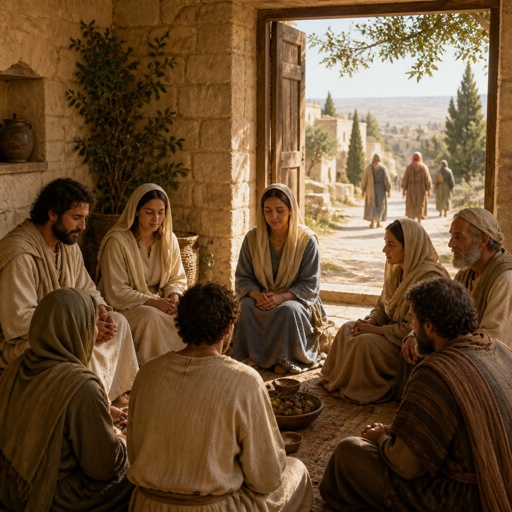
Artwork for Judges 1:12
Judges 1:12 - "And Caleb said, He that smiteth Kirjath-sepher, and taketh it, to him will I give Achsah my daughter to wife."
"And Caleb said, He that smiteth Kirjath-sepher, and taketh it, to him will I give Achsah my daughter to wife." - Judges 1:12

1 Corinthians 5:12 - "For what have I to do to judge them also that are without? do not ye judge them that are within?"

Judges 1:2 - "And the LORD said, Judah shall go up: behold, I have delivered the land into his hand."

Judges 12:12 - "And Elon the Zebulonite died, and was buried in Aijalon in the country of Zebulun."

Judges 12:11 - "¶ And after him Elon, a Zebulonite, judged Israel; and he judged Israel ten years."
"And the LORD said, Judah shall go up: behold, I have delivered the land into his hand." - Judges 1:2

1 Samuel 24:12 - "The LORD judge between me and thee, and the LORD avenge me of thee: but mine hand shall not be upon thee."

Judges 12:8 - "¶ And after him Ibzan of Beth-lehem judged Israel."

Judges 12:10 - "Then died Ibzan, and was buried at Beth-lehem."

Judges 12:13 - "¶ And after him Abdon the son of Hillel, a Pirathonite, judged Israel."
"For what have I to do to judge them also that are without? do not ye judge them that are within?" - 1 Corinthians 5:12

"And Elon the Zebulonite died, and was buried in Aijalon in the country of Zebulun." - Judges 12:12

Job 12:17 - "He leadeth counsellors away spoiled, and maketh the judges fools."

Judges 12:7 - "And Jephthah judged Israel six years. Then died Jephthah the Gileadite, and was buried in one of the cities of Gilead."

Judges 4:12 - "And they shewed Sisera that Barak the son of Abinoam was gone up to mount Tabor."

Judges 9:12 - "Then said the trees unto the vine, Come thou, and reign over us."

Judges 17:12 - "And Micah consecrated the Levite; and the young man became his priest, and was in the house of Micah."

Judges 12:1 - "And the men of Ephraim gathered themselves together, and went northward, and said unto Jephthah, Wherefore passedst thou over to fight against the children of Ammon, and didst not call us to go with thee? we will burn thine house upon thee with fire."

John 12:47 - "And if any man hear my words, and believe not, I judge him not: for I came not to judge the world, but to save the world."

Judges 12:15 - "And Abdon the son of Hillel the Pirathonite died, and was buried in Pirathon in the land of Ephraim, in the mount of the Amalekites."

Judges 12:14 - "And he had forty sons and thirty nephews, that rode on threescore and ten ass colts: and he judged Israel eight years."

Hosea 1:2-11;2:14;3:5

"¶ And after him Ibzan of Beth-lehem judged Israel." - Judges 12:8

"Then died Ibzan, and was buried at Beth-lehem." - Judges 12:10

"¶ And after him Elon, a Zebulonite, judged Israel; and he judged Israel ten years." - Judges 12:11

"¶ And after him Abdon the son of Hillel, a Pirathonite, judged Israel." - Judges 12:13

Matthew 7:1 - "Judge not, that ye be not judged."

Judges 6:12 - "And the angel of the LORD appeared unto him, and said unto him, The LORD is with thee, thou mighty man of valour."

Judges 20:12 - "¶ And the tribes of Israel sent men through all the tribe of Benjamin, saying, What wickedness is this that is done among you?"