What does Judges 1:7 mean?
“And Adoni-bezek said, Threescore and ten kings, having their thumbs and their great toes cut off, gathered their meat under my table: as I have done, so God hath requited me. And they brought him to Jerusalem, and there he died.” — Judges 1:7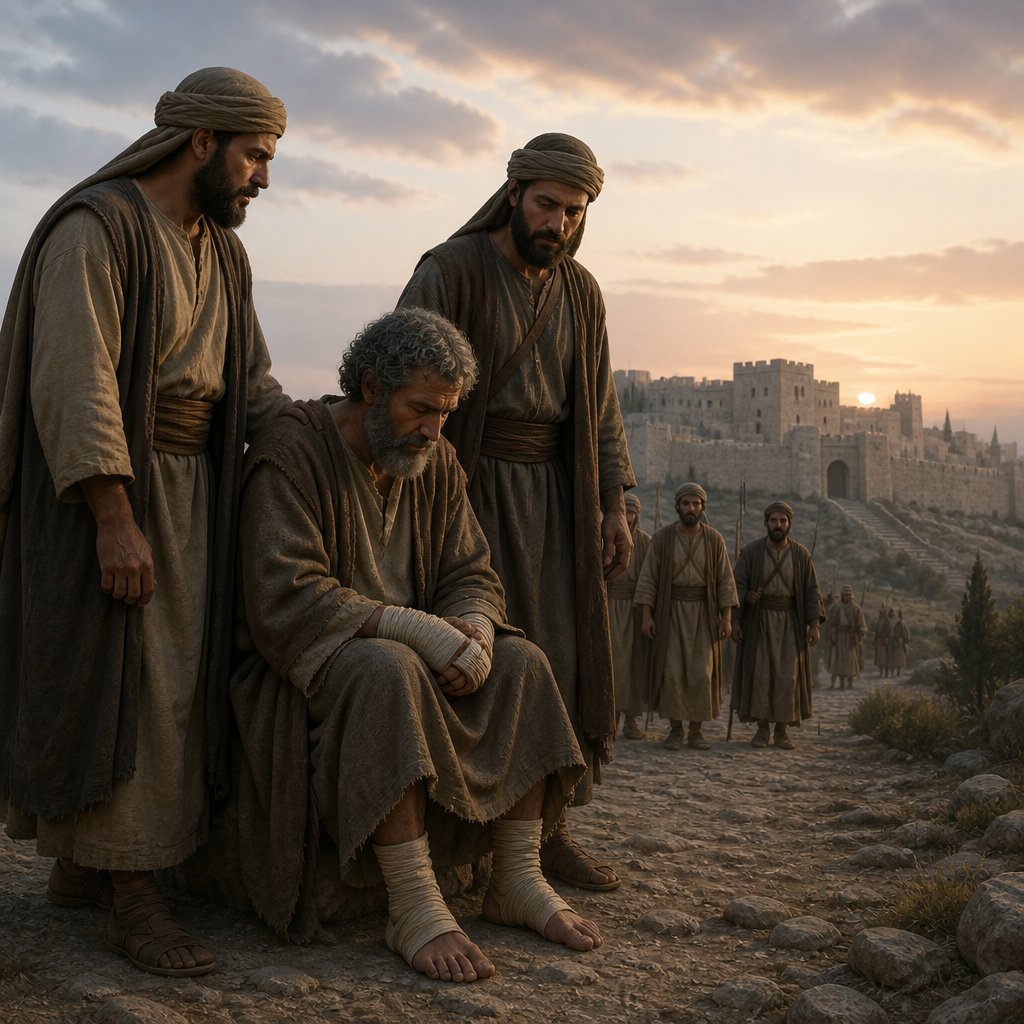
Judges 1:7 (KJV) says: "And Adonibezek said, Threescore and ten kings, having their thumbs and their great toes cut off, gathered their meat under my table: as I have done, so God hath requited me. And they brought him to Jerusalem, and there he died."
This verse occurs in the Book of Judges in the Old Testament of the Bible. It is part of a narrative that describes the Israelites' conquest of the promised land following their exodus from Egypt. The verse captures a specific instance of victory in this process, shedding light on the moral and ethical implications of war and the consequences of one's actions.
The context of Judges 1:7 is set in the aftermath of the death of Joshua, who had led the Israelites into the promised land. The tribes of Israel were continuing the task of conquering the land, each tribe having been allocated specific territories. The verse describes an encounter between the tribe of Judah and the Canaanites. Adonibezek, a prominent Canaanite king, was captured by the Israelites. He confesses to his brutal treatment of seventy kings, having mutilated them by cutting off their thumbs and big toes, effectively rendering them incapable of leading or fighting. Adonibezek recognizes that his own actions led to his downfall and justifies this as a punishment from God.
The themes present in this verse are numerous and profound. The most striking theme is that of divine justice. Adonibezek's acknowledgment of his own mistreatment of other kings and his attribution of his own punishment to God's retribution emphasize the concept of reaping what one sows. This aligns with the broader Biblical theme of moral accountability and the belief that God enacts justice upon those who commit wrongdoing.
Furthermore, this verse highlights the brutal realities of war and conquest. Adonibezek's actions reflect the ruthless nature of ancient warfare, where capturing and mutilating enemy leaders was not uncommon. The verse serves as a reminder of the violent and unforgiving nature of ancient conflicts, shedding light on the ethical and moral complexities of war.
Symbolism in Judges 1:7 is also notable. Adonibezek's mutilation of the seventy kings carries symbolic weight, representing his desire for power and dominance. By crippling these kings, he sought to assert his own authority and ensure they posed no threat to his reign. However, this act of cruelty ultimately leads to his own downfall, symbolizing the idea that oppressive and unjust actions can have severe consequences.
Moreover, the act of gathering meat under Adonibezek's table is symbolic of subservience and humiliation. The kings, once proud and powerful, are reduced to a state of degradation, forced to scavenge for sustenance under their captor's table. This symbolizes the degradation and loss of dignity that Adonibezek inflicts upon his enemies, reinforcing the narrative of his cruelty and tyranny.
In conclusion, Judges 1:7 offers valuable insights into the themes of divine justice, the ethical complexities of war, and the symbolism of power and oppression. It serves as a powerful narrative that prompts reflection on the consequences of one's actions and the moral implications of power and conquest. The verse's portrayal of Adonibezek's downfall stands as a poignant reminder of the enduring moral and ethical lessons found within the pages of the Bible.
Get our apps


Artwork for Judges 1:7
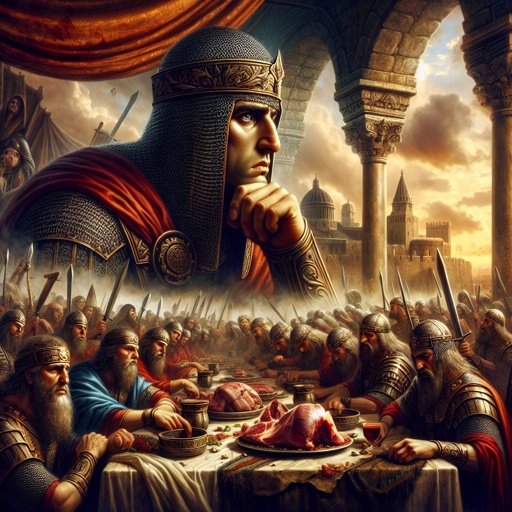
Judges 1:7 - "And Adoni-bezek said, Threescore and ten kings, having their thumbs and their great toes cut off, gathered their meat under my table: as I have done, so God hath requited me. And they brought him to Jerusalem, and there he died."
"And Adoni-bezek said, Threescore and ten kings, having their thumbs and their great toes cut off, gathered their meat under my table: as I have done, so God hath requited me. And they brought him to Jerusalem, and there he died." - Judges 1:7

Matthew 7:1 - "Judge not, that ye be not judged."

"Judge not, that ye be not judged." - Matthew 7:1

Matthew 7:1-2 - "Do not judge, or you too will be judged. For in the same way you judge others, you will be judged, and with the measure you use, it will be measured to you."

1 Samuel 7:15 - "And Samuel judged Israel all the days of his life."

1 Kings 7:7 - "¶ Then he made a porch for the throne where he might judge, even the porch of judgment: and it was covered with cedar from one side of the floor to the other."

Judges 5:7

"Do not judge, or you too will be judged. For in the same way you judge others, you will be judged, and with the measure you use, it will be measured to you." - Matthew 7:1-2

1 Samuel 7:17 - "And his return was to Ramah; for there was his house; and there he judged Israel; and there he built an altar unto the LORD."

John 7:24 - "Judge not according to the appearance, but judge righteous judgment."

1 Samuel 7:16 - "And he went from year to year in circuit to Beth-el, and Gilgal, and Mizpeh, and judged Israel in all those places."

Judges 7:1 - "Then Jerubbaal, who is Gideon, and all the people that were with him, rose up early, and pitched beside the well of Harod: so that the host of the Midianites were on the north side of them, by the hill of Moreh, in the valley."

"And Samuel judged Israel all the days of his life." - 1 Samuel 7:15

Hosea 7:7 - "They are all hot as an oven, and have devoured their judges; all their kings are fallen: there is none among them that calleth unto me."

Judges 12:7 - "And Jephthah judged Israel six years. Then died Jephthah the Gileadite, and was buried in one of the cities of Gilead."

Judges 14:7 - "And he went down, and talked with the woman; and she pleased Samson well."

Judges 20:7 - "Behold, ye are all children of Israel; give here your advice and counsel."
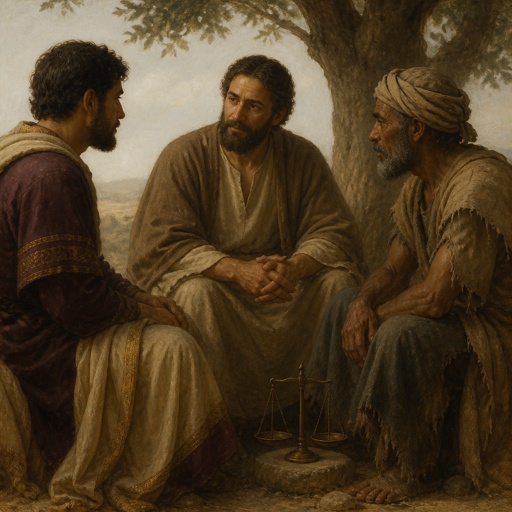
"Judge not according to the appearance, but judge righteous judgment." - John 7:24

Judges 6:7 - "¶ And it came to pass, when the children of Israel cried unto the LORD because of the Midianites,"

Matthew 7:2 - "For with what judgment ye judge, ye shall be judged: and with what measure ye mete, it shall be measured to you again."

Psalms 7:8 - "The LORD shall judge the people: judge me, O LORD, according to my righteousness, and according to mine integrity that is in me."

1 Samuel 7:6 - "And they gathered together to Mizpeh, and drew water, and poured it out before the LORD, and fasted on that day, and said there, We have sinned against the LORD. And Samuel judged the children of Israel in Mizpeh."

Judges 7:10 - "But if thou fear to go down, go thou with Phurah thy servant down to the host:"

Judges 17:7 - "¶ And there was a young man out of Beth-lehem-judah of the family of Judah, who was a Levite, and he sojourned there."

Judges 3:7 - "And the children of Israel did evil in the sight of the LORD, and forgat the LORD their God, and served Baalim and the groves."

Judges 4:4

Judges 2:31

Judges 3:31

Judges 5:7 - "The inhabitants of the villages ceased, they ceased in Israel, until that I Deborah arose, that I arose a mother in Israel."