What does Judges 20:9 mean?
“But now this shall be the thing which we will do to Gibeah; we will go up by lot against it;” — Judges 20:9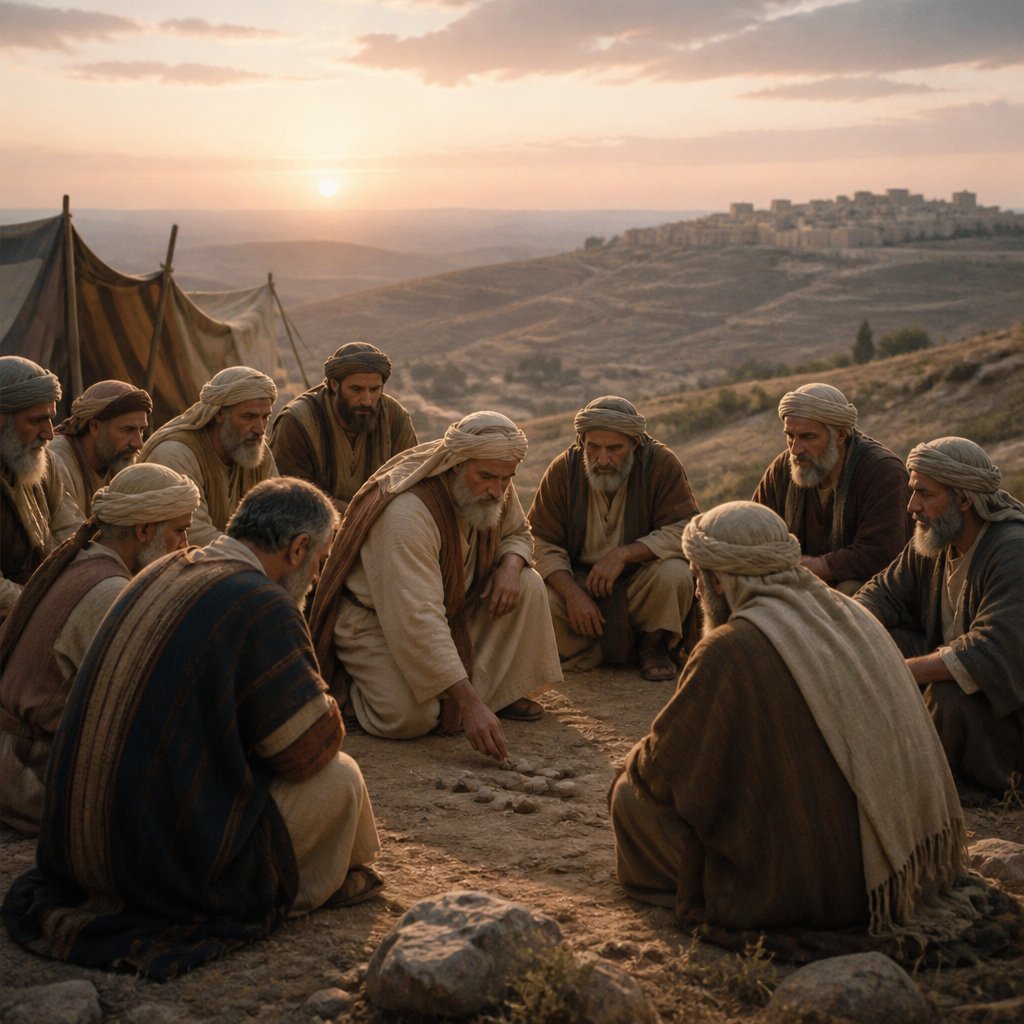
The verse Judges 20:9 from the King James Version of the Bible reads: "But now this shall be the thing which we will do to Gibeah; we will go up by lot against it."
This verse is part of a larger narrative found in the Book of Judges, which describes the period of time between the Israelites' entry into the Promised Land under the leadership of Joshua and the establishment of kingship in Israel. The book of Judges is known for its portrayal of a cycle of sin, oppression, repentance, and deliverance, and in this particular verse, the Israelites are preparing to take action against the city of Gibeah.
The context of this verse is important in understanding its meaning and significance. The story of Gibeah begins in Judges 19, where a Levite traveling with his concubine seeks refuge in the city. However, the men of Gibeah behave wickedly, leading to the mistreatment and eventual death of the Levite's concubine. This act of violence sparks outrage among the other tribes of Israel, leading them to gather together to address the situation.
In Judges 20, the Israelites come together as one man to seek justice for the horrific act committed in Gibeah. The verse in question is part of the council's discussion on how to proceed with dealing with Gibeah. The decision to go up by lot against Gibeah implies a sense of impartiality and reliance on the guidance of God in determining their course of action. This method of casting lots was a common practice in ancient Israel for making important decisions, signifying a belief in divine intervention and providence.
The themes present in this verse and its surrounding passages include justice, righteousness, and the consequences of sin. The mistreatment and murder of the Levite's concubine in Gibeah represents the depths of human depravity and the need for accountability and retribution. The Israelites' decision to seek recompense for this atrocity highlights the importance of upholding moral and ethical standards in society.
Furthermore, the verse also speaks to the concept of unity and collective action. The tribes of Israel coming together as one to address the injustice in Gibeah reflects the idea of strength in numbers and the significance of communal responsibility. This theme is consistent throughout the book of Judges, as it emphasizes the importance of solidarity and cooperation among God's people.
Symbolically, the act of casting lots to determine their approach to Gibeah can be seen as a relinquishment of control and a surrender to the will of God. By placing their trust in the outcome of the lots, the Israelites acknowledge the sovereignty of God in guiding their decisions. This act serves as a reminder of the importance of seeking God's guidance and wisdom in all matters of life, especially in times of moral and ethical dilemmas.
In conclusion, Judges 20:9 from the King James Version of the Bible holds significant meaning within its larger context and the overarching themes present in the book of Judges. It underscores the pursuit of justice, the importance of communal action, and the reliance on divine guidance in addressing moral and ethical challenges. This verse serves as a powerful reminder of the enduring relevance of these themes in the lives of believers and the timeless truths found in the biblical narrative.
Get our apps


Artwork for Judges 20:9

Judges 20:9 - "But now this shall be the thing which we will do to Gibeah; we will go up by lot against it;"
"But now this shall be the thing which we will do to Gibeah; we will go up by lot against it;" - Judges 20:9

Judges 9:20 - "But if not, let fire come out from Abimelech, and devour the men of Shechem, and the house of Millo; and let fire come out from the men of Shechem, and from the house of Millo, and devour Abimelech." respectful, symbolic bible verse art

Judges 15:20 - "And he judged Israel in the days of the Philistines twenty years."

Judges 20:29 - "And Israel set liers in wait round about Gibeah."

Judges 20:20 - "And the men of Israel went out to battle against Benjamin; and the men of Israel put themselves in array to fight against them at Gibeah."

Judges 9:8-15

Judges 20:19 - "And the children of Israel rose up in the morning, and encamped against Gibeah."

Judges 5:20 - "They fought from heaven; the stars in their courses fought against Sisera."

Judges 21:20 - "Therefore they commanded the children of Benjamin, saying, Go and lie in wait in the vineyards;"

Judges 20:27 - "And the children of Israel enquired of the LORD, (for the ark of the covenant of God was there in those days,"

Judges 20:44 - "And there fell of Benjamin eighteen thousand men; all these were men of valour."

Judges 20:24 - "And the children of Israel came near against the children of Benjamin the second day."

Judges 20:7 - "Behold, ye are all children of Israel; give here your advice and counsel."

Ezekiel 20:4 - "Wilt thou judge them, son of man, wilt thou judge them? cause them to know the abominations of their fathers:"

Judges 9:50 - "¶ Then went Abimelech to Thebez, and encamped against Thebez, and took it."

Judges 14:20 - "But Samson's wife was given to his companion, whom he had used as his friend."

Judges 1:20 - "And they gave Hebron unto Caleb, as Moses said: and he expelled thence the three sons of Anak."

Judges 9:22 - "¶ When Abimelech had reigned three years over Israel,"

Judges 15:9 - "¶ Then the Philistines went up, and pitched in Judah, and spread themselves in Lehi."

"And he judged Israel in the days of the Philistines twenty years." - Judges 15:20

Judges 9:39 - "And Gaal went out before the men of Shechem, and fought with Abimelech."

Judges 18:20 - "And the priest's heart was glad, and he took the ephod, and the teraphim, and the graven image, and went in the midst of the people."

Judges 20:11 - "So all the men of Israel were gathered against the city, knit together as one man."

Judges 21:9 - "For the people were numbered, and, behold, there were none of the inhabitants of Jabesh-gilead there."

Judges 9:10 - "And the trees said to the fig tree, Come thou, and reign over us."

Judges 9:42 - "And it came to pass on the morrow, that the people went out into the field; and they told Abimelech."

Judges 9:12 - "Then said the trees unto the vine, Come thou, and reign over us."

Judges 9:47 - "And it was told Abimelech, that all the men of the tower of Shechem were gathered together."

Psalms 98:9 - "Before the LORD; for he cometh to judge the earth: with righteousness shall he judge the world, and the people with equity."