What does Lamentations 1:10 mean?
“The adversary hath spread out his hand upon all her pleasant things: for she hath seen that the heathen entered into her sanctuary, whom thou didst command that they should not enter into thy congregation.” — Lamentations 1:10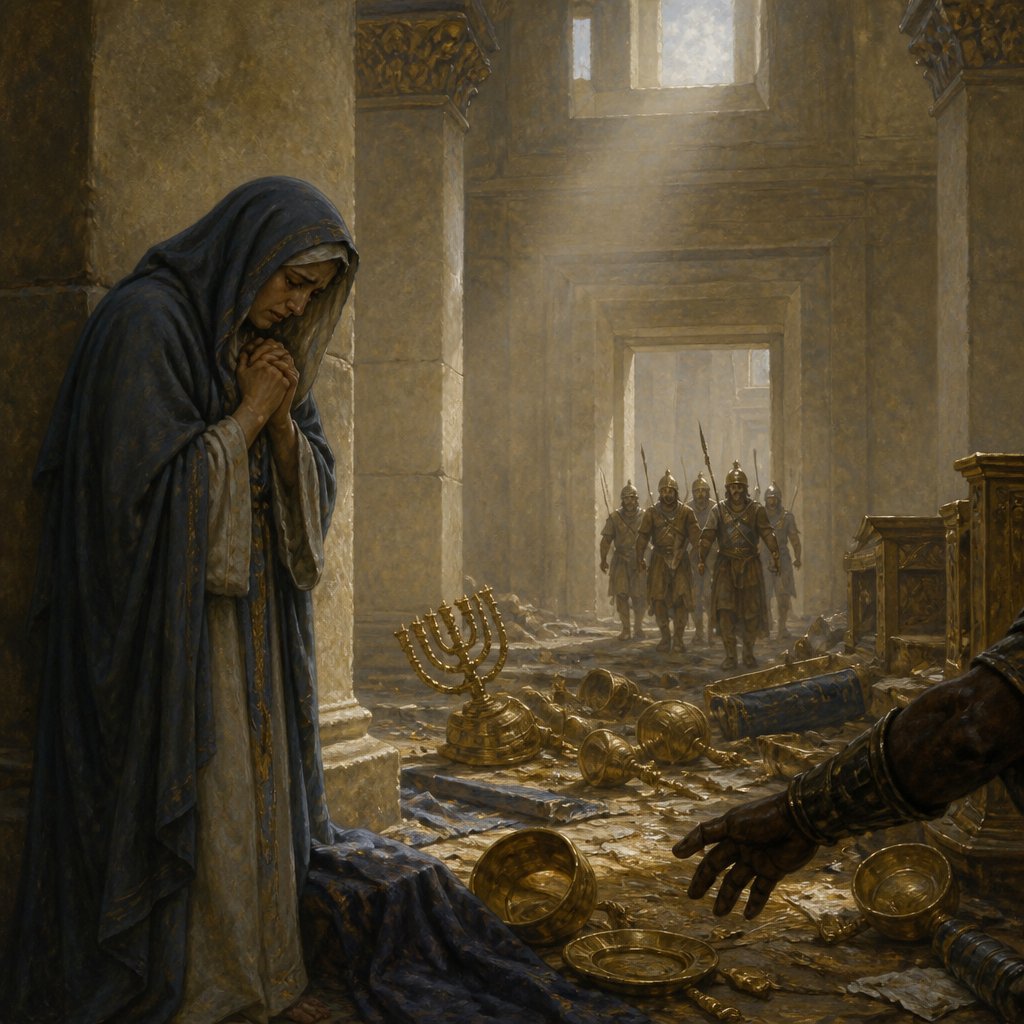
Lamentations 1:10 in the King James Version of the Bible reads: "The adversary hath spread out his hand upon all her pleasant things: for she hath seen that the heathen entered into her sanctuary, whom thou didst command that they should not enter into thy congregation."
The Book of Lamentations is a collection of poetic laments over the destruction of Jerusalem. It is traditionally attributed to the prophet Jeremiah and is believed to have been written shortly after the fall of Jerusalem in 586 BC. In this verse, the speaker mourns over the devastation and desolation of Jerusalem, as well as the defilement of the sanctuary by the heathen.
The verse reflects the theme of devastation and despair. The use of the word "adversary" conveys the sense of an enemy or foe who has inflicted great harm upon Jerusalem. The adversary is described as spreading out his hand upon all her pleasant things, signifying a deliberate and thorough destruction of everything that was once beautiful and beloved in the city. This includes not only material possessions and structures, but also the spiritual and religious sanctity of the sanctuary.
The phrase "for she hath seen" suggests that Jerusalem has witnessed the intrusion of the heathen into her sanctuary, which adds a layer of emotional anguish to the speaker's lament. The sanctuary is a place of holiness and divine presence, and its violation by the heathen is a grievous offense. The reference to the heathen entering "whom thou didst command that they should not enter into thy congregation" emphasizes the disobedience and disrespect shown towards God's commandments and the sacredness of the congregation.
The verse also conveys the theme of divine judgment and the consequences of disobedience. The invasion of Jerusalem and the defilement of the sanctuary are presented as direct results of the people's transgressions and unfaithfulness. The Book of Lamentations as a whole reflects the theological understanding that the destruction of Jerusalem is a manifestation of God's wrath and punishment for the people's sins.
The symbolism in this verse is rich and evocative. Jerusalem, often personified as a mourning woman in the Book of Lamentations, represents the collective suffering and sorrow of the people. The adversary's hand symbolizes the force of destruction and oppression that has befallen the city. The pleasant things that have been laid waste signify the loss of prosperity, security, and peace. The sanctuary, as the holiest place, symbolizes the intimate connection between the people and their God, and its desecration signifies the rupture of that sacred bond.
Overall, Lamentations 1:10 captures the deep anguish and lamentation over the devastation and desecration of Jerusalem. It conveys a profound sense of loss, despair, and spiritual desolation, while also reflecting the theological understanding of divine judgment and the consequences of disobedience. The verse's themes, context, and symbolism contribute to its powerful portrayal of the emotional and spiritual turmoil experienced in the aftermath of Jerusalem's destruction.
Get our apps


Artwork for Lamentations 1:10

Lamentations 1:10 - "The adversary hath spread out his hand upon all her pleasant things: for she hath seen that the heathen entered into her sanctuary, whom thou didst command that they should not enter into thy congregation."
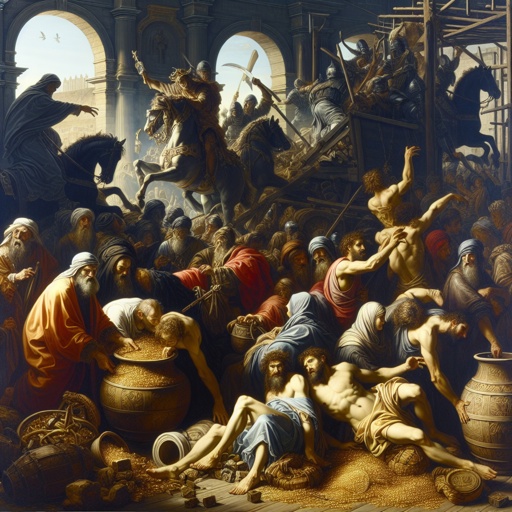
Lamentations 1:10 The enemy laid hands on all her treasures; she saw pagan nations enter her sanctuary— those you had forbidden to enter your assembly.
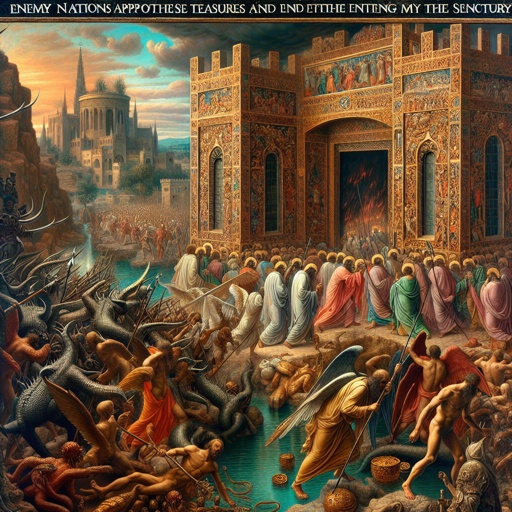
Lamentations 1:10 The enemy laid hands on all her treasures; she saw pagan nations enter her sanctuary— those you had forbidden to enter your assembly.

Lamentations 1:10 The enemy laid hands on all her treasures; she saw pagan nations enter her sanctuary— those you had forbidden to enter your assembly.
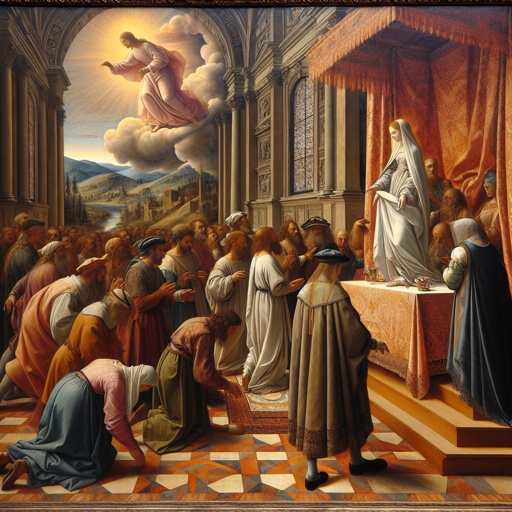
Lamentations 1:10 The enemy laid hands on all her treasures; she saw pagan nations enter her sanctuary— those you had forbidden to enter your assembly.
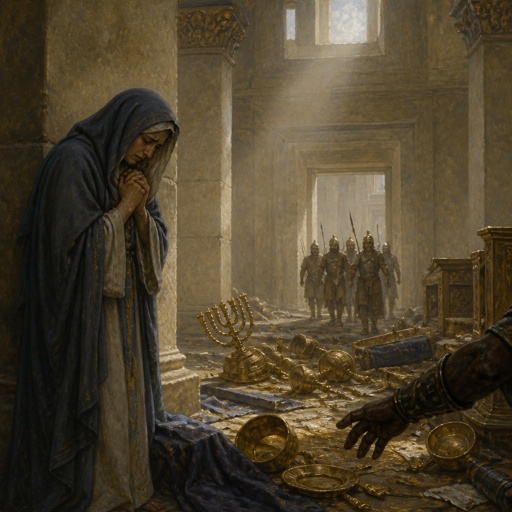
"The adversary hath spread out his hand upon all her pleasant things: for she hath seen that the heathen entered into her sanctuary, whom thou didst command that they should not enter into thy congregation." - Lamentations 1:10

Lamentations 5:10 - "Our skin was black like an oven because of the terrible famine."

Lamentations 3:10 - "He was unto me as a bear lying in wait, and as a lion in secret places."

Lamentations 2:1

Lamentations 2:1

Lamentations 2:1

Lamentations 3:1-18

Lamentations 3:13

Ezekiel 2:10 - "And he spread it before me; and it was written within and without: and there was written therein lamentations, and mourning, and woe."

Lamentations 4:10 - "The hands of the pitiful women have sodden their own children: they were their meat in the destruction of the daughter of my people."
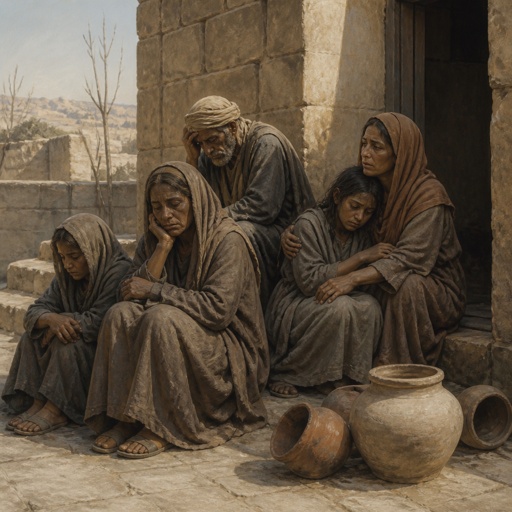
"Our skin was black like an oven because of the terrible famine." - Lamentations 5:10

"He was unto me as a bear lying in wait, and as a lion in secret places." - Lamentations 3:10

Lamentations 3:1 - "I am the man that hath seen affliction by the rod of his wrath."

Lamentations 5:1 - "Remember, O LORD, what is come upon us: consider, and behold our reproach."

Lamentations 1:1 How deserted lies the city, once so full of people!

Lamentations 1:1 How deserted lies the city, once so full of people!

Lamentations 1:1 How deserted lies the city, once so full of people!

Ezekiel 19:1 - "Moreover take thou up a lamentation for the princes of Israel,"

Lamentations 1:1 How deserted lies the city, once so full of people!

Genesis 50:10 - "And they came to the threshingfloor of Atad, which is beyond Jordan, and there they mourned with a great and very sore lamentation: and he made a mourning for his father seven days."

Lamentations 1:1 How deserted lies the city, once so full of people!

Lamentations 1:1 How deserted lies the city, once so full of people!

Lamentations 2:10 - "The elders of the daughter of Zion sit upon the ground, and keep silence: they have cast up dust upon their heads; they have girded themselves with sackcloth: the virgins of Jerusalem hang down their heads to the ground."

"And he spread it before me; and it was written within and without: and there was written therein lamentations, and mourning, and woe." - Ezekiel 2:10

2 Samuel 1:17 - "¶ And David lamented with this lamentation over Saul and over Jonathan his son:"