What does Lamentations 2:4 mean?
“He hath bent his bow like an enemy: he stood with his right hand as an adversary, and slew all that were pleasant to the eye in the tabernacle of the daughter of Zion: he poured out his fury like fire.” — Lamentations 2:4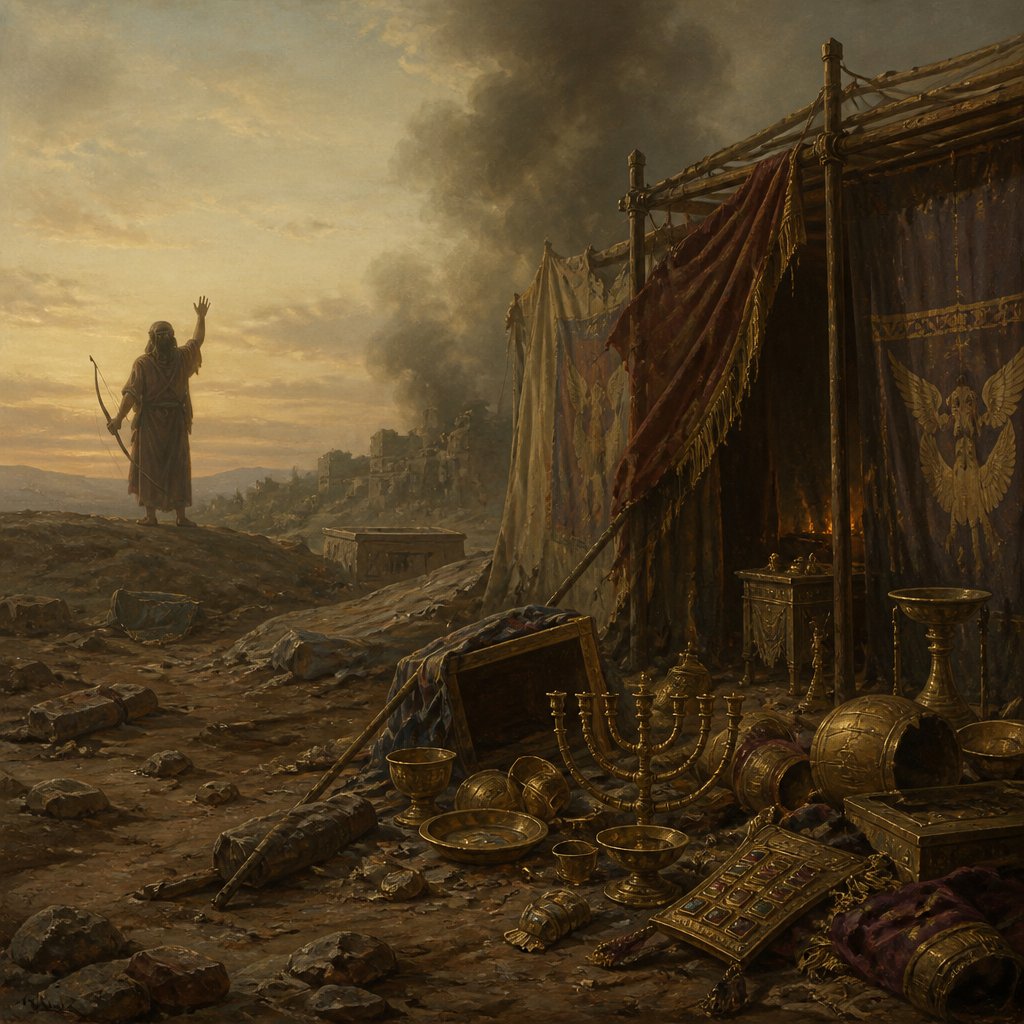
Lamentations-2:4 (KJV): "He hath bent his bow like an enemy: he stood with his right hand as an adversary, and slew all that were pleasant to the eye in the tabernacle of the daughter of Zion: he poured out his fury like fire."
The book of Lamentations is a collection of poetic laments over the destruction of Jerusalem and the Temple in 586 B.C. It is a book that expresses deep sorrow and mourning over the devastation and loss experienced by the people of Israel. The verse Lamentations-2:4 is a powerful and evocative description of the devastation that the people of Israel endured.
In this verse, the imagery of God bending his bow like an enemy and standing with his right hand as an adversary is striking and suggests a sense of betrayal and opposition. The bow is a symbol of warfare and destruction, and the portrayal of God as an enemy and adversary is a stark departure from the usual depictions of God as a protector and ally. This verse suggests that the people of Israel feel abandoned and betrayed by God, as if he has turned against them and become their enemy.
The second part of the verse depicts the consequences of God's anger and fury - the destruction of all that is pleasurable and beautiful in the tabernacle of the daughter of Zion. This image evokes a sense of desolation and loss, as the things that brought joy and beauty to the people have been destroyed and taken away. The pouring out of God's fury like fire is a powerful and vivid image that conveys the intensity and destructiveness of his anger.
The overarching theme of this verse is the devastation and loss that the people of Israel have experienced at the hands of God. It conveys a sense of despair and hopelessness, as the people are faced with the ruins of their once thriving city and the destruction of all that was dear to them. The use of vivid and evocative imagery serves to emphasize the depth of the people's grief and sorrow, as they come to terms with the enormity of their loss.
The context of this verse is the aftermath of the destruction of Jerusalem and the Temple by the Babylonians. The people of Israel are reeling from the devastation and struggling to make sense of the tragedy that has befallen them. The book of Lamentations is a testament to the depth of their sorrow and mourning, as they grapple with the harsh reality of their situation. The imagery of God as an enemy and adversary in this verse reflects the people's feelings of abandonment and betrayal, as they struggle to understand why God has allowed such devastation to occur.
Symbolism plays a significant role in this verse, as it conveys the emotional and spiritual impact of the destruction. The imagery of God bending his bow and standing as an adversary symbolizes the sense of opposition and hostility that the people feel from God. The destruction of all that is pleasant to the eye in the tabernacle of the daughter of Zion symbolizes the loss of beauty and joy in the midst of devastation. And the pouring out of God's fury like fire symbolizes the intensity and destructiveness of his anger.
In conclusion, Lamentations-2:4 is a powerful and poignant expression of the grief and despair experienced by the people of Israel in the aftermath of the destruction of Jerusalem. The vivid imagery and symbolism used in this verse serve to convey the depth of their sorrow and mourning, as they grapple with the devastation and loss that they have endured. It is a testament to the resilience and faith of the people, as they seek to make sense of their suffering and find hope in the midst of despair.
Get our apps


Artwork for Lamentations 2:4

Lamentations 2:4 - "He hath bent his bow like an enemy: he stood with his right hand as an adversary, and slew all that were pleasant to the eye in the tabernacle of the daughter of Zion: he poured out his fury like fire."
"He hath bent his bow like an enemy: he stood with his right hand as an adversary, and slew all that were pleasant to the eye in the tabernacle of the daughter of Zion: he poured out his fury like fire." - Lamentations 2:4

Lamentations 4:2 - "The precious sons of Zion, comparable to fine gold, how are they esteemed as earthen pitchers, the work of the hands of the potter!"

Lamentations 2:1

Lamentations 2:1

Lamentations 2:1

Lamentations 4:4 - "The tongue of the sucking child cleaveth to the roof of his mouth for thirst: the young children ask bread, and no man breaketh it unto them."
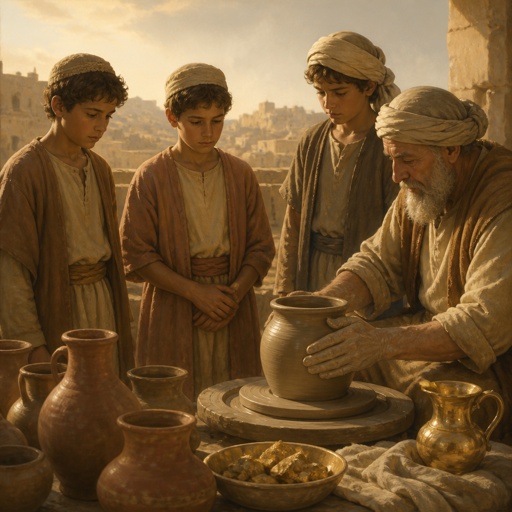
"The precious sons of Zion, comparable to fine gold, how are they esteemed as earthen pitchers, the work of the hands of the potter!" - Lamentations 4:2

2 Chronicles 35:25 - "¶ And Jeremiah lamented for Josiah: and all the singing men and the singing women spake of Josiah in their lamentations to this day, and made them an ordinance in Israel: and, behold, they are written in the lamentations."

Lamentations 4:5 - "They that did feed delicately are desolate in the streets: they that were brought up in scarlet embrace dunghills."

Lamentations 5:4 - "We have drunken our water for money; our wood is sold unto us."

Lamentations 4:13 - "¶ For the sins of her prophets, and the iniquities of her priests, that have shed the blood of the just in the midst of her,"

Lamentations 4:9 - "They that be slain with the sword are better than they that be slain with hunger: for these pine away, stricken through for want of the fruits of the field."

Lamentations 5:2 - "Our inheritance is turned to strangers, our houses to aliens."

Lamentations 4:10 - "The hands of the pitiful women have sodden their own children: they were their meat in the destruction of the daughter of my people."

Lamentations 3:4 - "My flesh and my skin hath he made old; he hath broken my bones."

Lamentations 4:8 - "Their visage is blacker than a coal; they are not known in the streets: their skin cleaveth to their bones; it is withered, it is become like a stick."

Lamentations 4:16 - "The anger of the LORD hath divided them; he will no more regard them: they respected not the persons of the priests, they favoured not the elders."

Lamentations 3:2 - "He hath led me, and brought me into darkness, but not into light."

Lamentations 4:14 - "They have wandered as blind men in the streets, they have polluted themselves with blood, so that men could not touch their garments."

Lamentations 4:19 - "Our persecutors are swifter than the eagles of the heaven: they pursued us upon the mountains, they laid wait for us in the wilderness."

Lamentations 4:6 - "For the punishment of the iniquity of the daughter of my people is greater than the punishment of the sin of Sodom, that was overthrown as in a moment, and no hands stayed on her."

Lamentations 4:12 - "The kings of the earth, and all the inhabitants of the world, would not have believed that the adversary and the enemy should have entered into the gates of Jerusalem."

Lamentations 4:1 - "How is the gold become dim! how is the most fine gold changed! the stones of the sanctuary are poured out in the top of every street."

Lamentations 4:17 - "As for us, our eyes as yet failed for our vain help: in our watching we have watched for a nation that could not save us."

Lamentations 4:18 - "They hunt our steps, that we cannot go in our streets: our end is near, our days are fulfilled; for our end is come."

Lamentations 1:4 The roads to Zion mourn, for no one comes to her appointed festivals.

Lamentations 1:4 The roads to Zion mourn, for no one comes to her appointed festivals.

Lamentations 1:4 The roads to Zion mourn, for no one comes to her appointed festivals.

Micah 2:4 - "¶ In that day shall one take up a parable against you, and lament with a doleful lamentation, and say, We be utterly spoiled: he hath changed the portion of my people: how hath he removed it from me! turning away he hath divided our fields."