What does Lamentations 3:31-33 mean?
“For the Lord will not cast off for ever: But though he cause grief, yet will he have compassion according to the multitude of his mercies. For he doth not afflict willingly nor grieve the children of men.” — Lamentations 3:31-33
Lamentations 3:31-33 in the King James Version (KJV) reads, "For the Lord will not cast off for ever: But though he cause grief, yet will he have compassion according to the multitude of his mercies. For he doth not afflict willingly nor grieve the children of men."
Lamentations is a book of the Old Testament that is often associated with sorrow and lamentation. It was traditionally attributed to the prophet Jeremiah, who is said to have written it in the aftermath of the fall of Jerusalem to the Babylonians in 586 BC. The book is a collection of poetic laments over the destruction of the city and the suffering of its people, and it reflects on the significance of these events in the context of the Israelites' relationship with God.
The passage in Lamentations 3:31-33 speaks to the enduring compassion and mercy of God, even in the face of suffering and affliction. It begins with a declaration that the Lord will not cast off his people forever. This statement conveys the belief that God's love and care are eternal and that, despite hardships and trials, his people can trust in his faithfulness.
The verse goes on to acknowledge the reality of grief and suffering, recognizing that God may cause grief but also affirming that he will have compassion according to the multitude of his mercies. This speaks to the complex nature of God's relationship with his people, acknowledging that while there may be moments of pain and distress, God's ultimate response is one of compassion and mercy. This reflects the belief that God's love and benevolence far outweigh any temporary suffering experienced by his children.
The passage concludes with a statement that God does not afflict willingly nor grieve the children of men. This is a recognition that suffering is not something that God enjoys or takes pleasure in. Rather, it suggests that suffering is a consequence of the brokenness of the world and the choices made by humanity. This understanding of suffering is important because it shifts the focus from seeing God as the source of pain to recognizing him as the source of comfort and healing in the midst of suffering.
In terms of themes, this passage from Lamentations 3 highlights the themes of God's faithfulness, compassion, and mercy in the face of suffering. It conveys a sense of hope and trust in the enduring love of God, even in the midst of difficult circumstances. It also emphasizes the idea that suffering is not the end, and that God's compassion and mercy will ultimately prevail.
In its historical context, this passage would have been particularly relevant to the Israelites who were experiencing the devastation of their city and the loss of their homes and loved ones. It would have provided them with a sense of comfort and assurance that God had not abandoned them, and that his compassion and mercy would sustain them through their trials.
Symbolically, this passage represents the enduring nature of God's love and care. It serves as a reminder that even in the face of suffering and affliction, God is present and compassionate towards his people. The imagery of God's mercies being "multitude" conveys the abundance and richness of his compassion, which is available to all who seek it. This symbolizes the idea that no matter how great the suffering, God's love and mercy are even greater.
In conclusion, Lamentations 3:31-33 in the KJV is a powerful and reassuring passage that speaks to the enduring compassion and mercy of God in the midst of suffering. Its themes of faithfulness, compassion, and hope make it a source of comfort and encouragement for those facing difficult circumstances. Its message of God's love and care, even in the midst of grief and pain, resonates across time and continues to provide solace and strength to believers today.
Get our apps


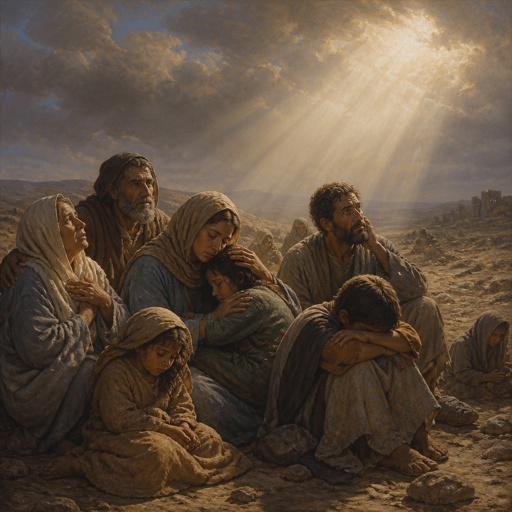
Artwork for Lamentations 3:31-33

Lamentations 3:31-33 - "For no one is cast off by the Lord forever. Though he brings grief, he will show compassion, so great is his unfailing love. For he does not willingly bring affliction or grief to anyone."

"For no one is cast off by the Lord forever. Though he brings grief, he will show compassion, so great is his unfailing love. For he does not willingly bring affliction or grief to anyone." - Lamentations 3:31-33

"For no one is cast off by the Lord forever. Though he brings grief, he will show compassion, so great is his unfailing love. For he does not willingly bring affliction or grief to anyone." - Lamentations 3:31-33

Lamentations 3:31 - "For the Lord will not cast off for ever:"

Lamentations 3:33 - "For he doth not afflict willingly nor grieve the children of men."

"For the Lord will not cast off for ever:" - Lamentations 3:31
"For he doth not afflict willingly nor grieve the children of men." - Lamentations 3:33

Lamentations 3:1-18

Lamentations 3:31-32 - "For no one is cast off by the Lord forever. Though he brings grief, he will show compassion, so great is his unfailing love."

Jeremiah 31:31-33

Jeremiah 31:31-33

Lamentations 3:1 - "I am the man that hath seen affliction by the rod of his wrath."

Lamentations 3:3 - "Surely against me is he turned; he turneth his hand against me all the day."

Exodus 26:31-33

Numbers 31:33 - "And threescore and twelve thousand beeves,"

Lamentations 3:13

Numbers 33:31 - "And they departed from Moseroth, and pitched in Bene-jaakan."

"For no one is cast off by the Lord forever. Though he brings grief, he will show compassion, so great is his unfailing love." - Lamentations 3:31-32

"Surely against me is he turned; he turneth his hand against me all the day." - Lamentations 3:3

Lamentations 3:23 - "They are new every morning: great is thy faithfulness."

Lamentations 5:3 - "We are orphans and fatherless, our mothers are as widows."

Lamentations 3:36 - "To subvert a man in his cause, the Lord approveth not."

"I am the man that hath seen affliction by the rod of his wrath." - Lamentations 3:1

"And threescore and twelve thousand beeves," - Numbers 31:33

Lamentations 3:27 - "It is good for a man that he bear the yoke in his youth."

Lamentations 3:38 - "Out of the mouth of the most High proceedeth not evil and good?"

Lamentations 3:47 - "Fear and a snare is come upon us, desolation and destruction."

Lamentations 3:19 - "Remembering mine affliction and my misery, the wormwood and the gall."

Job 31:33 - "If I covered my transgressions as Adam, by hiding mine iniquity in my bosom:"

Lamentations 3:34 - "To crush under his feet all the prisoners of the earth,"