What does Lamentations 3:57 mean?
“Thou drewest near in the day that I called upon thee: thou saidst, Fear not.” — Lamentations 3:57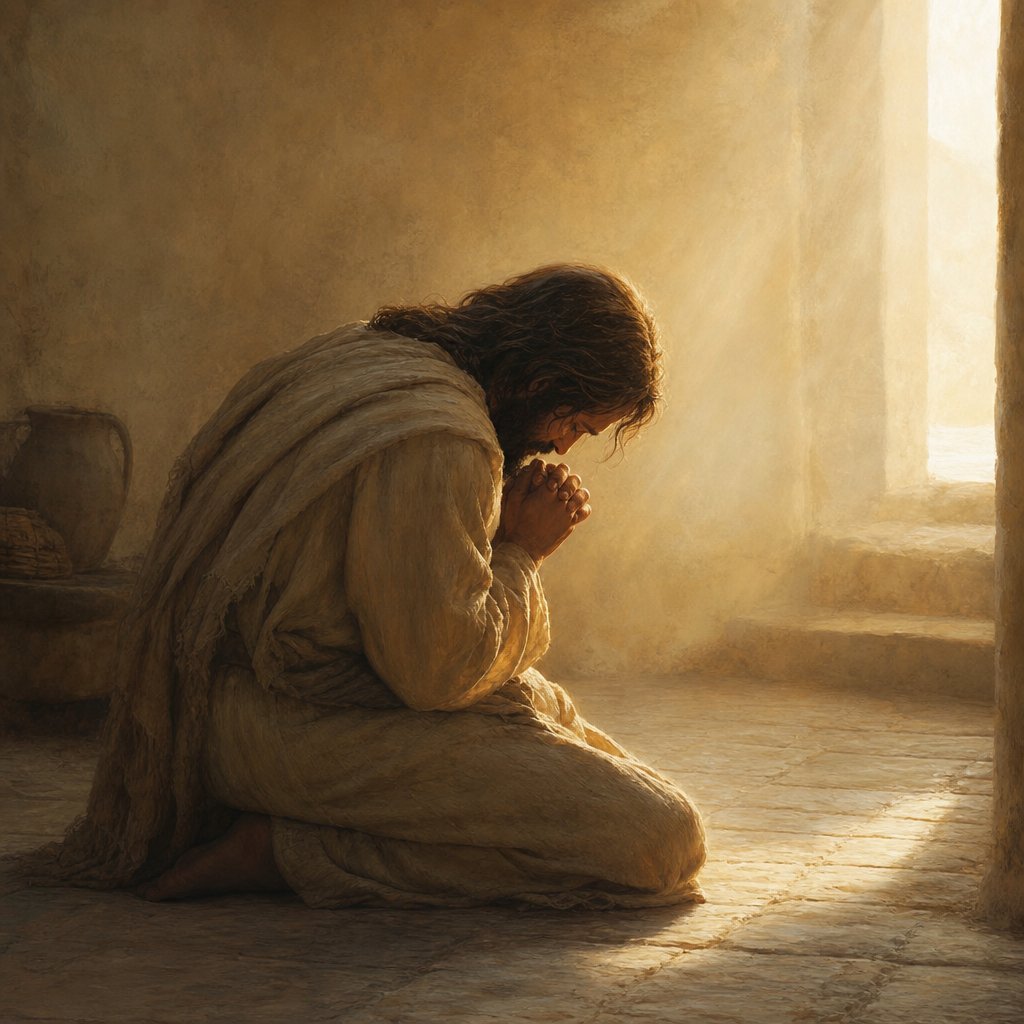
Lamentations 3:57 in the King James Version reads, “Thou drewest near in the day that I called upon thee: thou saidst, Fear not.” In its plain sense, the verse is a testimony of answered prayer: the speaker, overwhelmed by affliction, remembers a specific moment when he cried out to God and found that God did not remain distant. The Lord “drewest near,” not merely by sending relief at arm’s length, but by coming close in presence and attention. The second half of the verse gives the heart of that nearness: God speaks into terror with the words, “Fear not,” a divine reassurance that steadies the soul even when circumstances have not yet changed.
The context is crucial. Lamentations is the grief-song of Judah after the fall of Jerusalem. The book is steeped in desolation, loss, shame, and the felt weight of God’s judgment. Chapter 3, the longest chapter, is intensely personal: the speaker describes himself as a man who has “seen affliction,” hemmed in, broken, and made to dwell “in dark places.” Yet this chapter also contains the turning point of the whole book, where despair gives way to deliberate hope grounded in God’s character: “It is of the LORD’S mercies that we are not consumed… Great is thy faithfulness.” Against that backdrop, Lamentations 3:57 belongs to a stretch where the speaker moves from describing suffering to pleading for divine attention and justice, and then recalling how God has, in fact, heard him before. The verse is not denial of ruin; it is faith insisting that ruin is not the final word.
Several themes converge in the line “Thou drewest near in the day that I called upon thee.” First is the theme of prayer under judgment. Lamentations never pretends Israel is innocent; the suffering has moral meaning. Yet the verse shows that even in chastening, God remains approachable. The speaker does not say he earned God’s closeness, but that he “called,” and God “drewest near.” This highlights the covenant reality that the Lord may correct His people without abandoning them. Second is the theme of divine immediacy. The language suggests timely help: “in the day” points to the moment of crisis, the hour when fear is at its sharpest. God’s nearness is not only a doctrine; it is an intervention in lived time, when the soul is most aware of its need.
The symbolism of nearness matters. In Scripture, distance from God often signifies alienation, exile, and spiritual dislocation, while nearness implies acceptance, attention, and the restoration of relationship. Jerusalem’s destruction could feel like God had withdrawn, as if the heavens were shut. Against that feeling, “Thou drewest near” functions like a reversal of exile at the level of the heart: even if the people are scattered and the temple is ruined, the Lord can still come close to the one who calls upon Him. It also evokes the imagery of a judge or king who steps down to hear a plea, or of a rescuer who closes the distance to someone trapped. In a book full of images of siege, pit, and captivity, the God who “drewest near” is the opposite of an unreachable deity; He is personal, present, and responsive.
The words “thou saidst, Fear not” carry their own rich biblical resonance. “Fear not” is the language God speaks when He discloses Himself to the fearful—when human beings are overwhelmed by danger, guilt, uncertainty, or the sheer weight of divine holiness. Here it speaks into a particular fear: the fear that judgment means rejection without remedy, the fear that suffering means God is gone, the fear that one’s cry disappears into silence. By placing “Fear not” on God’s lips, the verse presents comfort as something God gives through His word. The comfort is not only emotional soothing; it is theological reassurance. God’s speech asserts that fear is no longer the ruling truth because God’s nearness has entered the moment.
The significance of Lamentations 3:57, then, is that it preserves hope inside lament without cheapening grief. The verse does not claim that devastation is an illusion, or that consequences are unreal. It insists that even in the darkest season—especially “in the day” of urgent calling—God can draw near, and His nearness is marked by a word that disarms despair: “Fear not.” In the landscape of Lamentations, where sorrow is honest and repentance is implied, this verse stands as a witness that the God who judges sin is also the God who hears prayer, approaches the broken, and speaks peace to those who tremble.
Get our apps


Artwork for Lamentations 3:57

Lamentations 3:57 - "Thou drewest near in the day that I called upon thee: thou saidst, Fear not."

"Thou drewest near in the day that I called upon thee: thou saidst, Fear not." - Lamentations 3:57
"Thou drewest near in the day that I called upon thee: thou saidst, Fear not." - Lamentations 3:57

Isaiah 57:3 - "¶ But draw near hither, ye sons of the sorceress, the seed of the adulterer and the whore."

Lamentations 3:13

Lamentations 3:1-18

Lamentations 3:31 - "For the Lord will not cast off for ever:"

Lamentations 3:23 - "They are new every morning: great is thy faithfulness."

Lamentations 5:3 - "We are orphans and fatherless, our mothers are as widows."

Lamentations 3:36 - "To subvert a man in his cause, the Lord approveth not."

Lamentations 3:3 - "Surely against me is he turned; he turneth his hand against me all the day."

Lamentations 3:38 - "Out of the mouth of the most High proceedeth not evil and good?"

Lamentations 3:27 - "It is good for a man that he bear the yoke in his youth."

Lamentations 3:47 - "Fear and a snare is come upon us, desolation and destruction."

Lamentations 3:19 - "Remembering mine affliction and my misery, the wormwood and the gall."

Lamentations 3:34 - "To crush under his feet all the prisoners of the earth,"

Lamentations 3:50 - "Till the LORD look down, and behold from heaven."

Lamentations 3:29 - "He putteth his mouth in the dust; if so be there may be hope."

Lamentations 3:2 - "He hath led me, and brought me into darkness, but not into light."

Lamentations 3:21 - "This I recall to my mind, therefore have I hope."

Lamentations 3:37 - "¶ Who is he that saith, and it cometh to pass, when the Lord commandeth it not?"

Lamentations 3:49 - "Mine eye trickleth down, and ceaseth not, without any intermission,"

Lamentations 3:45 - "Thou hast made us as the offscouring and refuse in the midst of the people."

Lamentations 3:20 - "My soul hath them still in remembrance, and is humbled in me."

Lamentations 3:35 - "To turn aside the right of a man before the face of the most High,"

Lamentations 3:63 - "Behold their sitting down, and their rising up; I am their musick."

Lamentations 3:33 - "For he doth not afflict willingly nor grieve the children of men."

Lamentations 3:46 - "All our enemies have opened their mouths against us."

Lamentations 3:42 - "We have transgressed and have rebelled: thou hast not pardoned."

Lamentations 3:65 - "Give them sorrow of heart, thy curse unto them."