What does Lamentations 5:9 mean?
“We gat our bread with the peril of our lives because of the sword of the wilderness.” — Lamentations 5:9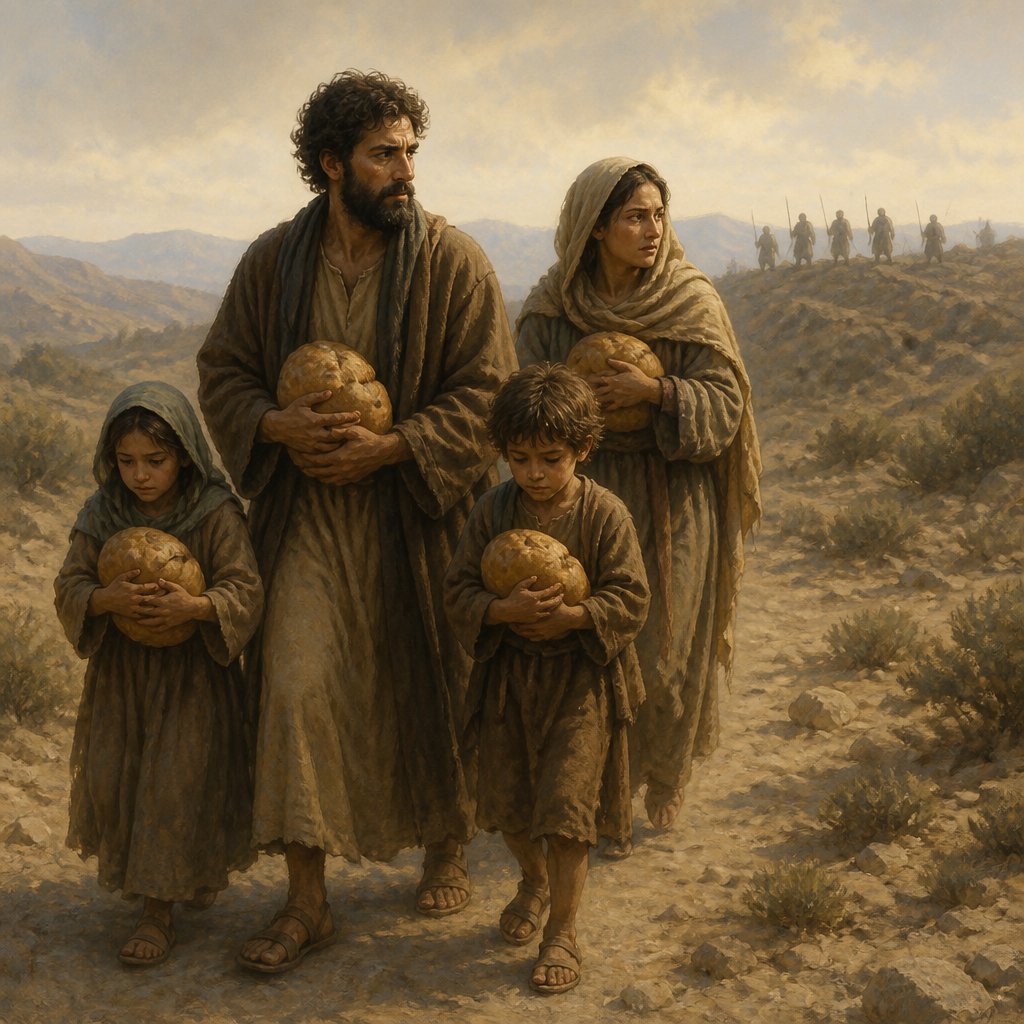
Lamentations 5:9 in the King James Version of the Bible reads, "We gat our bread with the peril of our lives because of the sword of the wilderness."
This verse comes from the book of Lamentations, which is a collection of poetic laments expressing grief and sorrow over the destruction of Jerusalem and the exile of the Israelites. It is traditionally attributed to the prophet Jeremiah, who witnesses the devastation of his beloved city and its people.
In Lamentations 5:9, the speaker laments the hardship and danger they faced in obtaining essential sustenance, specifically bread. The phrase "We gat our bread with the peril of our lives" speaks to the extreme difficulty and risk involved in procuring food. The "sword of the wilderness" further emphasizes the danger and threat the people faced in their pursuit of sustenance. The wilderness was a place of desolation and peril, and the presence of the sword signifies the constant threat of violence and death.
This verse captures the desperate and dire circumstances of the Israelites during the time of the city's destruction and the subsequent exile. It reflects the profound suffering and insecurity experienced by the people as they struggled to survive in a hostile and dangerous environment. The imagery of risking one's life for a basic necessity like bread underscores the severity of their plight and the immense hardships they endured.
The themes present in Lamentations 5:9 are profound and resonate with universal human experiences. One of the central themes is suffering, as the verse vividly depicts the extreme hardships and dangers faced by the Israelites. Their physical and emotional anguish is palpable, highlighting the profound impact of the traumatic events that befell them.
Another prominent theme is the fragility of human existence and the vulnerability of life in the face of adversity. The perilous quest for bread symbolizes the precarious nature of survival and the harsh realities of living in a hostile and unforgiving world. This theme speaks to the universal experience of grappling with uncertainty and the constant struggle for sustenance and security.
Additionally, the verse speaks to the spiritual and existential crisis experienced by the Israelites. The wilderness, traditionally associated with spiritual testing and struggle, becomes a menacing backdrop for their trials and tribulations. The sword represents not only physical danger but also the spiritual and moral challenges that the people faced in the midst of their suffering.
Symbolically, the bread can also be interpreted as a metaphor for sustenance in a broader sense, encompassing not only physical nourishment but also spiritual and emotional sustenance. The desperate pursuit of bread reflects the fundamental human need for sustenance and the lengths to which individuals will go to satisfy that need.
In a broader historical and cultural context, Lamentations 5:9 serves as a poignant meditation on the consequences of human folly and the devastating impact of war and conflict. It stands as a powerful testament to the enduring legacy of suffering and resilience, speaking to the universal themes of loss, survival, and the enduring human spirit.
In conclusion, Lamentations 5:9 is a verse that encapsulates the profound suffering, hardship, and vulnerability experienced by the Israelites during a time of crisis. It reflects the universal themes of suffering, survival, and the fragility of human existence, while also serving as a poignant reminder of the enduring human spirit in the face of adversity. As a part of the larger narrative of Lamentations, it offers a profound and timeless meditation on the nature of human suffering and the capacity for resilience in the midst of profound loss and despair.
Get our apps


Artwork for Lamentations 5:9

Lamentations 5:9 - "We gat our bread with the peril of our lives because of the sword of the wilderness."
"We gat our bread with the peril of our lives because of the sword of the wilderness." - Lamentations 5:9

Lamentations 5:5 - "Our necks are under persecution: we labour, and have no rest."

Lamentations 5:11 - "They ravished the women in Zion, and the maids in the cities of Judah."

Lamentations 5:3 - "We are orphans and fatherless, our mothers are as widows."

Lamentations 5:2 - "Our inheritance is turned to strangers, our houses to aliens."

Lamentations 5:17 - "For this our heart is faint; for these things our eyes are dim."

Lamentations 5:7 - "Our fathers have sinned, and are not; and we have borne their iniquities."

Lamentations 5:15 - "The joy of our heart is ceased; our dance is turned into mourning."

Lamentations 5:18 - "Because of the mountain of Zion, which is desolate, the foxes walk upon it."

Lamentations 5:6 - "We have given the hand to the Egyptians, and to the Assyrians, to be satisfied with bread."

Lamentations 5:10 - "Our skin was black like an oven because of the terrible famine."

Lamentations 5:13 - "They took the young men to grind, and the children fell under the wood."

Lamentations 5:12 - "Princes are hanged up by their hand: the faces of elders were not honoured."

Lamentations 3:5 - "He hath builded against me, and compassed me with gall and travail."

Lamentations 5:14 - "The elders have ceased from the gate, the young men from their musick."

Lamentations 5:19 – "You, Lord, reign forever; your throne endures from generation to generation."

Lamentations 5:19 - "Thou, O LORD, remainest for ever; thy throne from generation to generation."
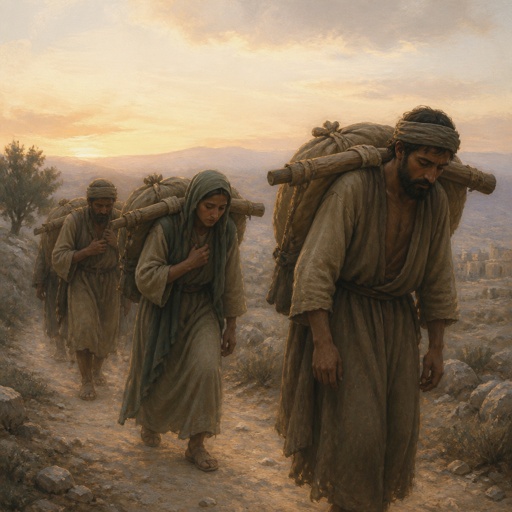
"Our necks are under persecution: we labour, and have no rest." - Lamentations 5:5

Lamentations 5:8 - "Servants have ruled over us: there is none that doth deliver us out of their hand."

Lamentations 5:1 - "Remember, O LORD, what is come upon us: consider, and behold our reproach."

Lamentations 5:22 - "But thou hast utterly rejected us; thou art very wroth against us."

Lamentations 4:5 - "They that did feed delicately are desolate in the streets: they that were brought up in scarlet embrace dunghills."

Lamentations 5:4 - "We have drunken our water for money; our wood is sold unto us."

Lamentations 5:20 - "Wherefore dost thou forget us for ever, and forsake us so long time?"

Lamentations 5:16 - "The crown is fallen from our head: woe unto us, that we have sinned!"

Lamentations 4:9 - "They that be slain with the sword are better than they that be slain with hunger: for these pine away, stricken through for want of the fruits of the field."

Lamentations 3:9 - "He hath inclosed my ways with hewn stone, he hath made my paths crooked."
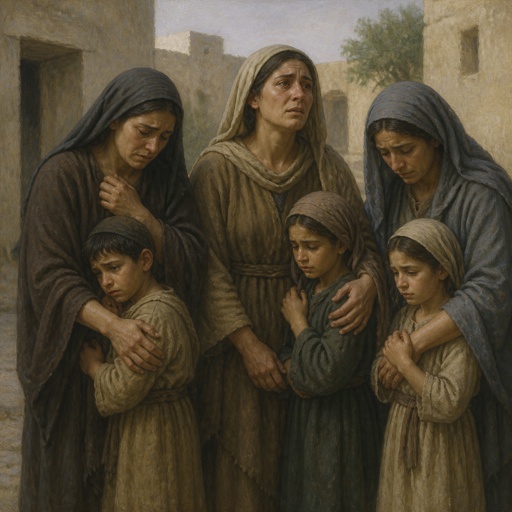
"We are orphans and fatherless, our mothers are as widows." - Lamentations 5:3
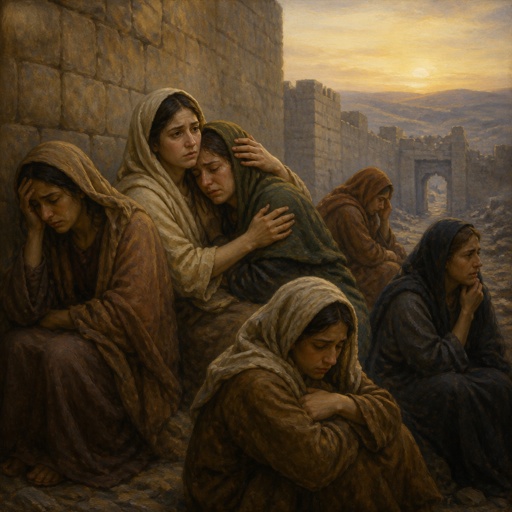
"They ravished the women in Zion, and the maids in the cities of Judah." - Lamentations 5:11