
Leviticus 10:8 in the King James Version of the Bible reads: "And the Lord spake unto Aaron, saying."
The book of Leviticus is the third book of the Hebrew Bible and the Old Testament. It is a book that mainly focuses on ritual and moral laws for the Israelite people, and it is often attributed to Moses. In this specific verse, the Lord speaks directly to Aaron, who was the brother of Moses and the first High Priest chosen by God.
This verse occurs in the context of the ordination of Aaron and his sons as priests, a significant event in the Israelites' history. In verse 1-7 of the same chapter, we read about the tragic deaths of Aaron's sons, Nadab and Abihu, who offered unauthorized fire and were killed by the Lord as a result. This demonstrates the seriousness of following the specific instructions and commands given by the Lord, as failure to do so can result in severe consequences.
In verse 8, the Lord speaks to Aaron, possibly to give him further instructions or as a way to reaffirm his authority and role as the High Priest. This direct communication from the Lord to Aaron highlights the importance of obedience and submission to God's will, especially for those in positions of leadership and authority within the community.
This verse also symbolizes the direct relationship between God and his chosen leaders, emphasizing the role of divine communication and guidance in fulfilling their responsibilities. This communication is essential for the successful implementation of the laws and rituals outlined in Leviticus, ensuring that the Israelites maintain their relationship with God and live according to his standards.
The broader theme of Leviticus, including this verse, is the idea of holiness and the importance of maintaining purity and sanctity in the presence of God. The laws and rituals prescribed in this book were meant to set the Israelites apart as a holy people, and the direct communication between God and the priests further reinforces the significance of this holiness.
In a broader sense, this verse can also be seen as a reminder of the importance of being open to receiving and following God's guidance in our lives. Just as Aaron was instructed by the Lord, we too should be open to hearing from God and obeying his commands, trusting that his guidance will lead us in the right direction and help us fulfill our purpose.
In conclusion, Leviticus 10:8 is a verse that underscores the significance of divine communication and obedience to God's will, particularly for those in positions of leadership and authority. This verse serves as a reminder of the importance of holiness and the need to maintain a direct relationship with God in order to fulfill our responsibilities and live according to his standards. It also encourages us to be open to receiving and following God's guidance in our own lives, trusting that his direction will lead us in the right path.
Get our apps


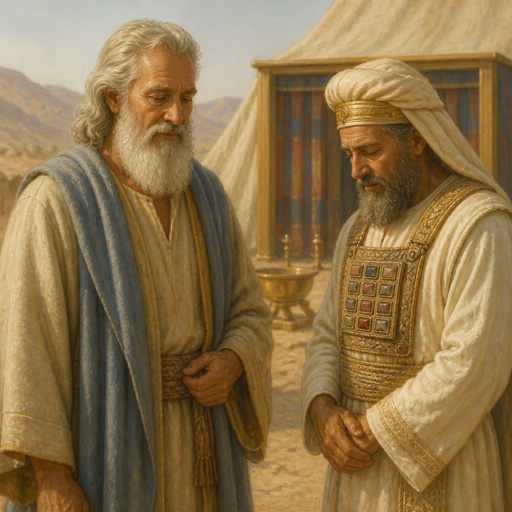
Artwork for Leviticus 10:8

Leviticus 10:8 - "¶ And the LORD spake unto Aaron, saying,"

"¶ And the LORD spake unto Aaron, saying," - Leviticus 10:8

Leviticus 8:10 - "And Moses took the anointing oil, and anointed the tabernacle and all that was therein, and sanctified them."
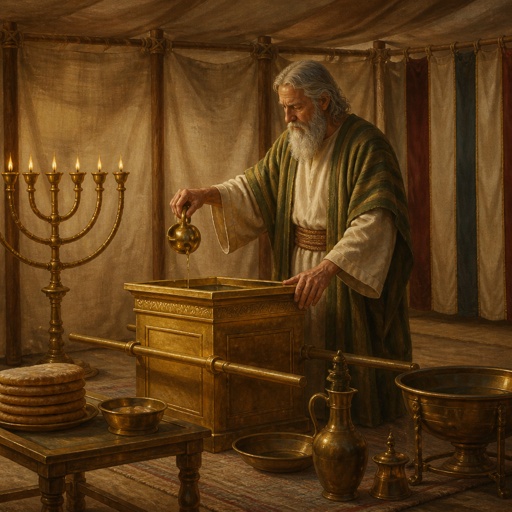
"And Moses took the anointing oil, and anointed the tabernacle and all that was therein, and sanctified them." - Leviticus 8:10

Leviticus 16:8

Leviticus 8:30

Leviticus 10:10 - "And that ye may put difference between holy and unholy, and between unclean and clean;"
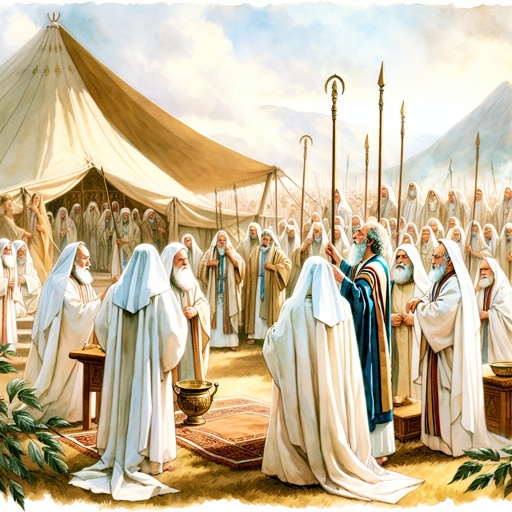
Leviticus 8:1-12

leviticus 16:7-10

Leviticus 8:8 - "And he put the breastplate upon him: also he put in the breastplate the Urim and the Thummim."

Leviticus 6:8 - "¶ And the LORD spake unto Moses, saying,"

Leviticus 10:20 - "And when Moses heard that, he was content."

Leviticus 8:1 - "And the LORD spake unto Moses, saying,"

Leviticus 8:32 - "And that which remaineth of the flesh and of the bread shall ye burn with fire."

Leviticus 8:6 - "And Moses brought Aaron and his sons, and washed them with water."

Leviticus 8:19 - "And he killed it; and Moses sprinkled the blood upon the altar round about."

Leviticus 8:3 - "And gather thou all the congregation together unto the door of the tabernacle of the congregation."

Leviticus 8:5 - "And Moses said unto the congregation, This is the thing which the LORD commanded to be done."

Leviticus 8:20 - "And he cut the ram into pieces; and Moses burnt the head, and the pieces, and the fat."

Leviticus 18:8 - "The nakedness of thy father's wife shalt thou not uncover: it is thy father's nakedness."

Leviticus 10:2 - "And there went out fire from the LORD, and devoured them, and they died before the LORD."

Leviticus 26:10 - "And ye shall eat old store, and bring forth the old because of the new."

Leviticus 11:8 - "Of their flesh shall ye not eat, and their carcase shall ye not touch; they are unclean to you."
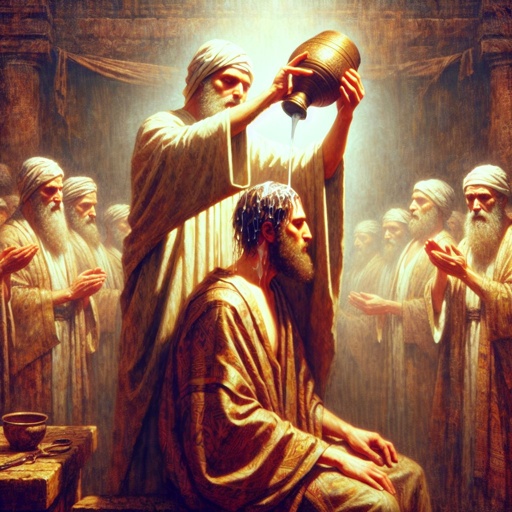
Leviticus 8:12 - "And he poured of the anointing oil upon Aaron's head, and anointed him, to sanctify him."

Leviticus 9:8 - "¶ Aaron therefore went unto the altar, and slew the calf of the sin offering, which was for himself."

Leviticus 10:5 - "So they went near, and carried them in their coats out of the camp; as Moses had said."

Leviticus 8:36 - "So Aaron and his sons did all things which the LORD commanded by the hand of Moses."
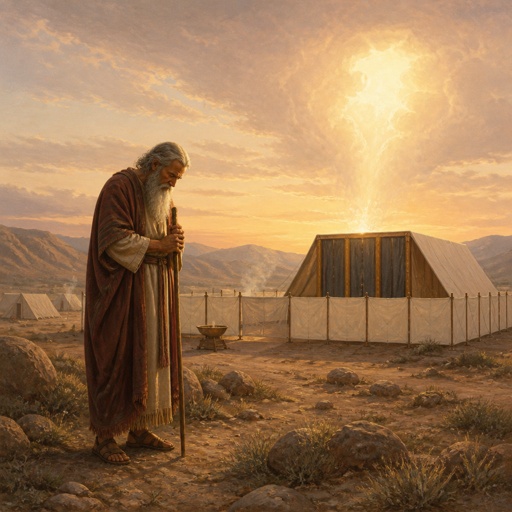
"¶ And the LORD spake unto Moses, saying," - Leviticus 6:8

"And the LORD spake unto Moses, saying," - Leviticus 8:1
"And when Moses heard that, he was content." - Leviticus 10:20