What does Leviticus 11:7 mean?
“And the swine, though he divide the hoof, and be clovenfooted, yet he cheweth not the cud; he is unclean to you.” — Leviticus 11:7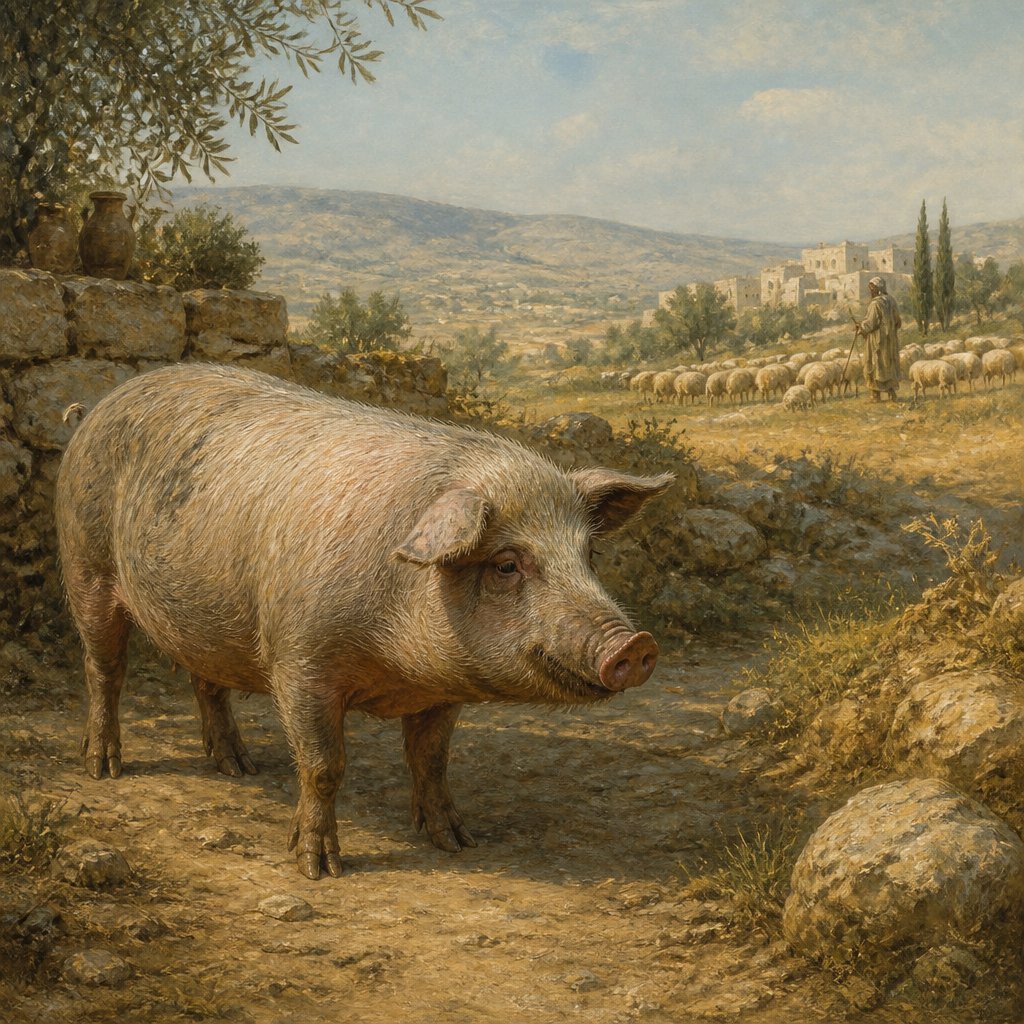
Leviticus 11:7 in the King James Version of the Bible reads, "And the swine, though he divide the hoof, and be cloven footed, yet he cheweth not the cud; he is unclean to you." This verse is part of the laws given to the Israelites by God through Moses, and it pertains to the dietary restrictions that the Israelites were to follow. The dietary laws are found in Leviticus 11 and Deuteronomy 14, and they outline which animals are considered clean and suitable for consumption, and which are unclean and not to be eaten.
The specific prohibition of consuming swine in Leviticus 11:7 is part of a broader list of unclean animals that the Israelites were to avoid eating. The reason for this prohibition has been the subject of much speculation and debate among biblical scholars and theologians. Some have suggested that the dietary laws were given for health and hygiene reasons, as certain animals may have carried diseases or parasites that could be harmful to humans if consumed. Others believe that the laws were given as a way to set the Israelites apart from other nations and to maintain their distinct identity as God's chosen people.
From a theological perspective, the dietary laws can be seen as a way for the Israelites to demonstrate their obedience to God and to live in accordance with His will. By following these laws, the Israelites were acknowledging God's authority over every aspect of their lives, including what they ate. It was a way for them to demonstrate their trust and reliance on God for their sustenance and well-being.
The symbolism of the dietary laws goes beyond the physical act of eating and extends to the spiritual and moral realm. The distinction between clean and unclean animals can be seen as a metaphor for the difference between holiness and impurity. By abstaining from unclean animals, the Israelites were reminded to strive for moral purity and to avoid anything that would defile them spiritually.
Furthermore, the dietary laws served as a reminder of the Israelites' allegiance to God. By following these laws, they were demonstrating their commitment to God's covenant and their desire to live in accordance with His expectations. It was a way for them to express their gratitude for God's blessings and to honor Him in all aspects of their lives.
In a broader context, the dietary laws can also be seen as a foreshadowing of the coming of Christ. The New Testament makes it clear that the dietary laws were fulfilled and transcended by the redemptive work of Jesus. In Mark 7:19, Jesus declares all foods clean, signaling a shift in the way that God's people were to relate to the dietary restrictions of the past. This shift symbolizes the broader movement from the old covenant to the new covenant, in which the laws of the old covenant are fulfilled and transformed by the grace of God through Jesus Christ.
In conclusion, Leviticus 11:7 and the broader dietary laws play an important role in shaping the identity and faith of the Israelites. They serve as a reminder of the Israelites' commitment to God, both in their physical sustenance and their moral conduct. These laws also foreshadow the redemptive work of Jesus and the transition from the old covenant to the new covenant. Studying and reflecting on these laws can deepen our understanding of God's character and the ways in which He calls His people to live in obedience and holiness.
Get our apps


Artwork for Leviticus 11:7

Leviticus 11:7 - "And the swine, though he divide the hoof, and be clovenfooted, yet he cheweth not the cud; he is unclean to you."
"And the swine, though he divide the hoof, and be clovenfooted, yet he cheweth not the cud; he is unclean to you." - Leviticus 11:7

Leviticus 7:11 - "And this is the law of the sacrifice of peace offerings, which he shall offer unto the LORD."
"And this is the law of the sacrifice of peace offerings, which he shall offer unto the LORD." - Leviticus 7:11
Leviticus 11:22

Leviticus 17:7
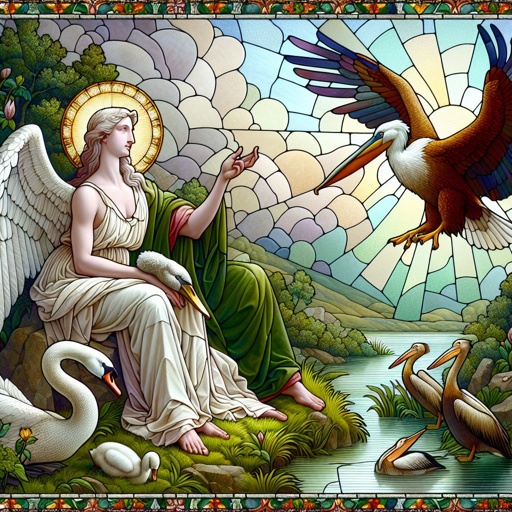
Leviticus 11:18 - "And the swan, and the pelican, and the gier eagle,"
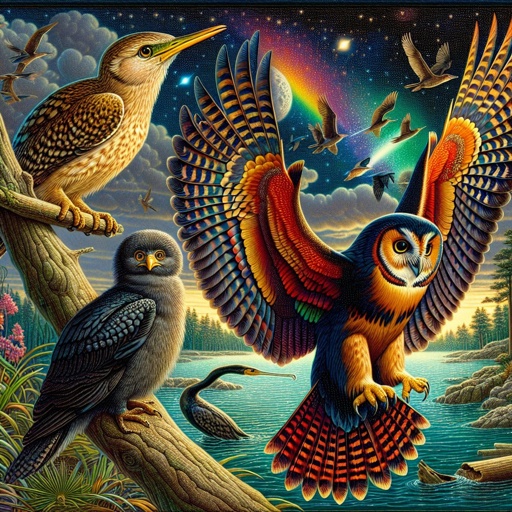
Leviticus 11:17 - "And the little owl, and the cormorant, and the great owl,"

Leviticus 11:14 - "And the vulture, and the kite after his kind;"
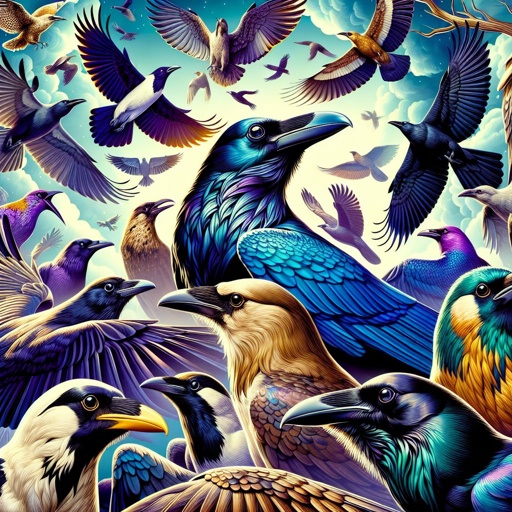
Leviticus 11:15 - "Every raven after his kind;"

leviticus 16:7-10

Leviticus 11:30 - "And the ferret, and the chameleon, and the lizard, and the snail, and the mole."

Leviticus 11:19 - "And the stork, the heron after her kind, and the lapwing, and the bat."

Leviticus 7:22 - "¶ And the LORD spake unto Moses, saying,"

Leviticus 7:28 - "¶ And the LORD spake unto Moses, saying,"

Leviticus 9:11 - "And the flesh and the hide he burnt with fire without the camp."

Leviticus 7:1 - "Likewise this is the law of the trespass offering: it is most holy."

Leviticus 7:7 - "As the sin offering is, so is the trespass offering: there is one law for them: the priest that maketh atonement therewith shall have it."

Leviticus 19:7 - "And if it be eaten at all on the third day, it is abominable; it shall not be accepted."

Leviticus 11:1 - "And the LORD spake unto Moses and to Aaron, saying unto them,"

Leviticus 11:16 - "And the owl, and the night hawk, and the cuckow, and the hawk after his kind,"

Leviticus 7:17 - "But the remainder of the flesh of the sacrifice on the third day shall be burnt with fire."

Leviticus 11:41 - "And every creeping thing that creepeth upon the earth shall be an abomination; it shall not be eaten."

Leviticus 19:11 - "¶ Ye shall not steal, neither deal falsely, neither lie one to another."

"And the swan, and the pelican, and the gier eagle," - Leviticus 11:18

Leviticus 11:12 - "Whatsoever hath no fins nor scales in the waters, that shall be an abomination unto you."

Leviticus 11:8 - "Of their flesh shall ye not eat, and their carcase shall ye not touch; they are unclean to you."

Leviticus 26:11 - "And I will set my tabernacle among you: and my soul shall not abhor you."

Leviticus 3:11 - "And the priest shall burn it upon the altar: it is the food of the offering made by fire unto the LORD."

Leviticus 11:24 - "And for these ye shall be unclean: whosoever toucheth the carcase of them shall be unclean until the even."