What does Leviticus 12:6 mean?
"And when the days of her purifying are fulfilled, for a son, or for a daughter, she shall bring a lamb of the first year for a burnt offering, and a young pigeon, or a turtledove, for a sin offering, unto the door of the tabernacle of the congregation, unto the priest:" - Leviticus 12:6
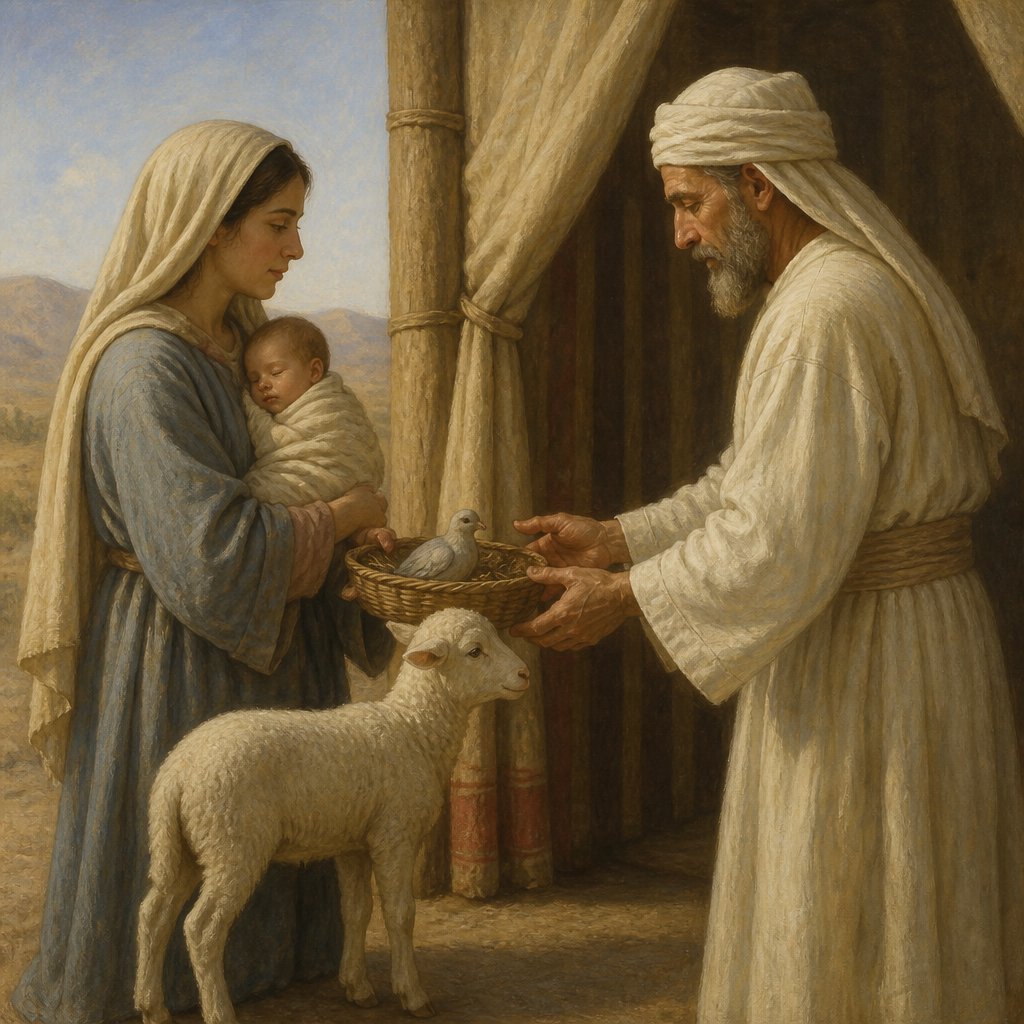
Leviticus 12:6 in the King James Version of the Bible reads: "And when the days of her purifying are fulfilled, for a son, or for a daughter, she shall bring a lamb of the first year for a burnt offering, and a young pigeon, or a turtledove, for a sin offering, unto the door of the tabernacle of the congregation, unto the priest."
This verse is part of the Old Testament book of Leviticus, which is primarily concerned with the religious, ethical, and ritual laws of the Israelites. In particular, Leviticus 12 deals with the purification rituals following childbirth. The chapter focuses on the purification of a woman after giving birth and outlines the specific offerings she must bring to the priest at the tabernacle.
The context of Leviticus 12:6 is within the broader framework of the Mosaic covenant, established by God with the people of Israel through the prophet Moses. This covenant includes the laws and regulations governing ritual purity, worship, and sacrificial offerings. Leviticus 12:6 reflects the intricate system of sacrifices and offerings intended to maintain the holiness and purity of the Israelites before God.
The verse begins with the specified duration of the woman's purification period, stating that "when the days of her purifying are fulfilled." This period of purification was forty days for a male child and eighty days for a female child. During this time, the woman was considered ritually unclean and was required to undergo a process of purification before re-entering the community or entering the tabernacle.
The verse then details the specific offerings the woman must bring to the tabernacle at the completion of her purifying period. First, she is to bring a lamb of the first year for a burnt offering. The choice of a young lamb for sacrifice was common in the Israelite sacrificial system and symbolized atonement and dedication. The burnt offering was to be completely consumed by fire, symbolizing the woman's dedication to God and her desire for purification.
In addition to the burnt offering, the woman is instructed to bring a young pigeon or turtledove for a sin offering. This type of offering was provided for those who were unable to afford a lamb, emphasizing the accessibility of atonement and purification for all members of the community, regardless of their socioeconomic status. This dual offering of a burnt offering and a sin offering underscores the importance of both purification and atonement in the woman's ritual process.
The offerings are to be presented "unto the door of the tabernacle of the congregation, unto the priest." This directive emphasizes the centrality of the tabernacle and the role of the priest in the rituals of purification and sacrifice. The tabernacle served as the dwelling place of God's presence among the Israelites, and the priest acted as an intermediary between the people and God, facilitating their access to divine forgiveness and reconciliation.
Leviticus 12:6 reflects several key themes and symbols that are prevalent throughout the book of Leviticus and the Old Testament as a whole. The theme of ritual purity and holiness is central to the verse, highlighting the Israelites' need to maintain a state of purity in their worship and communal life. The sacrificial system, including the offerings of a burnt offering and a sin offering, serves as a recurring symbol of atonement for sin and the restoration of the relationship between the people and God.
Additionally, the role of the priest as a mediator between the people and God is emphasized in this verse, underscoring the importance of the religious leadership in facilitating the forgiveness and reconciliation of the community. The act of bringing offerings to the tabernacle signifies the people's acknowledgment of their dependence on God and their desire for reconciliation and restoration.
In conclusion, Leviticus 12:6 provides a glimpse into the intricate system of ritual purity, sacrifice, and worship in ancient Israelite society. The verse underscores the themes of atonement, purification, and the role of the priest as a mediator between the people and God. While the specific rituals and offerings outlined in this verse are no longer practiced in the same manner today, they provide valuable insight into the religious and ethical framework of the ancient Israelites and continue to hold theological significance within the broader biblical tradition.
Have questions about Leviticus 12:6?
Dive deeper into this scripture with Bible Chat — an AI-powered tool for exploring God's Word through conversation. Ask questions, get context, and grow in your understanding of the Bible.
Get Our Apps


Leviticus 12:6 Artwork

Leviticus 12:6 - "And when the days of her purifying are fulfilled, for a son, or for a daughter, she shall bring a lamb of the first year for a burnt offering, and a young pigeon, or a turtledove, for a sin offering, unto the door of the tabernacle of the congregation, unto the priest:"
"And when the days of her purifying are fulfilled, for a son, or for a daughter, she shall bring a lamb of the first year for a burnt offering, and a young pigeon, or a turtledove, for a sin offering, unto the door of the tabernacle of the congregation, unto the priest:" - Leviticus 12:6

Leviticus 6:12 - "And the fire upon the altar shall be burning in it; it shall not be put out: and the priest shall burn wood on it every morning, and lay the burnt offering in order upon it; and he shall burn thereon the fat of the peace offerings."
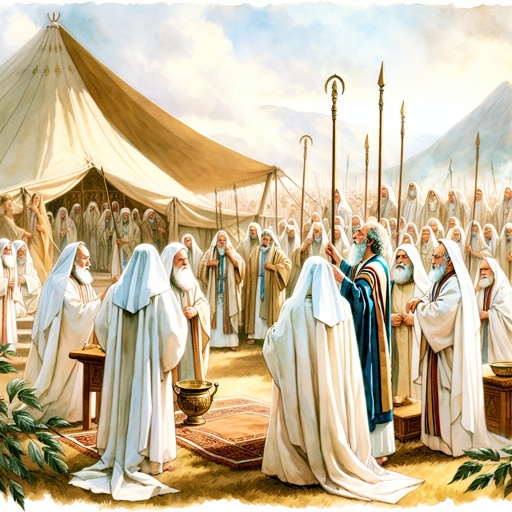
Leviticus 8:1-12

Leviticus 26: 4-6
Leviticus 26: 4-6

Leviticus 26: 4-6

Leviticus 12:1 - "And the LORD spake unto Moses, saying,"

Leviticus 6:24 - "¶ And the LORD spake unto Moses, saying,"

Leviticus 6:8 - "¶ And the LORD spake unto Moses, saying,"

Leviticus 12:3 - "And in the eighth day the flesh of his foreskin shall be circumcised."

Leviticus 6:19 - "¶ And the LORD spake unto Moses, saying,"

Leviticus 6:1 - "And the LORD spake unto Moses, saying,"

Leviticus 24:12 - "And they put him in ward, that the mind of the LORD might be shewed them."

Leviticus 3:12 - "¶ And if his offering be a goat, then he shall offer it before the LORD."

Leviticus 1:6 - "And he shall flay the burnt offering, and cut it into his pieces."

Leviticus 8:6 - "And Moses brought Aaron and his sons, and washed them with water."

Leviticus 2:6 - "Thou shalt part it in pieces, and pour oil thereon: it is a meat offering."

Leviticus 26:12 - "And I will walk among you, and will be your God, and ye shall be my people."

Leviticus 11:12 - "Whatsoever hath no fins nor scales in the waters, that shall be an abomination unto you."
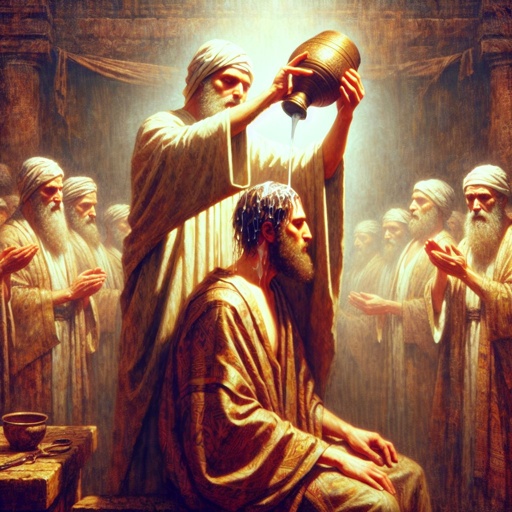
Leviticus 8:12 - "And he poured of the anointing oil upon Aaron's head, and anointed him, to sanctify him."

Leviticus 6:29 - "All the males among the priests shall eat thereof: it is most holy."

Leviticus 6:23 - "For every meat offering for the priest shall be wholly burnt: it shall not be eaten."

Leviticus 6:13 - "The fire shall ever be burning upon the altar; it shall never go out."

Leviticus 6:6 - "And he shall bring his trespass offering unto the LORD, a ram without blemish out of the flock, with thy estimation, for a trespass offering, unto the priest:"

Leviticus 25:12 - "For it is the jubile; it shall be holy unto you: ye shall eat the increase thereof out of the field."

"And the LORD spake unto Moses, saying," - Leviticus 12:1

Leviticus 18:12 - "Thou shalt not uncover the nakedness of thy father's sister: she is thy father's near kinswoman."

Leviticus 22:12 - "If the priest's daughter also be married unto a stranger, she may not eat of an offering of the holy things."

Leviticus 27:12 - "And the priest shall value it, whether it be good or bad: as thou valuest it, who art the priest, so shall it be."