What does Leviticus 12:8 mean?
“And if she be not able to bring a lamb, then she shall bring two turtles, or two young pigeons; the one for the burnt offering, and the other for a sin offering: and the priest shall make an atonement for her, and she shall be clean.” — Leviticus 12:8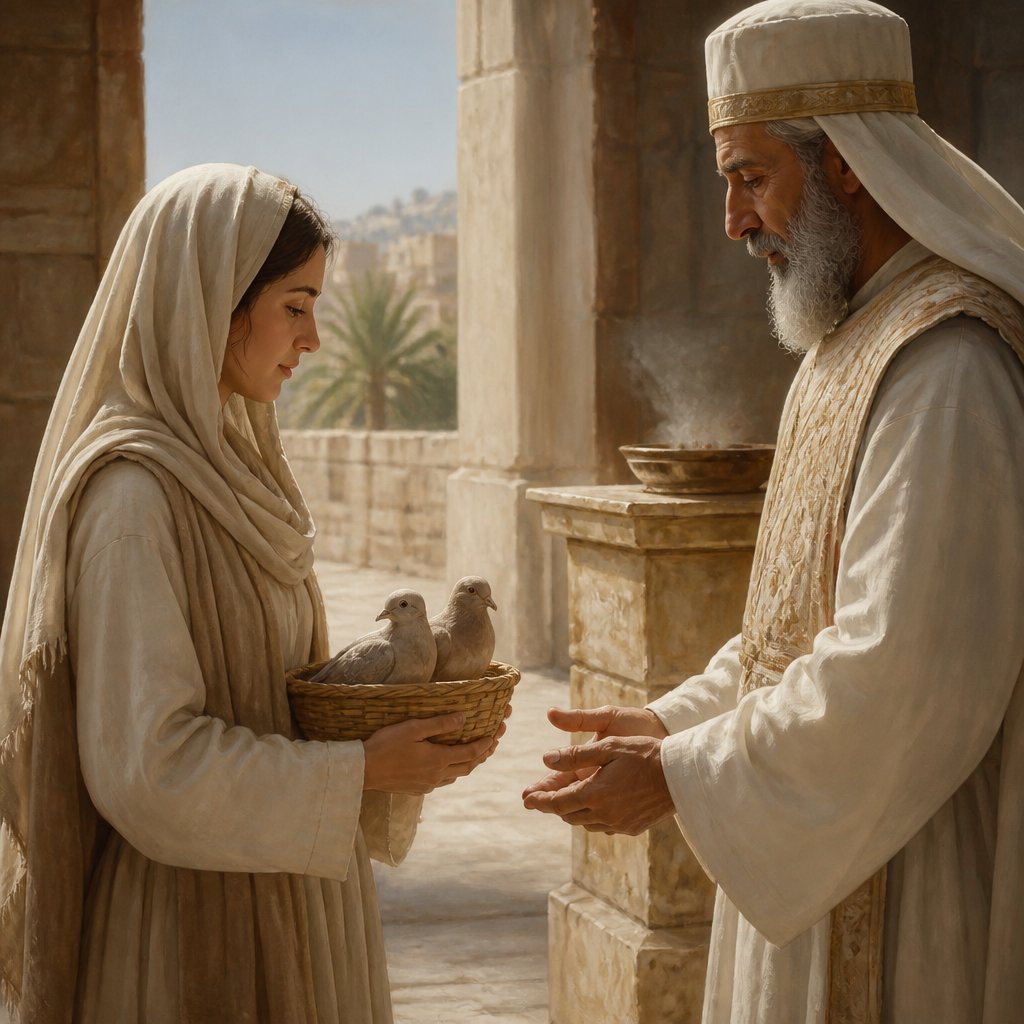
Leviticus 12:8 (KJV) states: "And if she be not able to bring a lamb, then she shall bring two turtles, or two young pigeons; the one for the burnt offering, and the other for a sin offering: and the priest shall make an atonement for her, and she shall be clean."
In order to understand the context and significance of this verse, it is necessary to examine the entire passage in Leviticus 12. In this chapter, God gives Moses specific instructions for the purification of women following childbirth. According to the Law, a woman who gives birth to a male child is considered unclean for seven days, and then she is to remain at home for an additional 33 days for her purification. If she gives birth to a female child, she is to be unclean for two weeks and then remain at home for 66 days for her purification.
In the verse prior to Leviticus 12:8, it states that after the designated period of time, the woman is to bring a lamb for a burnt offering and a young pigeon or turtledove for a sin offering to the entrance of the tent of meeting. However, in the event that the woman is unable to bring a lamb, she is permitted to bring two turtledoves or two young pigeons as a substitute sacrifice.
This passage is significant in several ways. Firstly, it highlights the attention to detail and reverence for God's holiness that was present in the Old Testament law. The Law detailed every aspect of the Israelites' lives, including purification rituals after childbirth. It served as a constant reminder to the people of their need for purification and reconciliation with God.
Secondly, the provision for those who could not afford a lamb reflects the compassion and understanding of God. This provision ensured that all women, regardless of their social or economic status, had the opportunity to be cleansed and restored to the community after childbirth. It demonstrates God's concern for the well-being of all His people, particularly those who were marginalized or disadvantaged.
The offering of a burnt offering and a sin offering was a common practice in ancient Israel for cleansing and atonement of sin. The burnt offering signified the complete surrender and dedication of the individual to God, while the sin offering served as a means of atonement for any wrongdoing or impurity. By participating in these offerings, the woman acknowledged her need for God's forgiveness and restoration.
The role of the priest in making atonement for the woman is also significant. The priest served as a mediator between the people and God, representing the people before God and offering sacrifices on their behalf. In this context, the priest's role symbolized the need for a mediator between God and humanity, ultimately pointing to the role of Jesus Christ as the ultimate mediator and atonement for sin.
Symbolically, the purification rituals for women after childbirth hold spiritual significance. The presence of blood in childbirth and the subsequent purification process serves as a powerful metaphor for the concept of cleansing and atonement for sin. It points to the universal need for spiritual cleansing and the provision of God for restoration and reconciliation.
In the New Testament, these rituals find their fulfillment in the ultimate sacrifice of Jesus Christ. He is described as the "Lamb of God" who takes away the sins of the world (John 1:29), and his death on the cross serves as the perfect atonement for all humanity. Through faith in Christ, believers are cleansed from sin and restored to a right relationship with God, fulfilling the spiritual significance of the Old Testament purification rituals.
In conclusion, Leviticus 12:8 and the surrounding passage provide a profound insight into the Old Testament law and the significance of purification rituals following childbirth. It illustrates the attention to detail and reverence for God's holiness, as well as the provision for those who were unable to afford a lamb. Symbolically, it points to the universal need for spiritual cleansing and atonement, finding its ultimate fulfillment in the sacrifice of Jesus Christ. As a result, this passage serves as a powerful reminder of God's compassion, provision, and ultimate plan for redemption and restoration for all humanity.
Get our apps


Artwork for Leviticus 12:8

Leviticus 12:8 - "And if she be not able to bring a lamb, then she shall bring two turtles, or two young pigeons; the one for the burnt offering, and the other for a sin offering: and the priest shall make an atonement for her, and she shall be clean."
"And if she be not able to bring a lamb, then she shall bring two turtles, or two young pigeons; the one for the burnt offering, and the other for a sin offering: and the priest shall make an atonement for her, and she shall be clean." - Leviticus 12:8
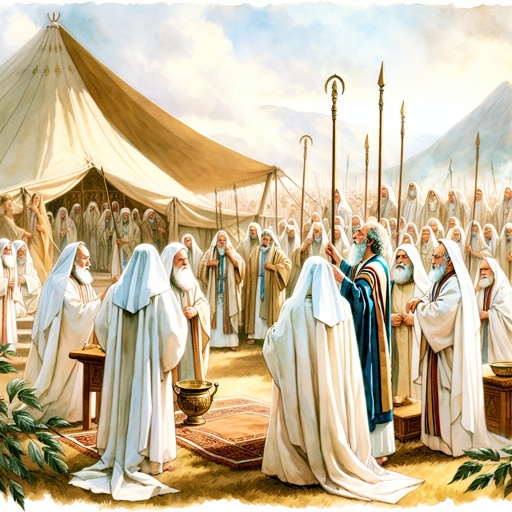
Leviticus 8:1-12
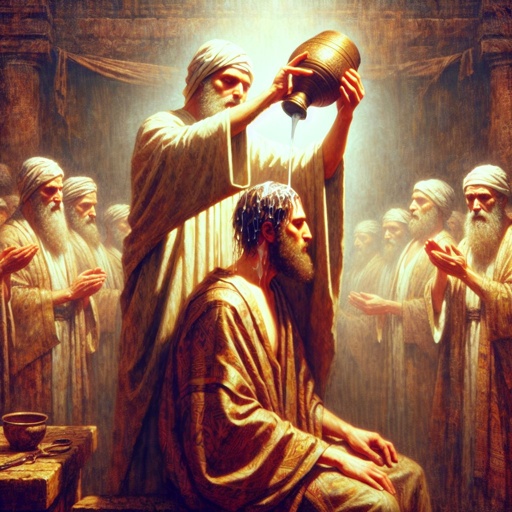
Leviticus 8:12 - "And he poured of the anointing oil upon Aaron's head, and anointed him, to sanctify him."
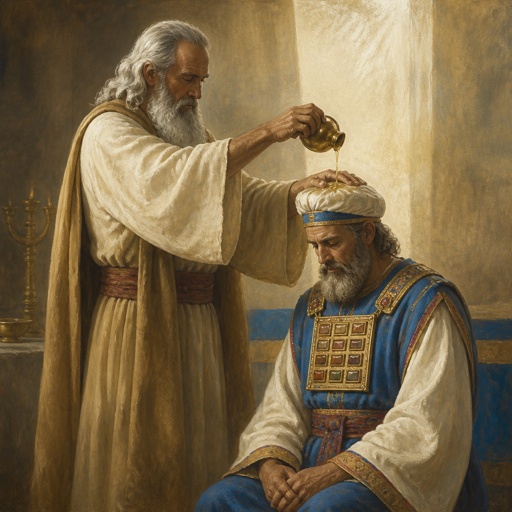
"And he poured of the anointing oil upon Aaron's head, and anointed him, to sanctify him." - Leviticus 8:12

Leviticus 16:8

Leviticus 8:30

Leviticus 8:8 - "And he put the breastplate upon him: also he put in the breastplate the Urim and the Thummim."

Leviticus 6:8 - "¶ And the LORD spake unto Moses, saying,"
Leviticus 10:8 - "¶ And the LORD spake unto Aaron, saying,"

Leviticus 12:1 - "And the LORD spake unto Moses, saying,"

Leviticus 8:1 - "And the LORD spake unto Moses, saying,"

Leviticus 12:3 - "And in the eighth day the flesh of his foreskin shall be circumcised."

Leviticus 24:12 - "And they put him in ward, that the mind of the LORD might be shewed them."

Leviticus 8:32 - "And that which remaineth of the flesh and of the bread shall ye burn with fire."

Leviticus 3:12 - "¶ And if his offering be a goat, then he shall offer it before the LORD."

Leviticus 8:6 - "And Moses brought Aaron and his sons, and washed them with water."

Leviticus 8:19 - "And he killed it; and Moses sprinkled the blood upon the altar round about."

Leviticus 8:3 - "And gather thou all the congregation together unto the door of the tabernacle of the congregation."

Leviticus 8:5 - "And Moses said unto the congregation, This is the thing which the LORD commanded to be done."

Leviticus 8:20 - "And he cut the ram into pieces; and Moses burnt the head, and the pieces, and the fat."

Leviticus 18:8 - "The nakedness of thy father's wife shalt thou not uncover: it is thy father's nakedness."

Leviticus 26:12 - "And I will walk among you, and will be your God, and ye shall be my people."

Leviticus 11:12 - "Whatsoever hath no fins nor scales in the waters, that shall be an abomination unto you."

Leviticus 9:8 - "¶ Aaron therefore went unto the altar, and slew the calf of the sin offering, which was for himself."

Leviticus 8:10 - "And Moses took the anointing oil, and anointed the tabernacle and all that was therein, and sanctified them."

Leviticus 11:8 - "Of their flesh shall ye not eat, and their carcase shall ye not touch; they are unclean to you."

Leviticus 25:12 - "For it is the jubile; it shall be holy unto you: ye shall eat the increase thereof out of the field."

"And the LORD spake unto Moses, saying," - Leviticus 12:1

Leviticus 8:36 - "So Aaron and his sons did all things which the LORD commanded by the hand of Moses."