What does Leviticus 13:20 mean?
"And if, when the priest seeth it, behold, it be in sight lower than the skin, and the hair thereof be turned white; the priest shall pronounce him unclean: it is a plague of leprosy broken out of the boil." - Leviticus 13:20
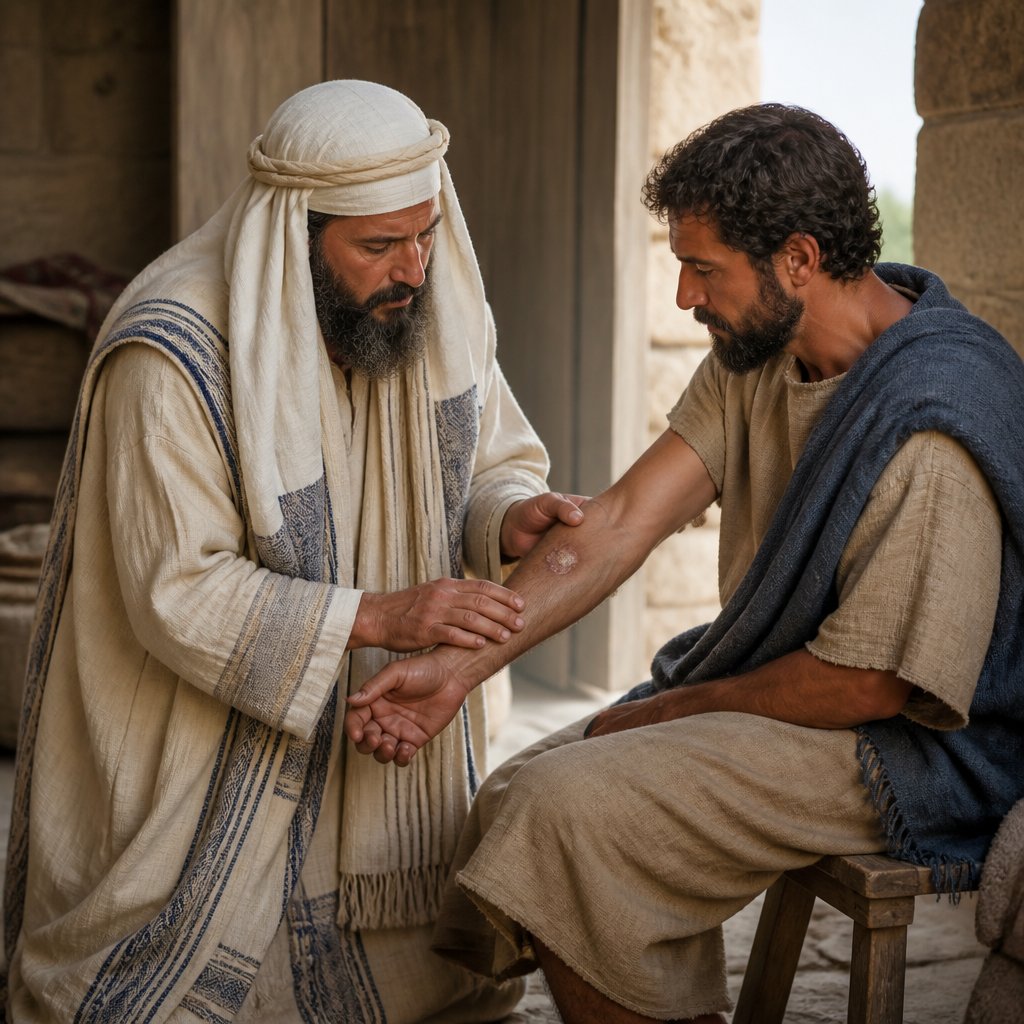
Leviticus 13:20 (KJV) states, "And if, when the priest seeth it, behold, it be in sight lower than the skin, and the hair thereof be turned white; the priest shall pronounce him unclean: it is a plague of leprosy broken out of the boil."
The book of Leviticus is a part of the Hebrew Bible and serves as a guide to the priests for carrying out rituals and laws for the Israelites. The verse in question is from a section concerning the diagnosis of leprosy, a highly infectious and feared disease in ancient times. The passage is a part of the detailed instructions given to the priests on how to identify and handle cases of leprosy among the Israelites.
The context of this verse is important to understanding its meaning and significance. In ancient times, leprosy was a feared and dangerous disease, often leading to the isolation and stigmatization of those afflicted with it. The Israelites, being a nomadic community, were particularly vulnerable to the spread of infectious diseases and hence, the book of Leviticus dedicates an entire chapter to the diagnosis and management of leprosy.
The themes present in this verse include purity, impurity, and the importance of ritual cleanliness. The specific description of the symptoms and the exact procedure for diagnosis highlight the meticulous and exacting nature of the priestly duties in ancient Israel. The emphasis on the color and location of the affected area, as well as the judgment of the priest, are indicative of the importance placed on physical signs and ritual purity in the religious and cultural context of the time.
Furthermore, the symbolism in this verse is significant. Leprosy, in the biblical context, is often seen as a metaphor for sin and impurity. The emphasis on the outward signs of the disease and the subsequent pronouncement of uncleanness by the priest can be viewed as a representation of the need for spiritual purity and the consequences of sin. It also serves as a reminder of the Israelites' need to uphold the laws and rituals to maintain their covenant with God.
In a broader context, this verse reflects the ancient Israelites' beliefs about illness, impurity, and the role of the priesthood in managing such issues. It also highlights the intersection of religion, medicine, and community health practices in ancient times. The strict guidelines for diagnosing and handling leprosy underscore the significance of maintaining the purity and well-being of the community.
In Christian theology, the verse can be interpreted as a reminder of the moral and spiritual obligation to maintain purity and to guard against the spread of sin and impurity. The meticulous diagnosis and management of leprosy in Leviticus can also be seen as a representation of the need for discernment and spiritual vigilance in identifying and addressing moral and spiritual ailments.
In conclusion, Leviticus 13:20, with its detailed instructions for diagnosing leprosy, holds significant historical, religious, and metaphorical significance. It serves as a reminder of the importance of maintaining physical and spiritual purity, the role of the priesthood in managing communal health, and the broader themes of sin, impurity, and ritual cleanliness in the religious and cultural context of ancient Israel.
Have questions about Leviticus 13:20?
Dive deeper into this scripture with Bible Chat — an AI-powered tool for exploring God's Word through conversation. Ask questions, get context, and grow in your understanding of the Bible.
Get Our Apps


Leviticus 13:20 Artwork
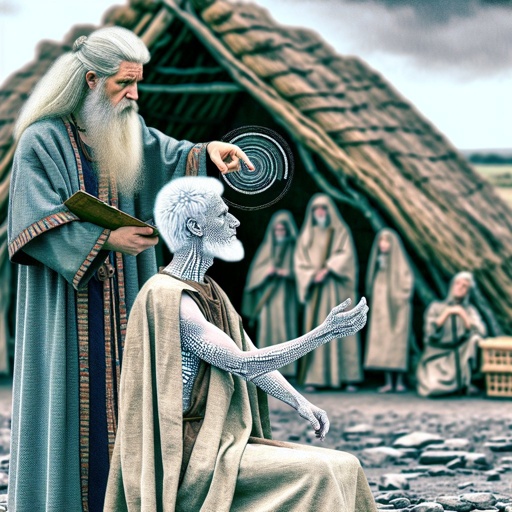
Leviticus 13:20 - "And if, when the priest seeth it, behold, it be in sight lower than the skin, and the hair thereof be turned white; the priest shall pronounce him unclean: it is a plague of leprosy broken out of the boil."
"And if, when the priest seeth it, behold, it be in sight lower than the skin, and the hair thereof be turned white; the priest shall pronounce him unclean: it is a plague of leprosy broken out of the boil." - Leviticus 13:20

Leviticus 20:13 - "If a man also lie with mankind, as he lieth with a woman, both of them have committed an abomination: they shall surely be put to death; their blood shall be upon them."

Leviticus 23:20

Leviticus 24:20-23

Leviticus 20:1 - "And the LORD spake unto Moses, saying,"

Leviticus 10:20 - "And when Moses heard that, he was content."

Leviticus 20:22-26 simple picture

Picture to summarize Leviticus 20:22-26

Leviticus 24:13 - "And the LORD spake unto Moses, saying,"

Leviticus 20:20 - "And if a man shall lie with his uncle's wife, he hath uncovered his uncle's nakedness: they shall bear their sin; they shall die childless."

Leviticus 21:13 - "And he shall take a wife in her virginity."

Leviticus 13:1 - "And the LORD spake unto Moses and Aaron, saying,"

Leviticus 9:20 - "And they put the fat upon the breasts, and he burnt the fat upon the altar:"

Leviticus 8:20 - "And he cut the ram into pieces; and Moses burnt the head, and the pieces, and the fat."

Leviticus 22:20 - "But whatsoever hath a blemish, that shall ye not offer: for it shall not be acceptable for you."

Leviticus 13:35 - "But if the scall spread much in the skin after his cleansing;"

Leviticus 13:29 - "¶ If a man or woman have a plague upon the head or the beard;"

Leviticus 20:7 - "¶ Sanctify yourselves therefore, and be ye holy: for I am the LORD your God."

Leviticus 13:18 - "¶ The flesh also, in which, even in the skin thereof, was a boil, and is healed,"

Luke 13:20-21

Luke 13:20-21

Luke 13:20-21

Luke 13:20-21
Luke 13:20-21

Leviticus 13:14 - "But when raw flesh appeareth in him, he shall be unclean."

Leviticus 18:20 - "Moreover thou shalt not lie carnally with thy neighbour's wife, to defile thyself with her."

Leviticus 11:20 - "All fowls that creep, going upon all four, shall be an abomination unto you."

Leviticus 21:20 - "Or crookbackt, or a dwarf, or that hath a blemish in his eye, or be scurvy, or scabbed, or hath his stones broken;"

"And the LORD spake unto Moses, saying," - Leviticus 20:1