What does Leviticus 13:10 mean?
“And the priest shall see him: and, behold, if the rising be white in the skin, and it have turned the hair white, and there be quick raw flesh in the rising;” — Leviticus 13:10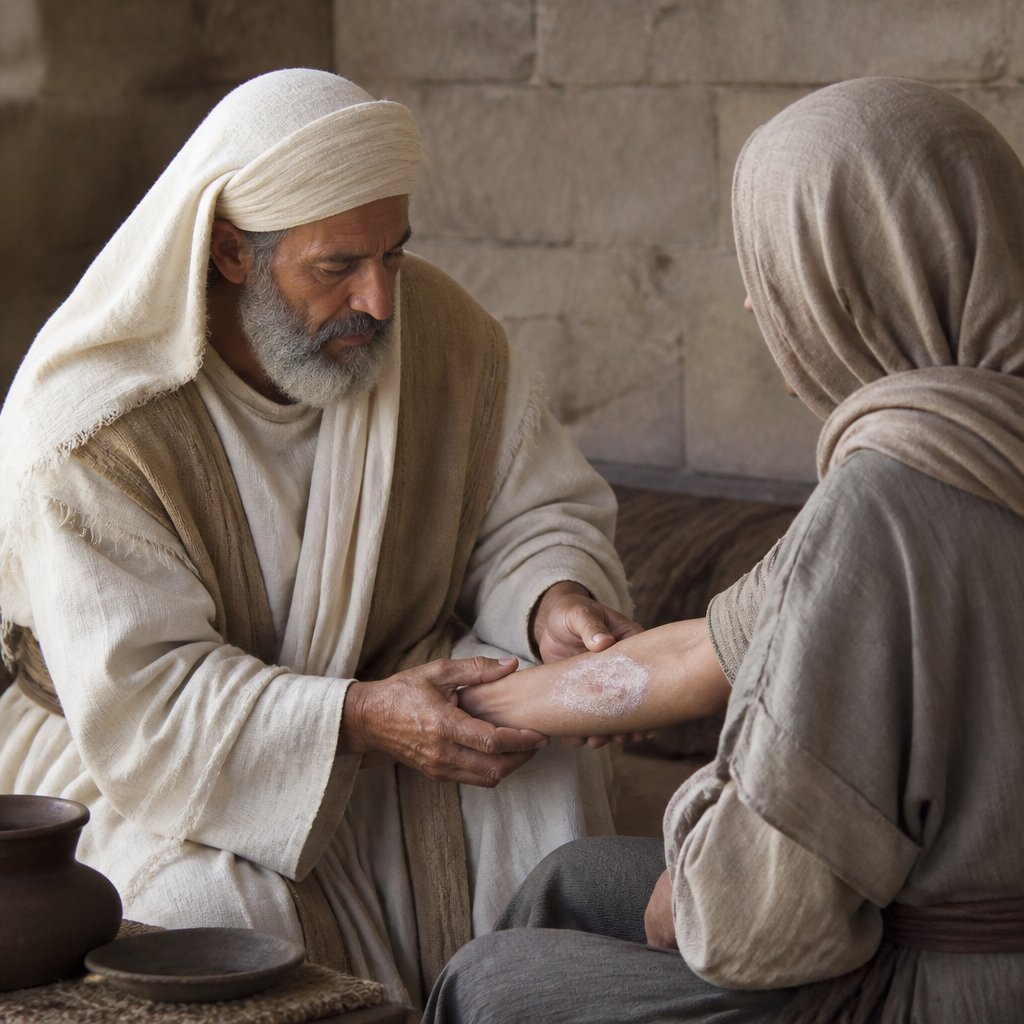
Leviticus 13:10 (KJV) says, "And the priest shall see him: and, behold, if the rising be white in the skin, and it have turned the hair white, and there be quick raw flesh in the rising."
This verse is part of a larger passage in the Old Testament book of Leviticus that deals with various skin diseases and infections. The entire chapter 13 of Leviticus is dedicated to the identification and management of leprosy, skin diseases, and other bodily ailments. In ancient Israel, the priests were responsible for diagnosing and dealing with these conditions, and this verse outlines one particular presentation of a skin affliction.
The verse begins with the phrase "And the priest shall see him," indicating that the afflicted individual is to be examined by a religious leader. This demonstrates the importance of the role of the priest in the community and their expertise in matters of health and hygiene. In addition to their spiritual duties, the priests were also responsible for the physical well-being of the people.
The verse goes on to describe the characteristics of the skin condition that the priest is to look for. It mentions a "rising" that is white in color, has turned the hair white, and contains raw flesh. In ancient times, these symptoms were likely associated with leprosy or other serious skin diseases. The mention of white hair and raw flesh indicates a significant and advanced disease process.
This passage, like many others in Leviticus, serves as a guide for the Israelites on how to identify and respond to various physical conditions. It reinforces the idea that cleanliness and purity are important to the Israelite community, and that any signs of impurity or disease should be dealt with swiftly and decisively. This emphasis on hygiene and health reflects the concern for the physical well-being of the community as a whole.
In a broader theological sense, this verse and the surrounding passages also serve as a reminder of the importance of physical health and the care of the body. In the Christian tradition, the body is often seen as a temple of the Holy Spirit, and caring for one's physical well-being is considered to be a moral and spiritual responsibility. This verse teaches the importance of attending to physical ailments and seeking the guidance and support of religious leaders in times of sickness or disease.
The symbolic significance of this verse lies in its representation of the broader theme of purity and impurity. Throughout Leviticus, there are numerous regulations and instructions related to maintaining purity, both in a physical and spiritual sense. The identification and management of skin diseases are just one aspect of this larger theme of purity, and they serve as a metaphor for the importance of maintaining moral and spiritual purity as well.
In conclusion, Leviticus 13:10 provides a glimpse into the ancient Israelite understanding of skin diseases and the role of the priest in managing these conditions. It also serves as a reminder of the importance of physical health and cleanliness in the community. From a symbolic standpoint, the verse underscores the broader theme of purity and impurity that runs throughout the book of Leviticus and serves as a metaphor for spiritual cleanliness. Overall, this verse offers valuable insights into the religious and cultural practices of ancient Israel and continues to hold significance for modern readers in both a practical and symbolic sense.
Get our apps


Artwork for Leviticus 13:10

Leviticus 13:10 - "And the priest shall see him: and, behold, if the rising be white in the skin, and it have turned the hair white, and there be quick raw flesh in the rising;"
"And the priest shall see him: and, behold, if the rising be white in the skin, and it have turned the hair white, and there be quick raw flesh in the rising;" - Leviticus 13:10

Leviticus 10:13 - "And ye shall eat it in the holy place, because it is thy due, and thy sons' due, of the sacrifices of the LORD made by fire: for so I am commanded."

Leviticus 10:10 - "And that ye may put difference between holy and unholy, and between unclean and clean;"

leviticus 16:7-10

Leviticus 24:13 - "And the LORD spake unto Moses, saying,"

Leviticus 21:13 - "And he shall take a wife in her virginity."

Leviticus 13:1 - "And the LORD spake unto Moses and Aaron, saying,"

Leviticus 10:20 - "And when Moses heard that, he was content."

Leviticus 10:8 - "¶ And the LORD spake unto Aaron, saying,"

Leviticus 13:35 - "But if the scall spread much in the skin after his cleansing;"

Leviticus 13:29 - "¶ If a man or woman have a plague upon the head or the beard;"

Leviticus 13:18 - "¶ The flesh also, in which, even in the skin thereof, was a boil, and is healed,"

Leviticus 13:14 - "But when raw flesh appeareth in him, he shall be unclean."

Leviticus 13:47 - "¶ The garment also that the plague of leprosy is in, whether it be a woollen garment, or a linen garment;"

Leviticus 13:9 - "¶ When the plague of leprosy is in a man, then he shall be brought unto the priest;"

Leviticus 13:22 - "And if it spread much abroad in the skin, then the priest shall pronounce him unclean: it is a plague."

Leviticus 25:13 - "In the year of this jubile ye shall return every man unto his possession."

Leviticus 6:13 - "The fire shall ever be burning upon the altar; it shall never go out."

Leviticus 13:19 - "And in the place of the boil there be a white rising, or a bright spot, white, and somewhat reddish, and it be shewed to the priest;"
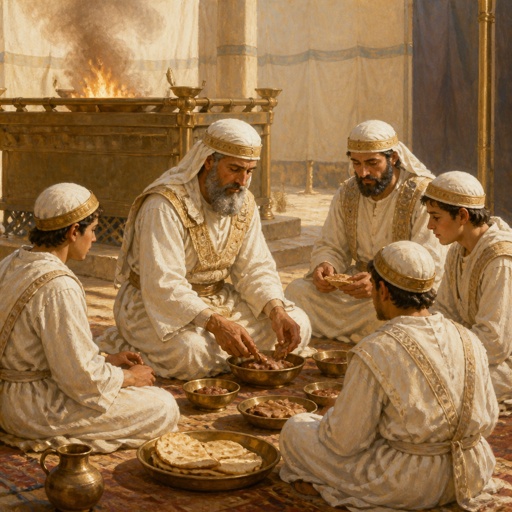
"And ye shall eat it in the holy place, because it is thy due, and thy sons' due, of the sacrifices of the LORD made by fire: for so I am commanded." - Leviticus 10:13

Leviticus 10:2 - "And there went out fire from the LORD, and devoured them, and they died before the LORD."

Leviticus 13:48 - "Whether it be in the warp, or woof; of linen, or of woollen; whether in a skin, or in any thing made of skin;"

Leviticus 13:50 - "And the priest shall look upon the plague, and shut up it that hath the plague seven days:"

Leviticus 27:13 - "But if he will at all redeem it, then he shall add a fifth part thereof unto thy estimation."

Leviticus 13:38 - "¶ If a man also or a woman have in the skin of their flesh bright spots, even white bright spots;"

Leviticus 13:16 - "Or if the raw flesh turn again, and be changed unto white, he shall come unto the priest;"

Leviticus 26:10 - "And ye shall eat old store, and bring forth the old because of the new."

Leviticus 8:10 - "And Moses took the anointing oil, and anointed the tabernacle and all that was therein, and sanctified them."

Leviticus 13:13 - "Then the priest shall consider: and, behold, if the leprosy have covered all his flesh, he shall pronounce him clean that hath the plague: it is all turned white: he is clean."