What does Leviticus 13:25 mean?
“Then the priest shall look upon it: and, behold, if the hair in the bright spot be turned white, and it be in sight deeper than the skin; it is a leprosy broken out of the burning: wherefore the priest shall pronounce him unclean: it is the plague of leprosy.” — Leviticus 13:25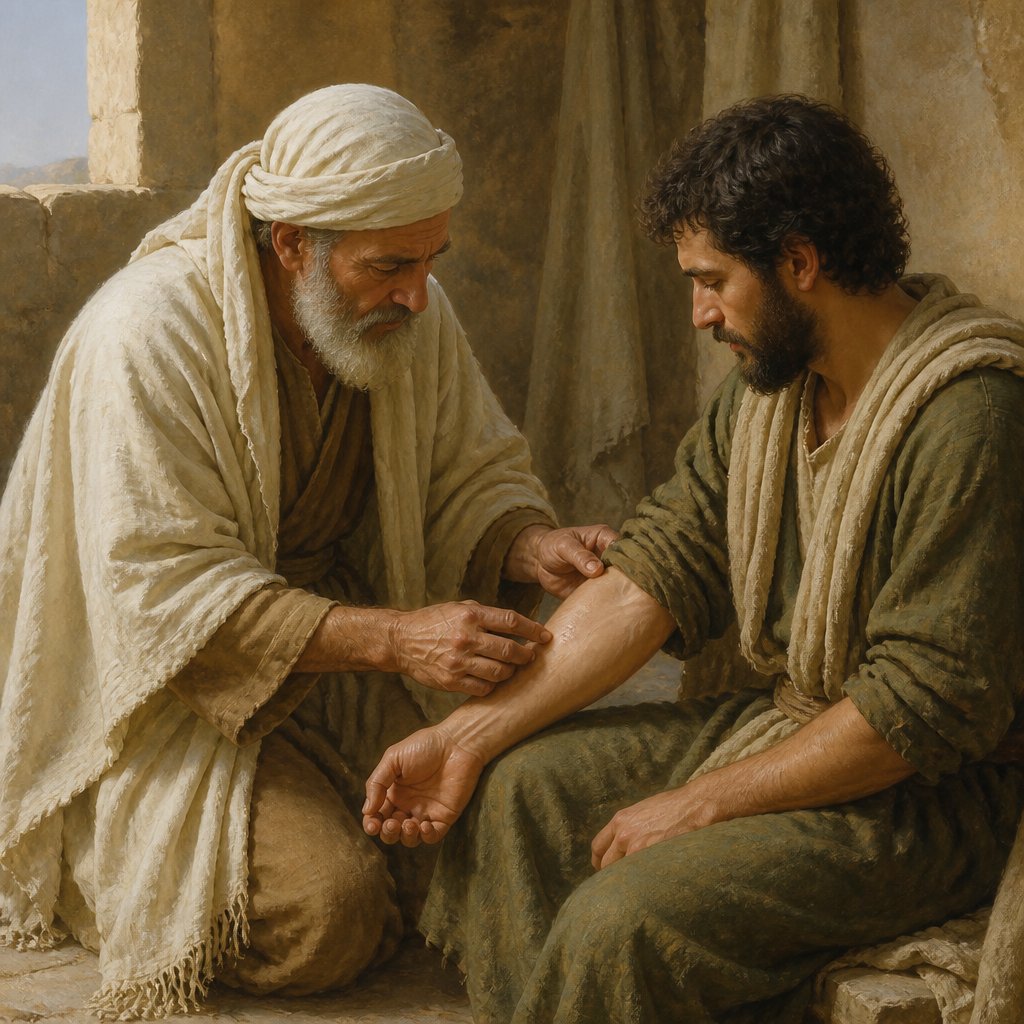
Leviticus 13:25 (KJV) says, "Then the priest shall look upon it: and, behold, if the hair in the bright spot be turned white, and it be in sight deeper than the skin; it is a leprosy broken out of the burning: wherefore the priest shall pronounce him unclean: it is the plague of leprosy."
The book of Leviticus is the third book of the Hebrew Bible and the Old Testament. It is a book of laws and regulations given to the Israelites by God through Moses, primarily focusing on the moral and ceremonial laws for the priests and Levites, as well as guidelines for the entire community of Israel. Leviticus 13 specifically deals with laws concerning leprosy and other skin diseases. The verse in question, Leviticus 13:25, is part of a larger passage describing the signs of leprosy and how the priest should examine a person's skin to determine if they are unclean.
In ancient Israel, leprosy was a feared and stigmatized disease. It was not only a physical ailment but also considered a spiritual and social affliction, leading to isolation and separation from the community. The laws in Leviticus 13 regarding leprosy were put in place to protect the health of the community and maintain its ritual purity.
The verse begins with the instruction that the priest shall look upon the skin and examine the bright spot. This emphasizes the role of the priest as a mediator between the people and God, entrusted with the task of determining the person's status of cleanliness or uncleanness based on the appearance of their skin. The priest's examination was not just a medical assessment but also a spiritual one, as leprosy was seen as a divine punishment for sin.
The bright spot turning white and being deeper than the skin was considered a sign of leprosy broken out of the burning. The burning likely refers to an inflammation or an intense redness of the skin, which could be a symptom of a more serious and contagious form of leprosy. This specific diagnosis of leprosy was significant because it meant that the person was unclean and had to be isolated from the community until they were declared healed by the priest.
Symbolically, the bright spot and its progression into leprosy can be interpreted as a metaphor for sin and its effects on an individual. Just as the bright spot started as a small anomaly and developed into a more severe condition, sin can start small but, if left unchecked, can spread and consume a person's life. The bright spot also represents the outward manifestation of an inward problem, just as sin manifests itself in a person's actions and behavior.
The concept of uncleanness and being pronounced unclean by the priest has broader significance in the Bible. It reflects the idea of spiritual impurity and the need for cleansing and purification. The ritual of isolation for those with leprosy can be seen as a form of discipline and a call to repentance, highlighting the importance of spiritual healing and restoration.
Furthermore, this verse showcases the role of the priest as a mediator between God and the people. The priest had the authority to pronounce someone unclean and to determine their status before God. This points to the need for spiritual leadership and accountability within the community, as well as the importance of seeking guidance and counsel from those who are spiritually mature.
In conclusion, Leviticus 13:25 serves as a reminder of the seriousness of sin and its consequences, as well as the need for spiritual discernment and accountability within the community. It also underscores the importance of seeking spiritual healing and restoration through the proper channels. This verse, while specific to the context of leprosy in ancient Israel, contains timeless truths about the nature of sin, the role of spiritual leaders, and the need for repentance and restoration.
Get our apps


Artwork for Leviticus 13:25
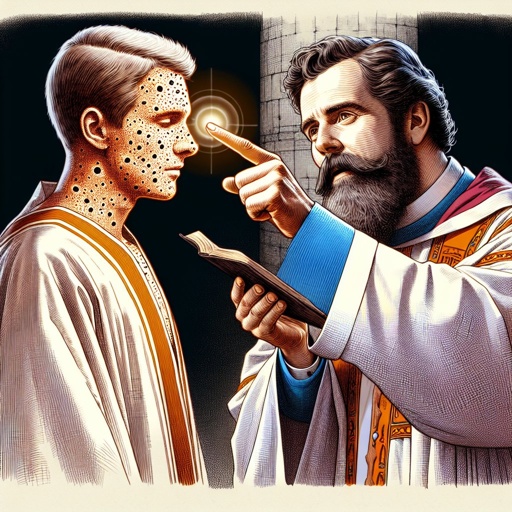
Leviticus 13:25 - "Then the priest shall look upon it: and, behold, if the hair in the bright spot be turned white, and it be in sight deeper than the skin; it is a leprosy broken out of the burning: wherefore the priest shall pronounce him unclean: it is the plague of leprosy."
"Then the priest shall look upon it: and, behold, if the hair in the bright spot be turned white, and it be in sight deeper than the skin; it is a leprosy broken out of the burning: wherefore the priest shall pronounce him unclean: it is the plague of leprosy." - Leviticus 13:25

Leviticus 25:13 - "In the year of this jubile ye shall return every man unto his possession."
"In the year of this jubile ye shall return every man unto his possession." - Leviticus 25:13

Leviticus 25:26 - "And if the man have none to redeem it, and himself be able to redeem it;"

Leviticus 25:34 - "But the field of the suburbs of their cities may not be sold; for it is their perpetual possession."

Leviticus 25:1 - "And the LORD spake unto Moses in mount Sinai, saying,"

Leviticus 16:25 - "And the fat of the sin offering shall he burn upon the altar."

Leviticus 25:24 - "And in all the land of your possession ye shall grant a redemption for the land."

Leviticus 25:23 - "¶ The land shall not be sold for ever: for the land is mine; for ye are strangers and sojourners with me."

Leviticus 25:7 - "And for thy cattle, and for the beast that are in thy land, shall all the increase thereof be meat."
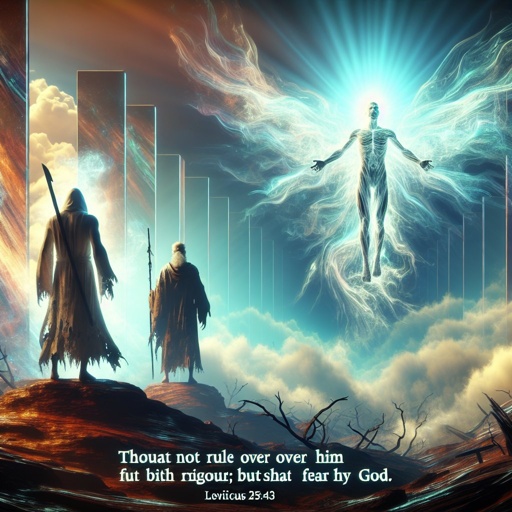
Leviticus 25:43 - "Thou shalt not rule over him with rigour; but shalt fear thy God."

Leviticus 25:32 - "Notwithstanding the cities of the Levites, and the houses of the cities of their possession, may the Levites redeem at any time."

Leviticus 27:25 - "And all thy estimations shall be according to the shekel of the sanctuary: twenty gerahs shall be the shekel."

Leviticus 25:25 - "¶ If thy brother be waxen poor, and hath sold away some of his possession, and if any of his kin come to redeem it, then shall he redeem that which his brother sold."

Leviticus 25:12 - "For it is the jubile; it shall be holy unto you: ye shall eat the increase thereof out of the field."

Leviticus 25:40 - "But as an hired servant, and as a sojourner, he shall be with thee, and shall serve thee unto the year of jubile:"

Cycle of sabbath rest year. Leviticus 25:1-7

Leviticus 24:13 - "And the LORD spake unto Moses, saying,"

Genesis 25-13

Leviticus 25:42 - "For they are my servants, which I brought forth out of the land of Egypt: they shall not be sold as bondmen."
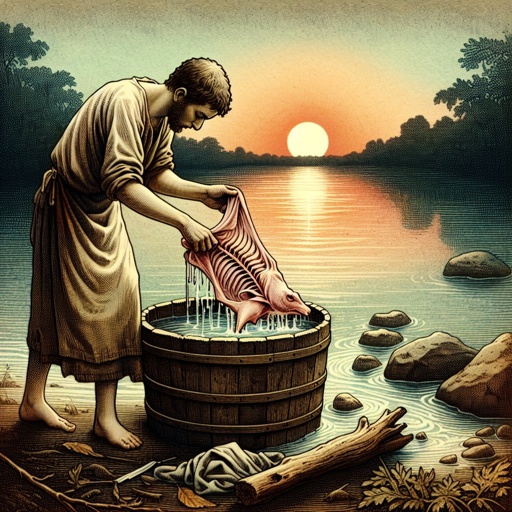
Leviticus 11:25 - "And whosoever beareth ought of the carcase of them shall wash his clothes, and be unclean until the even."

Leviticus 21:13 - "And he shall take a wife in her virginity."

Leviticus 13:1 - "And the LORD spake unto Moses and Aaron, saying,"

Leviticus 25:48 - "After that he is sold he may be redeemed again; one of his brethren may redeem him:"

Leviticus 25:36 - "Take thou no usury of him, or increase: but fear thy God; that thy brother may live with thee."

Leviticus 25:19 - "And the land shall yield her fruit, and ye shall eat your fill, and dwell therein in safety."

Leviticus 13:35 - "But if the scall spread much in the skin after his cleansing;"

Leviticus 25:21 - "Then I will command my blessing upon you in the sixth year, and it shall bring forth fruit for three years."

Leviticus 25:37 - "Thou shalt not give him thy money upon usury, nor lend him thy victuals for increase."