What does Leviticus 13:32 mean?
“And in the seventh day the priest shall look on the plague: and, behold, if the scall spread not, and there be in it no yellow hair, and the scall be not in sight deeper than the skin;” — Leviticus 13:32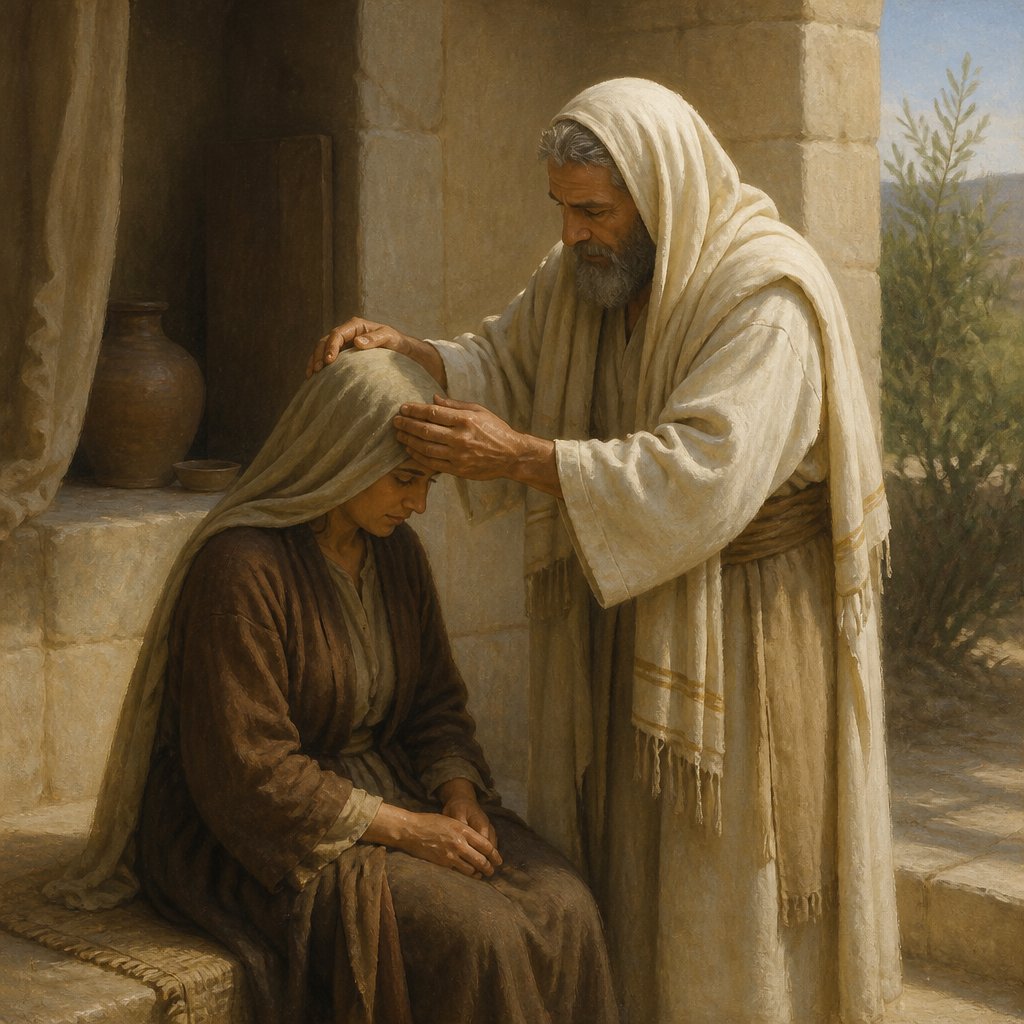
Leviticus 13:32 (KJV) states: "And in the seventh day the priest shall look on the plague: and, behold, if the scall spread not, and there be in it no yellow hair, and the scall be not in sight deeper than the skin;"
The book of Leviticus, from which this verse is taken, is the third book of the Hebrew Bible and the Old Testament. It is part of the Torah, which is the central reference of Jewish tradition and scripture, and it holds significant importance in Christianity as well. Leviticus includes a number of laws and regulations, many of which pertain to the subject of disease and impurity. Chapter 13 specifically deals with the identification and treatment of skin diseases, or what is commonly translated as leprosy in the Bible.
In this verse, the seventh day is significant because it is a day of evaluation and observation. The priest, who serves as a mediator between the people and God, examines the affected person to determine if the skin condition has improved, worsened, or remained the same. This delay in examination reinforces the idea of patience and trust in God's timing, as the people must wait for the priest's judgment and the eventual outcome.
The mention of the "plague" and the "scall" refers to a skin disease that was of great concern in ancient times. It is important to note that the biblical concept of leprosy may encompass a range of skin conditions, not limited to what is known as leprosy today. The detailed description of the symptoms, such as the color of the hair and the depth of the affected area, reflects the meticulousness of the diagnostic process laid out in the text.
Symbolically, this passage can be interpreted in several ways. The emphasis on the number seven, which frequently appears in the Bible, represents completeness and rest. This points to the idea that thorough evaluation and careful consideration are necessary before making judgments or decisions. It also reminds believers that healing and restoration can take time, and they need to have faith and perseverance.
The role of the priest in inspecting the diseased person carries symbolic weight as well. As a spiritual leader and intercessor, the priest represents the divine authority in making determinations about the purity or impurity of the individual. This echoes the broader theme of submission to authority and the significance of seeking spiritual guidance in times of trouble.
Furthermore, the imagery of the "yellow hair" and the depth of the "scall" may hold symbolic meaning. The color yellow can signify decay or corruption, while the depth of the affected area suggests the internal condition of the individual. This could be seen as a metaphor for the presence of sin or spiritual sickness within a person's heart. Therefore, the physical examination by the priest can be seen as a parallel to the spiritual examination of a person's soul by God.
In a broader context, this verse is part of a larger framework of laws and guidelines laid out in Leviticus. The meticulous attention to detail in diagnosing and managing skin diseases serves as a model for the Israelites to maintain physical and spiritual purity. It reflects the value placed on cleanliness and holiness in the sight of God, as well as the importance of community health and well-being.
While the specific regulations regarding leprosy may not directly apply to modern-day Christian practices, the underlying principles of seeking guidance from spiritual authorities, patiently awaiting God's timing, and striving for purity and holiness can still be relevant. The verse encourages believers to approach their own spiritual "plagues" with humility, seeking guidance and healing from God and those appointed to minister in his name.
In conclusion, Leviticus 13:32 from the King James Version of the Bible offers a detailed account of the process for evaluating skin diseases, providing practical and symbolic insights for believers. It underscores the themes of patience, trust in authority, and the pursuit of purity, while also highlighting the spiritual significance of physical well-being. Overall, it contributes to the broader message of spiritual and communal health in the context of ancient Israel and continues to offer valuable lessons for contemporary readers.
Get our apps


Artwork for Leviticus 13:32

Leviticus 13:32 - "And in the seventh day the priest shall look on the plague: and, behold, if the scall spread not, and there be in it no yellow hair, and the scall be not in sight deeper than the skin;"
"And in the seventh day the priest shall look on the plague: and, behold, if the scall spread not, and there be in it no yellow hair, and the scall be not in sight deeper than the skin;" - Leviticus 13:32

Leviticus 8:32 - "And that which remaineth of the flesh and of the bread shall ye burn with fire."

Leviticus 25:32 - "Notwithstanding the cities of the Levites, and the houses of the cities of their possession, may the Levites redeem at any time."

Leviticus 4:32 - "And if he bring a lamb for a sin offering, he shall bring it a female without blemish."

Leviticus 26:32 - "And I will bring the land into desolation: and your enemies which dwell therein shall be astonished at it."

Leviticus 14:32 - "This is the law of him in whom is the plague of leprosy, whose hand is not able to get that which pertaineth to his cleansing."

Leviticus 7:32 - "And the right shoulder shall ye give unto the priest for an heave offering of the sacrifices of your peace offerings."

Leviticus 27:32 - "And concerning the tithe of the herd, or of the flock, even of whatsoever passeth under the rod, the tenth shall be holy unto the LORD."

Jeremiah 32:13 - "¶ And I charged Baruch before them, saying,"

Leviticus 19:32 - "¶ Thou shalt rise up before the hoary head, and honour the face of the old man, and fear thy God: I am the LORD."

Leviticus 24:13 - "And the LORD spake unto Moses, saying,"

Leviticus 22:32 - "Neither shall ye profane my holy name; but I will be hallowed among the children of Israel: I am the LORD which hallow you,"

Leviticus 21:13 - "And he shall take a wife in her virginity."

Leviticus 13:1 - "And the LORD spake unto Moses and Aaron, saying,"

"And that which remaineth of the flesh and of the bread shall ye burn with fire." - Leviticus 8:32

Leviticus 15:32 - "This is the law of him that hath an issue, and of him whose seed goeth from him, and is defiled therewith;" The image should not depict explicit or offensive content but be symbolic.

Leviticus 13:35 - "But if the scall spread much in the skin after his cleansing;"

Leviticus 13:29 - "¶ If a man or woman have a plague upon the head or the beard;"

Leviticus 13:18 - "¶ The flesh also, in which, even in the skin thereof, was a boil, and is healed,"

Leviticus 13:14 - "But when raw flesh appeareth in him, he shall be unclean."

Mark 13:32 - "¶ But of that day and that hour knoweth no man, no, not the angels which are in heaven, neither the Son, but the Father."

Leviticus 13:47 - "¶ The garment also that the plague of leprosy is in, whether it be a woollen garment, or a linen garment;"

Leviticus 13:9 - "¶ When the plague of leprosy is in a man, then he shall be brought unto the priest;"

Leviticus 23:32 - "It shall be unto you a sabbath of rest, and ye shall afflict your souls: in the ninth day of the month at even, from even unto even, shall ye celebrate your sabbath."

Leviticus 13:22 - "And if it spread much abroad in the skin, then the priest shall pronounce him unclean: it is a plague."

Leviticus 25:13 - "In the year of this jubile ye shall return every man unto his possession."

Leviticus 6:13 - "The fire shall ever be burning upon the altar; it shall never go out."

Acts 13:32 - "And we declare unto you glad tidings, how that the promise which was made unto the fathers,"

Leviticus 13:19 - "And in the place of the boil there be a white rising, or a bright spot, white, and somewhat reddish, and it be shewed to the priest;"