What does Leviticus 13:33 mean?
“He shall be shaven, but the scall shall he not shave; and the priest shall shut up him that hath the scall seven days more:” — Leviticus 13:33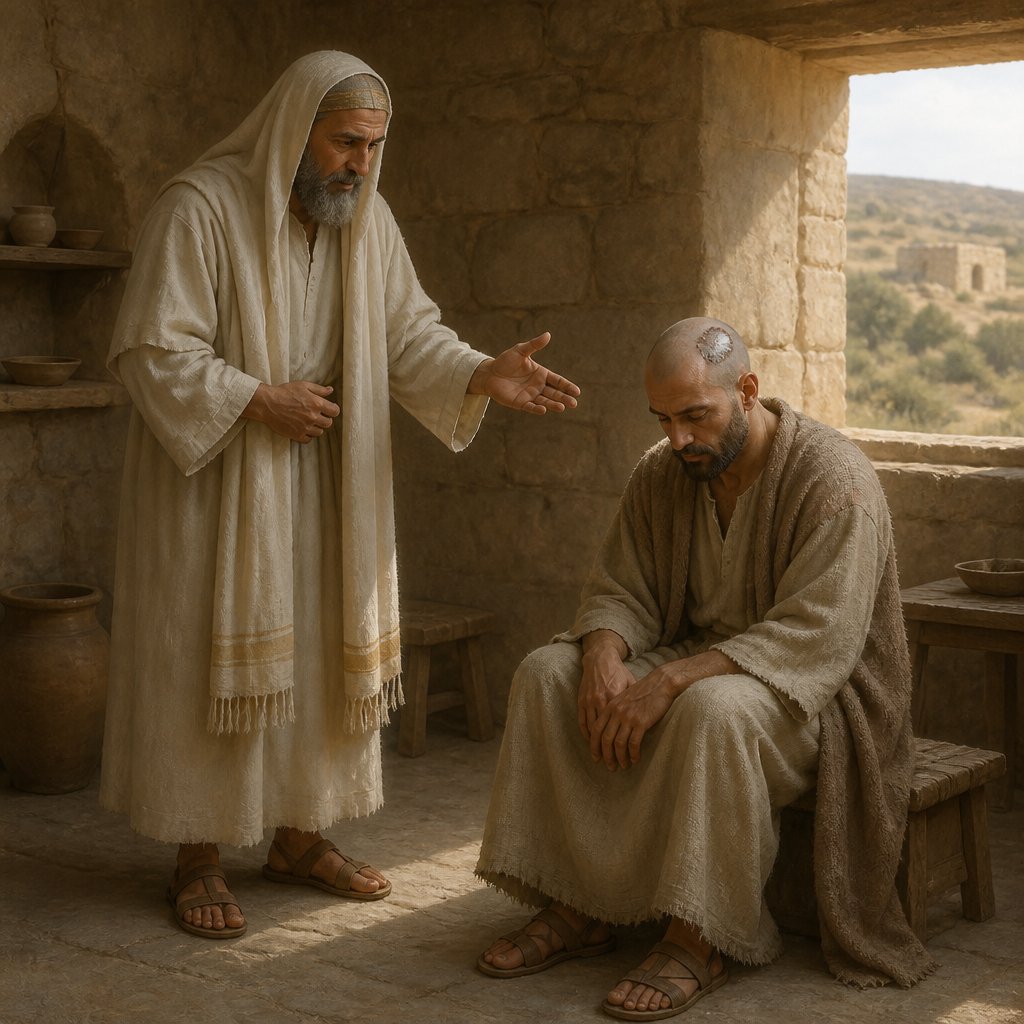
Leviticus 13:33 (KJV) states: "He shall be shaven, but the scall shall he not shave; and the priest shall shut up [him that hath] the scall seven days more."
This verse is part of a larger section in the book of Leviticus which deals with laws concerning leprosy, skin diseases, and bodily discharges. In this specific verse, the focus is on how a person with a scall, which is a skin disorder, should be treated. The verse gives specific instructions to the priest on how to handle the situation and what actions should be taken with regards to the infected individual.
To fully comprehend the meaning and significance of this verse, it is important to consider the historical and religious context in which it was written. The book of Leviticus is part of the Torah, the first five books of the Hebrew Bible, and is attributed to Moses. It contains a collection of laws and regulations given to the Israelites by God, often focusing on religious rituals, moral conduct, and maintaining purity and cleanliness.
In the ancient Israelite society, skin diseases such as leprosy and scall were considered serious issues, not only because of the physical suffering they caused, but also because of their symbolic implications. These diseases were often associated with impurity and sin, and those who suffered from them were often ostracized and considered unclean. Therefore, the laws outlined in this chapter of Leviticus were meant to provide guidelines for identifying, treating, and ultimately reintegrating individuals with these diseases back into the community.
Now, let's delve into the specific details of Leviticus 13:33. The verse begins with the instruction that the infected individual shall be shaven. This act of shaving was a symbolic gesture, representing a form of purification and separation from the impurity associated with the disease. In ancient cultures, hair was often viewed as a source of pollution, and shaving it off was a way to remove this pollution and start anew. This act also served to physically remove any contaminated hair that may be carrying the infection.
However, the verse goes on to specify that the scall itself should not be shaved. This seemingly contradictory instruction is rooted in the belief that the disease may spread further if the affected area is disturbed or irritated. By leaving the scall untouched, it would prevent the potential spread of the disease and allow for observation of its progress over time.
The verse concludes with the directive that the priest shall shut up the individual with the scall for seven more days. The act of being "shut up" may be understood as a period of quarantine or isolation, during which the priest could closely monitor the individual's condition. This waiting period allowed for careful observation of the disease's progression and provided an opportunity for the affected individual to potentially recover or for the disease to run its course.
From a symbolic perspective, the seven-day period holds spiritual significance. In biblical numerology, the number seven often represents completeness, perfection, and divine intervention. This waiting period could be seen as a time of waiting for God's intervention, healing, and restoration.
In a broader sense, this verse addresses the importance of maintaining physical, spiritual, and communal purity. It underscores the need for proper diagnosis, treatment, and isolation of contagious diseases in order to protect the well-being of the community as a whole. Additionally, it highlights the role of the priest as a mediator between the afflicted individual and God, responsible for overseeing the purification process and ensuring compliance with religious laws.
As with many Old Testament laws, the regulations regarding skin diseases serve as a foreshadowing of spiritual truths. The concept of impurity and cleansing is ultimately fulfilled in the person of Jesus Christ, who came to cleanse and purify humanity from sin and impurity. The rituals and laws outlined in Leviticus point to the need for spiritual cleansing and the ultimate redemptive work of Christ.
In conclusion, Leviticus 13:33 provides valuable insight into the cultural, religious, and symbolic significance of laws pertaining to skin diseases in ancient Israelite society. It serves as a reminder of the importance of maintaining purity, both physically and spiritually, and the need for proper discernment and care in the face of illness. Additionally, it foreshadows the ultimate purification and redemption offered through Christ's sacrifice.
Get our apps


Artwork for Leviticus 13:33

Leviticus 13:33 - "He shall be shaven, but the scall shall he not shave; and the priest shall shut up him that hath the scall seven days more:"
"He shall be shaven, but the scall shall he not shave; and the priest shall shut up him that hath the scall seven days more:" - Leviticus 13:33

Leviticus 23:33 - "¶ And the LORD spake unto Moses, saying,"

Leviticus 14:33 - "¶ And the LORD spake unto Moses and unto Aaron, saying,"

Leviticus 19:33 - "¶ And if a stranger sojourn with thee in your land, ye shall not vex him."

Leviticus 22:33 - "That brought you out of the land of Egypt, to be your God: I am the LORD."

"¶ And the LORD spake unto Moses, saying," - Leviticus 23:33

Leviticus 11:33 - "And every earthen vessel, whereinto any of them falleth, whatsoever is in it shall be unclean; and ye shall break it."

Leviticus 15:33 - "And of her that is sick of her flowers, and of him that hath an issue, of the man, and of the woman, and of him that lieth with her that is unclean."

Numbers 33:13 - "And they departed from Dophkah, and encamped in Alush."

Leviticus 7:33 - "He among the sons of Aaron, that offereth the blood of the peace offerings, and the fat, shall have the right shoulder for his part."

Mark 13:33 watch and pray

Mark 13:33 watch and pray

Leviticus 26:33 - "And I will scatter you among the heathen, and will draw out a sword after you: and your land shall be desolate, and your cities waste."

"¶ And the LORD spake unto Moses and unto Aaron, saying," - Leviticus 14:33

Leviticus 4:33 - "And he shall lay his hand upon the head of the sin offering, and slay it for a sin offering in the place where they kill the burnt offering."

Leviticus 24:13 - "And the LORD spake unto Moses, saying,"

Leviticus 21:13 - "And he shall take a wife in her virginity."

Leviticus 13:1 - "And the LORD spake unto Moses and Aaron, saying,"

Leviticus 27:33 - "He shall not search whether it be good or bad, neither shall he change it: and if he change it at all, then both it and the change thereof shall be holy; it shall not be redeemed."

Mark 13:33 - "Take ye heed, watch and pray: for ye know not when the time is."

Psalms 33:13 - "The LORD looketh from heaven; he beholdeth all the sons of men."

"¶ And if a stranger sojourn with thee in your land, ye shall not vex him." - Leviticus 19:33

Leviticus 16:33 - "And he shall make an atonement for the holy sanctuary, and he shall make an atonement for the tabernacle of the congregation, and for the altar, and he shall make an atonement for the priests, and for all the people of the congregation."

Leviticus 8:33 - "And ye shall not go out of the door of the tabernacle of the congregation in seven days, until the days of your consecration be at an end: for seven days shall he consecrate you."

Leviticus 25:33 - "And if a man purchase of the Levites, then the house that was sold, and the city of his possession, shall go out in the year of jubile: for the houses of the cities of the Levites are their possession among the children of Israel."

Leviticus 13:35 - "But if the scall spread much in the skin after his cleansing;"

Leviticus 13:29 - "¶ If a man or woman have a plague upon the head or the beard;"

Leviticus 13:18 - "¶ The flesh also, in which, even in the skin thereof, was a boil, and is healed,"

"That brought you out of the land of Egypt, to be your God: I am the LORD." - Leviticus 22:33