What does Leviticus 13:38 mean?
“If a man also or a woman have in the skin of their flesh bright spots, even white bright spots;” — Leviticus 13:38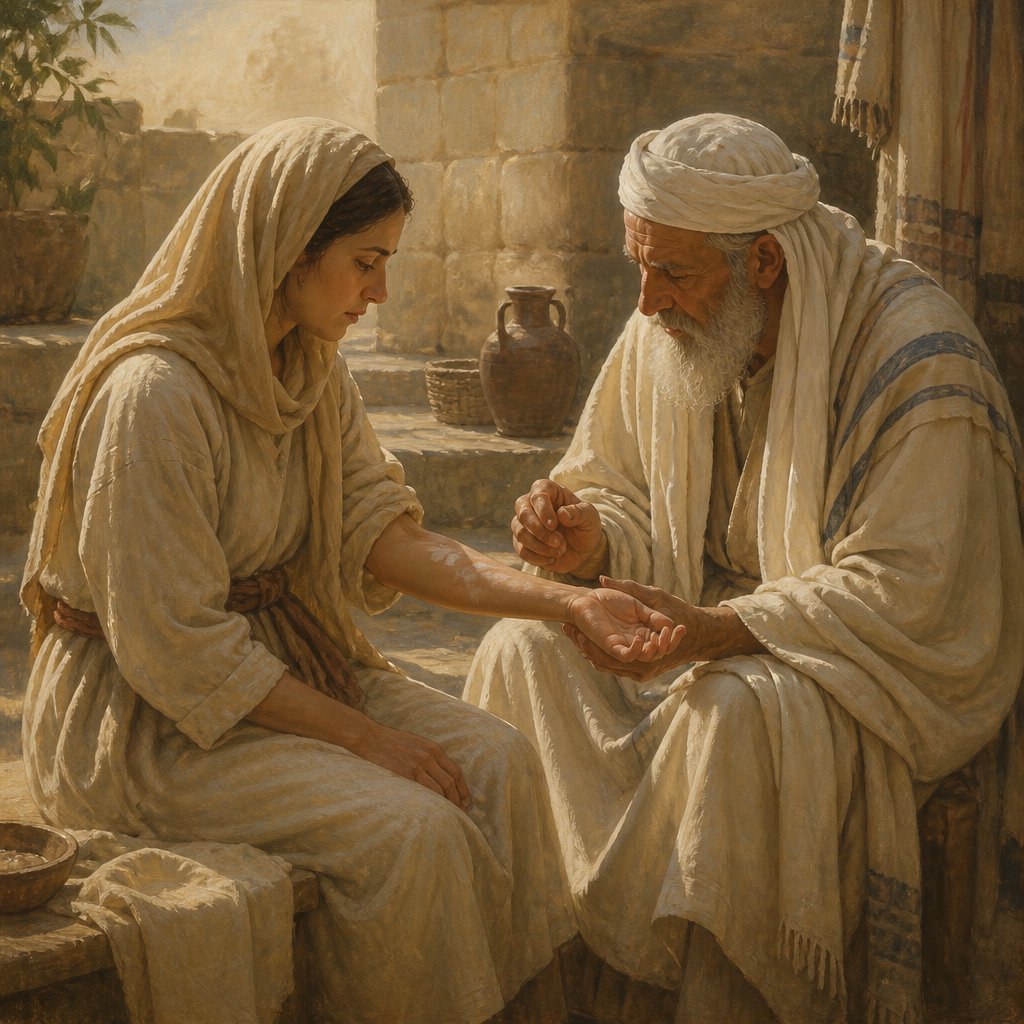
Leviticus 13:38 (KJV) states, “If a man also or a woman have in the skin of their flesh bright spots, even white bright spots.” This verse is part of a larger section in the book of Leviticus that deals with laws concerning various skin diseases and infections. In this chapter, the Israelites are given specific instructions on how to identify and quarantine individuals who have been infected with leprosy or other skin conditions.
The book of Leviticus is part of the Torah, the first five books of the Hebrew Bible, and is traditionally attributed to Moses. It is primarily concerned with the laws and rituals that were to be followed by the ancient Israelites. This particular verse is situated within a passage that outlines the process for identifying leprosy in individuals and determining whether they are clean or unclean according to the regulations set forth by God.
The context of Leviticus 13:38 is important for understanding its significance. The chapter as a whole addresses the issue of bodily discharges, skin diseases, and lesions. In ancient times, leprosy was a dreaded and highly stigmatized disease that was believed to be highly contagious. The presence of leprosy or other skin conditions was considered not only a physical ailment but also a sign of ritual impurity and moral defilement.
The theme of purity and impurity is central to the passage in Leviticus 13, as it deals with the ways in which the Israelites were to maintain cleanliness and holiness in their community. The identification and quarantine of individuals with skin diseases were not only practical measures for preventing the spread of contagious illnesses, but also symbolic of the need to separate what is pure from what is impure. By isolating those with skin diseases, the Israelites sought to protect the sanctity of their community and maintain their ritual purity before God.
Furthermore, the symbolism in Leviticus 13:38 can be interpreted in a theological and moral context. The bright white spots mentioned in the verse could be seen as representative of moral blemishes or impurities within the community. This can be seen as a metaphor for sin and the need for individuals to recognize and address moral and spiritual ailments within themselves.
In a broader sense, the laws outlined in Leviticus 13 speak to the larger theme of holiness and separation in the Hebrew Bible. The Israelites were called to be a holy people, set apart for God’s purposes, and as such, they were required to follow specific guidelines for maintaining their purity and avoiding contamination. The laws concerning skin diseases and bodily discharges were not simply hygienic measures but served to reinforce the importance of moral and spiritual purity in the eyes of God.
In the New Testament, the themes of purity and holiness are further developed in the teachings of Jesus and the apostles. While the specific regulations outlined in Leviticus 13 may no longer apply in the same way for Christians, the underlying principles of moral purity and the need for spiritual cleansing remain relevant. The bright spots and blemishes mentioned in the verse can be seen as a reminder of the continual need for self-examination and repentance in the Christian life.
In conclusion, Leviticus 13:38, within its larger context, speaks to the themes of ritual purity, moral cleanliness, and the need for separation from impurity. The laws and regulations outlined in this passage served as a means for the Israelites to maintain their holiness before God and as a symbolic reminder of the importance of spiritual purity. While the specific regulations may not apply in the same way for Christians today, the underlying principles of moral and spiritual purity remain significant for believers.
Get our apps


Artwork for Leviticus 13:38

Leviticus 13:38 - "¶ If a man also or a woman have in the skin of their flesh bright spots, even white bright spots;"

"¶ If a man also or a woman have in the skin of their flesh bright spots, even white bright spots;" - Leviticus 13:38

Philippians 1:3-8

Philippians 1:3-8

Leviticus 26:38 - "And ye shall perish among the heathen, and the land of your enemies shall eat you up."

Leviticus 14:38 - "Then the priest shall go out of the house to the door of the house, and shut up the house seven days:"

Jeremiah 38:1–13

Leviticus 11:38 - "But if any water be put upon the seed, and any part of their carcase fall thereon, it shall be unclean unto you."

Exodus 38:13 - "And for the east side eastward fifty cubits."

Leviticus 7:38 - "Which the LORD commanded Moses in mount Sinai, in the day that he commanded the children of Israel to offer their oblations unto the LORD, in the wilderness of Sinai."

Leviticus 25:38 - "I am the LORD your God, which brought you forth out of the land of Egypt, to give you the land of Canaan, and to be your God."

2 Samuel 13:38 - "So Absalom fled, and went to Geshur, and was there three years."

Job 38:13 - "That it might take hold of the ends of the earth, that the wicked might be shaken out of it?"

Leviticus 23:38 - "Beside the sabbaths of the LORD, and beside your gifts, and beside all your vows, and beside all your freewill offerings, which ye give unto the LORD."

Psalms 38:13 - "But I, as a deaf man, heard not; and I was as a dumb man that openeth not his mouth."

Matthew 13:38 - "The field is the world; the good seed are the children of the kingdom; but the tares are the children of the wicked one;"

Leviticus 24:13 - "And the LORD spake unto Moses, saying,"

"And for the east side eastward fifty cubits." - Exodus 38:13

Leviticus 21:13 - "And he shall take a wife in her virginity."

Leviticus 13:1 - "And the LORD spake unto Moses and Aaron, saying,"

Acts 13:38 - "¶ Be it known unto you therefore, men and brethren, that through this man is preached unto you the forgiveness of sins:"

Leviticus 13:35 - "But if the scall spread much in the skin after his cleansing;"

Jeremiah 38:13 - "So they drew up Jeremiah with cords, and took him up out of the dungeon: and Jeremiah remained in the court of the prison."

Leviticus 13:29 - "¶ If a man or woman have a plague upon the head or the beard;"

Leviticus 13:18 - "¶ The flesh also, in which, even in the skin thereof, was a boil, and is healed,"

Leviticus 13:14 - "But when raw flesh appeareth in him, he shall be unclean."

Leviticus 13:47 - "¶ The garment also that the plague of leprosy is in, whether it be a woollen garment, or a linen garment;"

"And ye shall perish among the heathen, and the land of your enemies shall eat you up." - Leviticus 26:38

"Then the priest shall go out of the house to the door of the house, and shut up the house seven days:" - Leviticus 14:38

Leviticus 13:9 - "¶ When the plague of leprosy is in a man, then he shall be brought unto the priest;"