What does Leviticus 13:40 mean?
“And the man whose hair is fallen off his head, he is bald; yet is he clean.” — Leviticus 13:40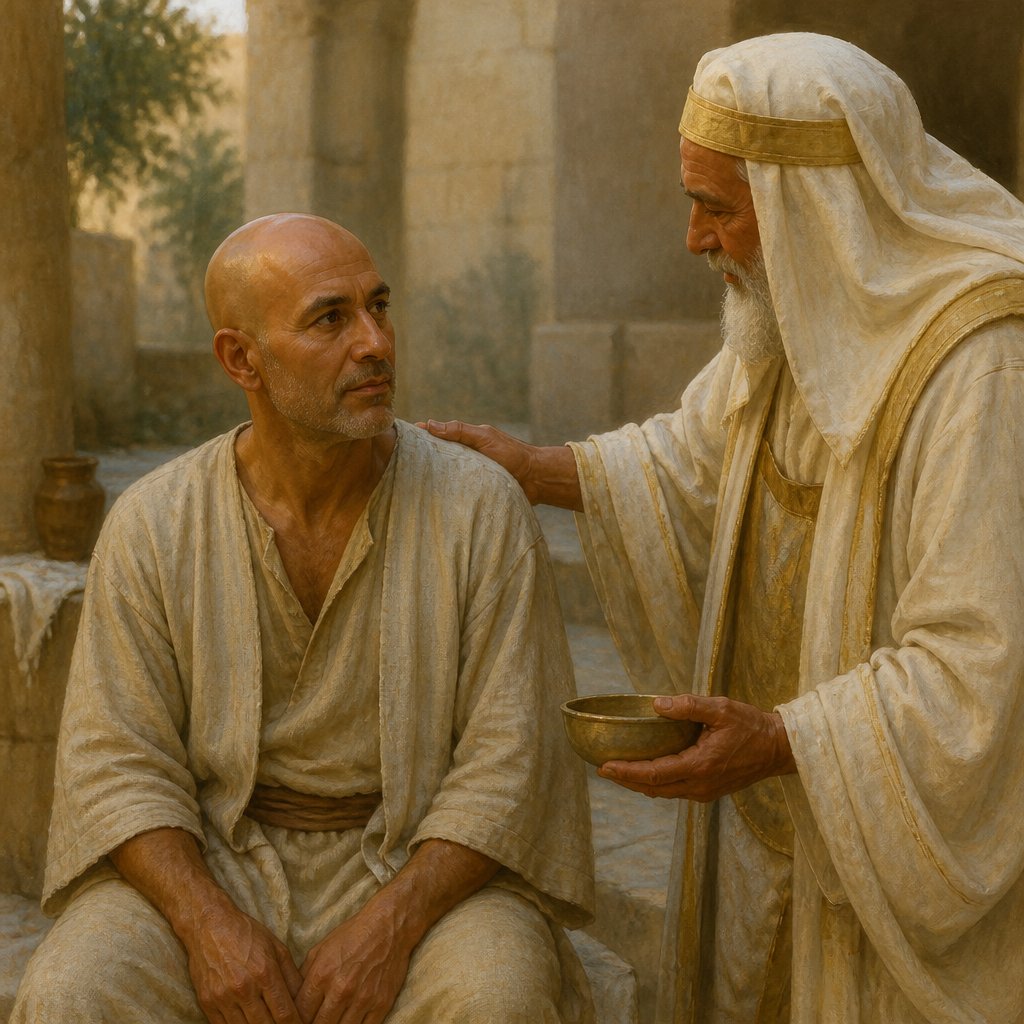
Leviticus 13:40
"And the man whose hair is fallen off his head, he is bald; yet is he clean."
The book of Leviticus is the third book of the Old Testament and plays a crucial role in understanding the laws and regulations of the Israelite society. Leviticus 13 specifically deals with the laws regarding skin diseases and mildews and the procedures to be followed by the priests in diagnosing and isolating those who are infected.
In this particular verse, a man who has lost his hair and is now bald is deemed to be clean. This may seem like a simple and straightforward statement, but upon further examination, it reveals deeper layers of meaning and significance.
The context of this verse is important in understanding its meaning. In ancient Israelite society, physical appearance held a lot of significance. Hair was considered to be a symbol of vitality, strength, and even virility. The loss of hair, therefore, could be seen as a sign of weakness or illness. In the surrounding verses, we see that various skin diseases are being discussed, and the loss of hair could be a symptom of some of these diseases. Thus, the bald man, being declared clean, was essentially being pronounced free from any contagious skin disease that may have caused his hair loss.
On a symbolic level, the concept of cleanliness is deeply ingrained in the scriptures. In a religious and ritualistic sense, being clean was a crucial requirement for approaching the presence of God in the tabernacle or temple. The concept of cleanliness was not limited to just physical cleanliness but extended to spiritual and moral purity as well. The bald man being declared clean can be seen as a metaphor for his fitness to approach God without any hindrances.
Furthermore, this verse can be interpreted as a message of acceptance and inclusivity. In a society where physical perfection and outward appearances held so much importance, those who did not fit into the societal norms may have been ostracized or marginalized. By declaring the bald man as clean, the verse is essentially stating that everyone, regardless of their physical appearance, is deemed acceptable and worthy. This can be seen as a reflection of God's unconditional love and acceptance of all his children, regardless of their outward appearance or societal status.
In a broader theological context, this verse can be seen as a precursor to the teachings of Jesus, who emphasized inner purity and righteousness over outward appearances. Jesus often criticized the religious leaders of his time for their obsession with external rituals and appearances, and instead emphasized the importance of a pure heart and righteous living. This verse can be seen as an early indication of God's concern for the heart and inner state of a person, rather than their outward appearance.
In conclusion, Leviticus 13:40, though seemingly simple, holds deep meaning and significance within the context of the Israelite society and the broader theological themes of cleanliness, acceptance, and inner purity. It serves as a reminder of God's care and concern for all his children, regardless of their outward appearances, and sets the stage for the teachings of Jesus on the importance of inner purity and righteousness.
Get our apps


Artwork for Leviticus 13:40

Leviticus 13:40 - "And the man whose hair is fallen off his head, he is bald; yet is he clean."
"And the man whose hair is fallen off his head, he is bald; yet is he clean." - Leviticus 13:40

Leviticus 25:40 - "But as an hired servant, and as a sojourner, he shall be with thee, and shall serve thee unto the year of jubile:"

Leviticus 14:40 - "Then the priest shall command that they take away the stones in which the plague is, and they shall cast them into an unclean place without the city:"

Leviticus 26:40 - "If they shall confess their iniquity, and the iniquity of their fathers, with their trespass which they trespassed against me, and that also they have walked contrary unto me;"

Job 40:13 - "Hide them in the dust together; and bind their faces in secret."

Acts 13:40 - "Beware therefore, lest that come upon you, which is spoken of in the prophets;"

Matthew 13:40 - "As therefore the tares are gathered and burned in the fire; so shall it be in the end of this world."

the jewish holidays mentioned in leviticus 23:1 until 23:40 combined in one picture,

Psalms 40:13 - "Be pleased, O LORD, to deliver me: O LORD, make haste to help me."

Leviticus 11:40 - "And he that eateth of the carcase of it shall wash his clothes, and be unclean until the even: he also that beareth the carcase of it shall wash his clothes, and be unclean until the even."

the jewish holidays mentioned in leviticus 23:1 until 23:40 combined in one picture, with hebrew names in hebrew charactes

Jeremiah 40:13 - "¶ Moreover Johanan the son of Kareah, and all the captains of the forces that were in the fields, came to Gedaliah to Mizpah,"

Leviticus 24:13 - "And the LORD spake unto Moses, saying,"

Leviticus 21:13 - "And he shall take a wife in her virginity."

Leviticus 13:1 - "And the LORD spake unto Moses and Aaron, saying,"

Leviticus 13:35 - "But if the scall spread much in the skin after his cleansing;"

Leviticus 13:29 - "¶ If a man or woman have a plague upon the head or the beard;"

Leviticus 23:40 - "And ye shall take you on the first day the boughs of goodly trees, branches of palm trees, and the boughs of thick trees, and willows of the brook; and ye shall rejoice before the LORD your God seven days."

Leviticus 13:18 - "¶ The flesh also, in which, even in the skin thereof, was a boil, and is healed,"
"But as an hired servant, and as a sojourner, he shall be with thee, and shall serve thee unto the year of jubile:" - Leviticus 25:40

Leviticus 13:14 - "But when raw flesh appeareth in him, he shall be unclean."

Isaiah 40:13 - "Who hath directed the Spirit of the LORD, or being his counsellor hath taught him?" respectful, symbolic bible verse art

Leviticus 13:47 - "¶ The garment also that the plague of leprosy is in, whether it be a woollen garment, or a linen garment;"
"Hide them in the dust together; and bind their faces in secret." - Job 40:13

Ezekiel 40:13 - "He measured then the gate from the roof of one little chamber to the roof of another: the breadth was five and twenty cubits, door against door."

Leviticus 13:9 - "¶ When the plague of leprosy is in a man, then he shall be brought unto the priest;"
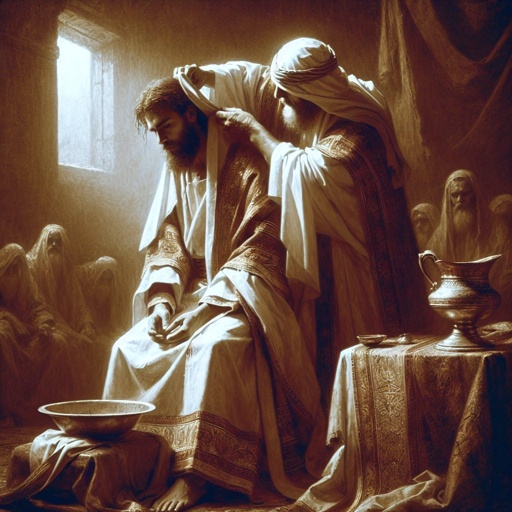
Exodus 40:13 - "And thou shalt put upon Aaron the holy garments, and anoint him, and sanctify him; that he may minister unto me in the priest's office."

Leviticus 13:22 - "And if it spread much abroad in the skin, then the priest shall pronounce him unclean: it is a plague."

Leviticus 25:13 - "In the year of this jubile ye shall return every man unto his possession."