What does Leviticus 13:6 mean?
“And the priest shall look on him again the seventh day: and, behold, if the plague be somewhat dark, and the plague spread not in the skin, the priest shall pronounce him clean: it is but a scab: and he shall wash his clothes, and be clean.” — Leviticus 13:6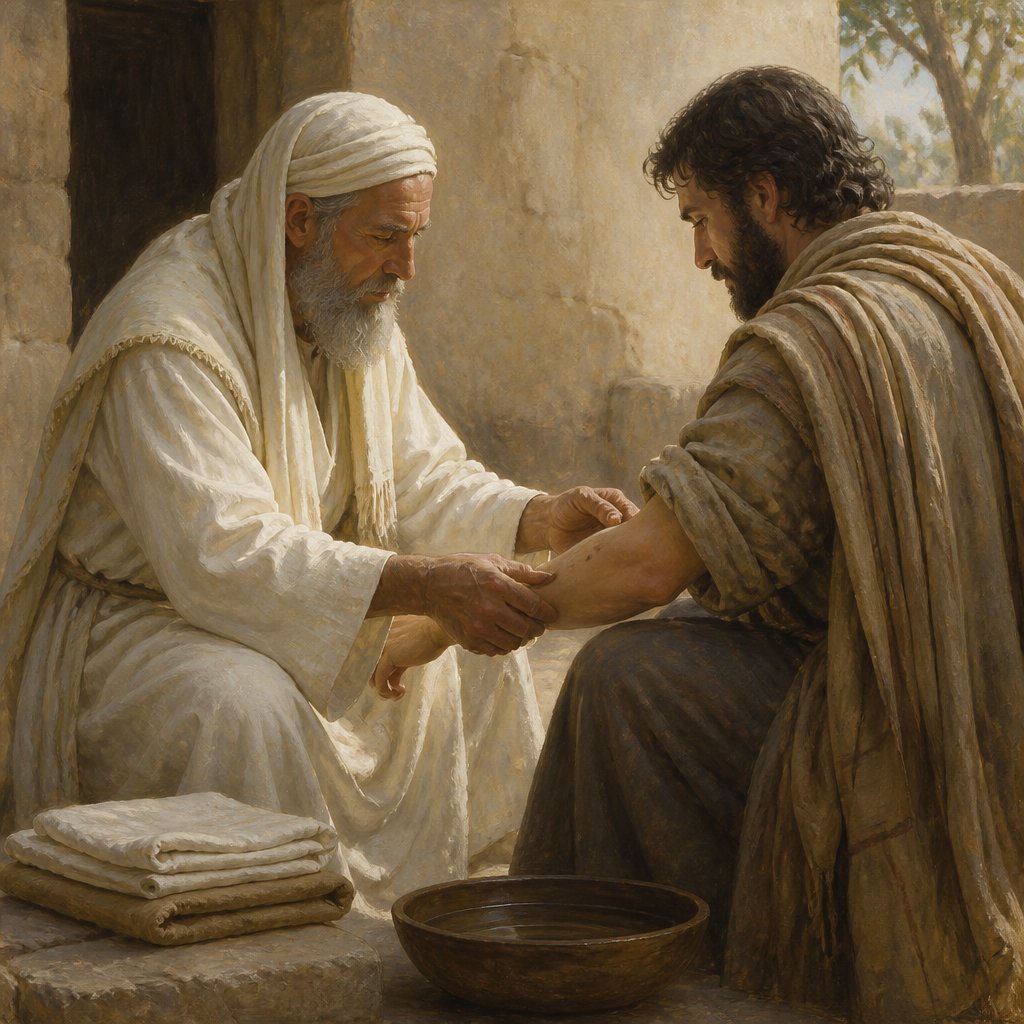
Leviticus 13:6 (KJV) states, "And the priest shall look on him again the seventh day: and, behold, if the plague be somewhat dark, and the plague spread not in the skin, the priest shall pronounce him clean: it is but a scab: and he shall wash his clothes, and be clean."
In order to understand the significance and context of this verse, it is essential to take a look at the book of Leviticus as a whole. Leviticus is the third book of the Old Testament and it primarily focuses on the regulations and rituals of the Israelite priesthood. The book is divided into two main sections: the first describes the various types of offerings and the responsibilities of the priests, while the second section contains laws for the people of Israel, encompassing areas such as cleanliness, dietary laws, and moral conduct.
Leviticus 13 falls within the section that discusses laws concerning leprosy. This chapter is specifically concerned with the diagnosis of leprosy and how it is to be treated within the Israelite community. The verses leading up to Leviticus 13:6 outline the process by which an individual suspected of having leprosy is examined by a priest and isolated from the community. The priest would then check on the individual after a period of time had passed, as described in Leviticus 13:5-6.
The verse itself begins with the repetition of the priest examining the individual "again the seventh day." This emphasizes the importance of careful observation and assessment, as well as the significance of the number seven in the Bible, which signifies completion and perfection. The detailed examination and the waiting period reflect the cautious approach needed when dealing with matters of purity and impurity, as well as the importance of patience in making judgments.
The focus of this verse then shifts to the physical characteristics of the plague or skin disease. It mentions that if the plague is "somewhat dark" and has not spread, the priest is to declare the individual as clean. This emphasis on the color and the lack of spreading indicates that the priest is looking for specific signs that distinguish the disease from other skin conditions. This attention to detail and specific criteria underscores the precision and discernment required of the priesthood in making such determinations. The judgment of cleanliness or uncleanness in this context has broader implications, as being declared unclean would result in isolation from the community and the need for ongoing assessment and purification.
The symbolic significance of this verse is deeply rooted in the themes of purity and impurity, which are prevalent throughout the book of Leviticus. The concept of spiritual and physical cleanliness is closely intertwined with the notion of being set apart and holy in the sight of God. In this context, the role of the priest as the mediator between God and the people in matters of purity and impurity is crucial. The meticulous process of examination and the pronouncement of cleanliness or uncleanness reflect the priest's responsibility to uphold the holiness and integrity of the community.
Furthermore, the emphasis on the action of washing the clothes and being declared clean not only carries a physical meaning but also symbolizes the spiritual cleansing and restoration of the individual. This act of washing holds a parallel to repentance and the forgiveness of sins, emphasizing the importance of acknowledging and addressing impurity in all its forms.
Ultimately, Leviticus 13:6 serves as a reminder of the careful discernment required in matters of purity and impurity, the responsibility placed on the priesthood, and the broader implications of physical and spiritual cleanliness within the community of faith. It emphasizes the need for thorough examination, patience, and sensitivity in making judgments, and reinforces the interconnectedness of physical and spiritual well-being in the eyes of God.
Get our apps


Artwork for Leviticus 13:6

Leviticus 13:6 - "And the priest shall look on him again the seventh day: and, behold, if the plague be somewhat dark, and the plague spread not in the skin, the priest shall pronounce him clean: it is but a scab: and he shall wash his clothes, and be clean."
"And the priest shall look on him again the seventh day: and, behold, if the plague be somewhat dark, and the plague spread not in the skin, the priest shall pronounce him clean: it is but a scab: and he shall wash his clothes, and be clean." - Leviticus 13:6

Leviticus 6:13 - "The fire shall ever be burning upon the altar; it shall never go out."

"The fire shall ever be burning upon the altar; it shall never go out." - Leviticus 6:13

Leviticus 24:13 - "And the LORD spake unto Moses, saying,"

Leviticus 26: 4-6

Leviticus 26: 4-6

Leviticus 26: 4-6

Leviticus 21:13 - "And he shall take a wife in her virginity."

Leviticus 13:1 - "And the LORD spake unto Moses and Aaron, saying,"

Leviticus 6:24 - "¶ And the LORD spake unto Moses, saying,"

Leviticus 6:8 - "¶ And the LORD spake unto Moses, saying,"

Leviticus 13:35 - "But if the scall spread much in the skin after his cleansing;"

Leviticus 13:29 - "¶ If a man or woman have a plague upon the head or the beard;"

Leviticus 6:19 - "¶ And the LORD spake unto Moses, saying,"

Leviticus 6:1 - "And the LORD spake unto Moses, saying,"

Leviticus 13:18 - "¶ The flesh also, in which, even in the skin thereof, was a boil, and is healed,"

Leviticus 13:14 - "But when raw flesh appeareth in him, he shall be unclean."

Leviticus 13:47 - "¶ The garment also that the plague of leprosy is in, whether it be a woollen garment, or a linen garment;"

Leviticus 13:9 - "¶ When the plague of leprosy is in a man, then he shall be brought unto the priest;"

Leviticus 1:6 - "And he shall flay the burnt offering, and cut it into his pieces."

Leviticus 13:22 - "And if it spread much abroad in the skin, then the priest shall pronounce him unclean: it is a plague."

Leviticus 25:13 - "In the year of this jubile ye shall return every man unto his possession."

Leviticus 8:6 - "And Moses brought Aaron and his sons, and washed them with water."

Leviticus 13:19 - "And in the place of the boil there be a white rising, or a bright spot, white, and somewhat reddish, and it be shewed to the priest;"

Leviticus 2:6 - "Thou shalt part it in pieces, and pour oil thereon: it is a meat offering."

Leviticus 13:48 - "Whether it be in the warp, or woof; of linen, or of woollen; whether in a skin, or in any thing made of skin;"

Leviticus 13:50 - "And the priest shall look upon the plague, and shut up it that hath the plague seven days:"

Leviticus 6:29 - "All the males among the priests shall eat thereof: it is most holy."

Leviticus 6:23 - "For every meat offering for the priest shall be wholly burnt: it shall not be eaten."