What does Leviticus 14:22 mean?
“And two turtledoves, or two young pigeons, such as he is able to get; and the one shall be a sin offering, and the other a burnt offering.” — Leviticus 14:22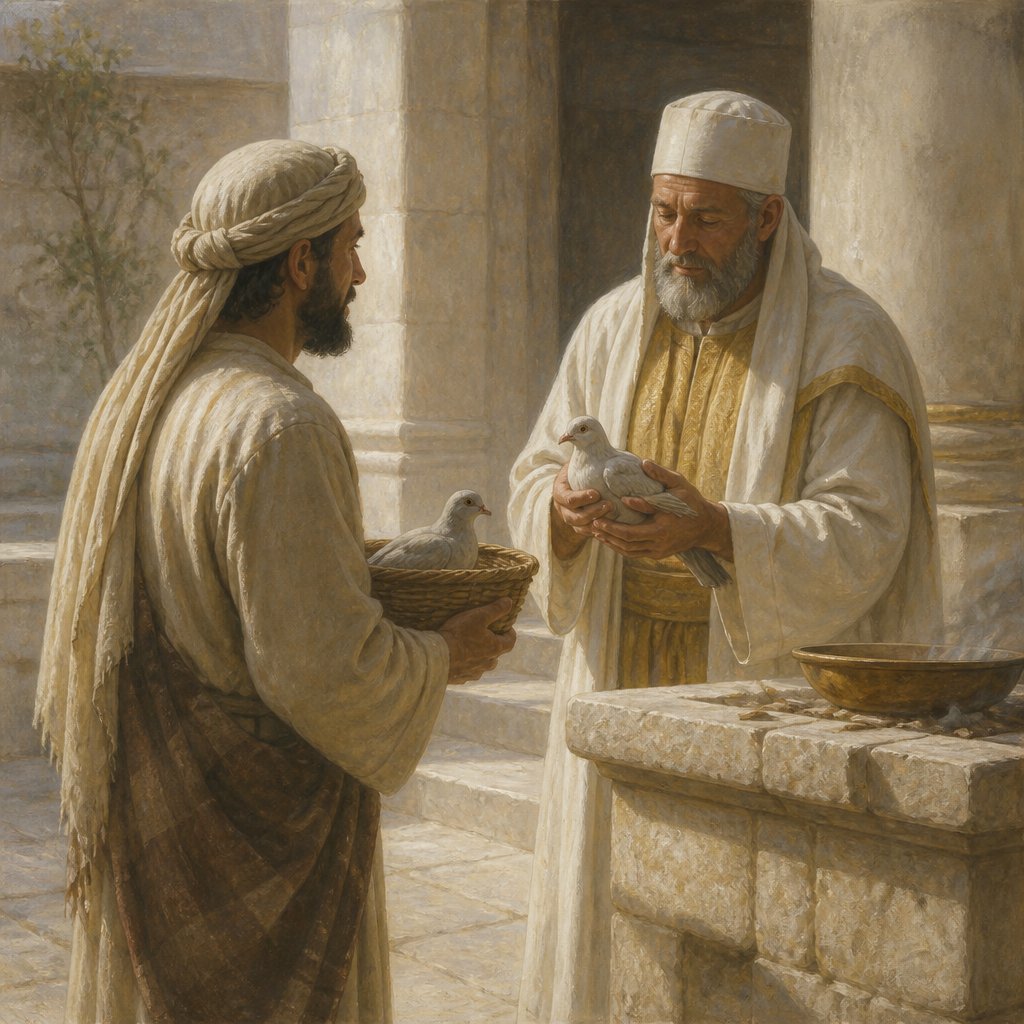
Leviticus 14:22 (KJV) - "And two turtledoves, or two young pigeons, such as he is able to get; and the one shall be a sin offering, and the other a burnt offering."
The book of Leviticus is the third book of the Bible and it is focused primarily on the laws and rituals for the Israelites. This particular verse is part of a passage detailing the specific instructions for cleansing and atonement for someone who has been healed from a skin disease.
In this verse, the individual who has been healed is instructed to bring two turtledoves or two young pigeons. One of these birds is to be offered as a sin offering, while the other is to be offered as a burnt offering. These offerings were a common practice in the Old Testament as a way for the Israelites to seek forgiveness and atonement for their sins.
Symbolically, the two birds represent the duality of the sacrifice. The sin offering signifies the need for forgiveness and the acknowledgement of wrongdoing, while the burnt offering represents the complete surrender and dedication to God. This duality is a common theme throughout the Bible, as it speaks to the complexity of human nature and the multifaceted relationship between humanity and the divine.
The act of sacrificing an animal as atonement for sin may seem foreign or even distasteful to modern readers, but it served as an important ritual for the Israelites. It was a physical and tangible way for the people to express their remorse and seek reconciliation with God.
Furthermore, the specific choice of birds in this verse is significant. Turtledoves and young pigeons were commonly used as offerings in the Old Testament because they were readily available and affordable for all members of the community. This reflects the inclusive nature of the rituals and demonstrates that atonement and forgiveness were accessible to everyone, regardless of their social or economic status.
Contextually, this verse is part of a larger passage that outlines the detailed procedures for the cleansing and atonement of various skin diseases. Throughout Leviticus, there is a strong emphasis on cleanliness and purity, both in a physical and spiritual sense. The rituals and sacrifices prescribed in this passage were meant to restore the individual to a state of ritual purity and allow them to reintegrate into the community.
From a broader thematic perspective, this verse speaks to the universal human need for forgiveness and reconciliation. The concept of atonement is central to many religious traditions, and it reflects the understanding that human beings are fallible and in need of divine grace.
In Christian theology, the sacrificial system of the Old Testament is often understood as a precursor to the ultimate sacrifice of Jesus Christ on the cross. The apostle Paul makes this connection in the New Testament, describing Jesus as the "sacrificial lamb" who atones for the sins of the world. In this interpretation, the rituals and sacrifices of the Old Testament foreshadow the redemptive work of Christ, who brings about forgiveness and reconciliation for all who believe in him.
In conclusion, Leviticus 14:22 provides insight into the ancient rituals and practices of the Israelites, while also conveying timeless themes of sin, atonement, and forgiveness. The symbolism of the two birds, the accessibility of the offerings, and the broader theological implications make this verse a rich and thought-provoking passage for readers of the Bible.
Get our apps


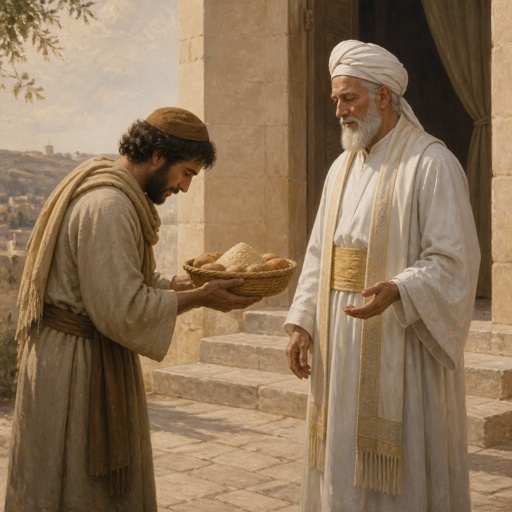
Artwork for Leviticus 14:22

Leviticus 14:22 - "And two turtledoves, or two young pigeons, such as he is able to get; and the one shall be a sin offering, and the other a burnt offering."
"And two turtledoves, or two young pigeons, such as he is able to get; and the one shall be a sin offering, and the other a burnt offering." - Leviticus 14:22

Leviticus 22:14 - "¶ And if a man eat of the holy thing unwittingly, then he shall put the fifth part thereof unto it, and shall give it unto the priest with the holy thing."
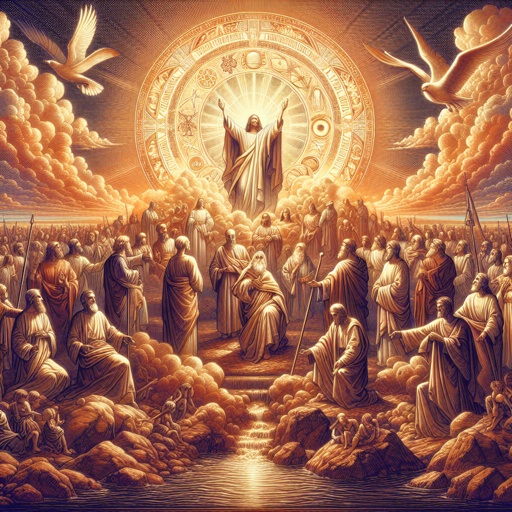
Leviticus 11:22

Leviticus 23:15-22

Leviticus 23:17-22

Leviticus 14:51

Leviticus 22:17 - "¶ And the LORD spake unto Moses, saying,"

Leviticus 7:22 - "¶ And the LORD spake unto Moses, saying,"

Leviticus 22:1 - "And the LORD spake unto Moses, saying,"

Leviticus 22:26 - "¶ And the LORD spake unto Moses, saying,"

Leviticus 18:22 - "Thou shalt not lie with mankind, as with womankind: it is abomination."

Leviticus 14:55 - "And for the leprosy of a garment, and of a house,"

Leviticus 14:56 - "And for a rising, and for a scab, and for a bright spot:"

Leviticus 20:22-26 simple picture

Picture to summarize Leviticus 20:22-26

Leviticus 14:1 - "And the LORD spake unto Moses, saying,"

Leviticus 11:14 - "And the vulture, and the kite after his kind;"
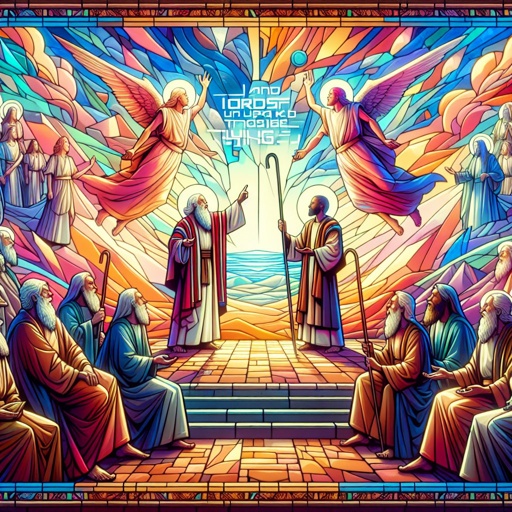
Leviticus 5:14 - "¶ And the LORD spake unto Moses, saying,"
"¶ And if a man eat of the holy thing unwittingly, then he shall put the fifth part thereof unto it, and shall give it unto the priest with the holy thing." - Leviticus 22:14

Leviticus 14:54 - "This is the law for all manner of plague of leprosy, and scall,"

Leviticus 22:20 - "But whatsoever hath a blemish, that shall ye not offer: for it shall not be acceptable for you."

Leviticus 13:22 - "And if it spread much abroad in the skin, then the priest shall pronounce him unclean: it is a plague."

Leviticus 21:22 - "He shall eat the bread of his God, both of the most holy, and of the holy."

Leviticus 26:14 - "¶ But if ye will not hearken unto me, and will not do all these commandments;"

Leviticus 14:33 - "¶ And the LORD spake unto Moses and unto Aaron, saying,"

Leviticus 22:33 - "That brought you out of the land of Egypt, to be your God: I am the LORD."

Leviticus 22:29 - "And when ye will offer a sacrifice of thanksgiving unto the LORD, offer it at your own will."

Leviticus 22:15 - "And they shall not profane the holy things of the children of Israel, which they offer unto the LORD;"

Leviticus 22:22 - "Blind, or broken, or maimed, or having a wen, or scurvy, or scabbed, ye shall not offer these unto the LORD, nor make an offering by fire of them upon the altar unto the LORD."