What does Leviticus 14:38 mean?
“Then the priest shall go out of the house to the door of the house, and shut up the house seven days:” — Leviticus 14:38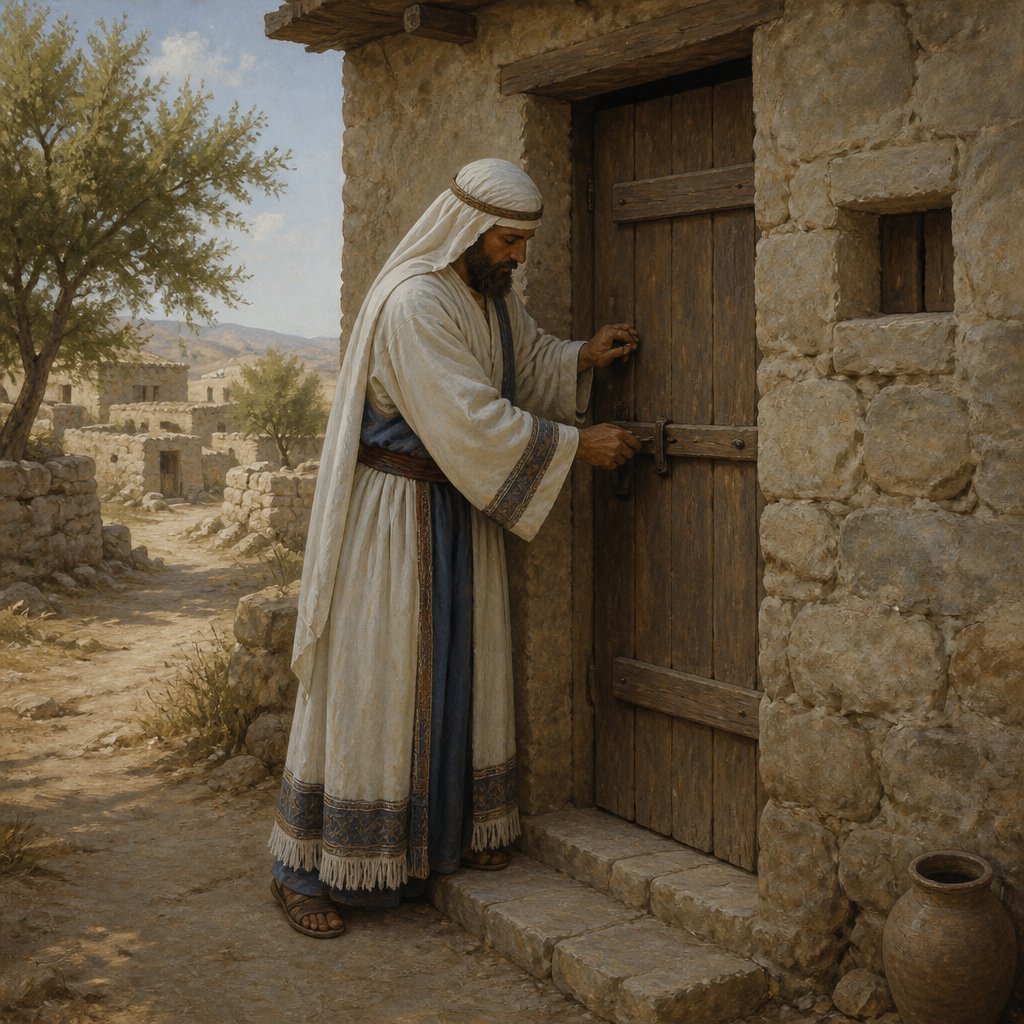
Leviticus 14:38 (KJV) states, "Then the priest shall go out of the house to the door of the house, and shut up the house seven days."
The book of Leviticus is the third book of the Bible's Old Testament and is deeply rooted in the laws and procedures of the Israelite community. It outlines the rituals and sacrifices that the Israelites were required to perform in order to maintain their spiritual purity and relationship with God. In Leviticus 14, the focus is on the treatment of leprosy, a contagious skin disease that was seen as a symbol of impurity and sin.
In verse 38, the instructions given to the priest are specific and practical. When a house is suspected of being infected with leprosy, the priest is to inspect it and then close it off for a period of seven days. This action is a part of the purification process that would have been taken very seriously by the Israelites. The closure of the house for seven days would have allowed time for the priest to observe any further spreading of the disease and for the people to recognize the seriousness of the situation.
There is a deeper meaning behind this verse that extends beyond the physical implications of dealing with a contagious disease. The shutting up of the house for seven days can be seen as a metaphor for the way in which the Israelites were called to deal with sin and impurity in their lives. Just as the infected house needed to be isolated and purified, so too were the Israelites expected to identify and separate themselves from sin in order to maintain their spiritual cleanliness.
The number seven is significant in the Bible and is often associated with completion and perfection. In this verse, the fact that the house is to be shut up for seven days indicates that a full and thorough process of purification is taking place. This required patience and trust in the process, as it was necessary for the Israelites to fully commit to the purification ritual in order to be cleansed from the impurity of leprosy.
The themes of holiness, purity, and the need for separation from sin are prevalent throughout the book of Leviticus and are exemplified in this verse. The Israelites were continually reminded of the importance of upholding their spiritual and moral integrity, as well as the consequences of neglecting this responsibility. By following the specific instructions given to them, the Israelites were able to demonstrate their obedience and commitment to God.
The context of this verse is set within a larger narrative of God's instructions to the people of Israel regarding their hygiene, health, and moral conduct. The laws and regulations laid out in Leviticus were intended to guide the Israelites in their daily lives and ensure their adherence to God's will. The treatment of leprosy and the procedures outlined in Leviticus 14 provided the Israelites with a framework for dealing with impurity and sin, ultimately leading them towards spiritual renewal and restoration.
Symbolically, the shutting up of the house for seven days can be seen as a representation of the time of reflection and introspection that is often required in the process of spiritual purification. It serves as a reminder of the importance of taking the time to address and confront the presence of sin in our lives, in order to ultimately rid ourselves of its influence. The actions taken by the priest in Leviticus 14:38 can be seen as a model for how we should take responsibility for our spiritual and moral well-being, acknowledging the reality of sin and actively working towards its removal from our lives.
In conclusion, Leviticus 14:38 holds significant spiritual and moral implications for the Israelites and for us as contemporary readers of the Bible. It serves as a reminder of the importance of maintaining spiritual purity and the necessity of confronting sin within our lives. The practical instructions given to the priest convey a message of accountability and dedication to God's will, ultimately calling for a commitment to spiritual cleansing and renewal. Through its symbolic and metaphorical meanings, this verse continues to offer valuable insights into the timeless principles of holiness and the need for separation from sin.
Get our apps


Artwork for Leviticus 14:38

Leviticus 14:38 - "Then the priest shall go out of the house to the door of the house, and shut up the house seven days:"

"Then the priest shall go out of the house to the door of the house, and shut up the house seven days:" - Leviticus 14:38

Leviticus 26:38 - "And ye shall perish among the heathen, and the land of your enemies shall eat you up."

Leviticus 13:38 - "¶ If a man also or a woman have in the skin of their flesh bright spots, even white bright spots;"

Leviticus 11:38 - "But if any water be put upon the seed, and any part of their carcase fall thereon, it shall be unclean unto you."

Job 38:14 - "It is turned as clay to the seal; and they stand as a garment."

Psalms 38:14 - "Thus I was as a man that heareth not, and in whose mouth are no reproofs."

1 Corinthians 14:38 - "But if any man be ignorant, let him be ignorant."

Leviticus 14:51

Leviticus 7:38 - "Which the LORD commanded Moses in mount Sinai, in the day that he commanded the children of Israel to offer their oblations unto the LORD, in the wilderness of Sinai."

Leviticus 25:38 - "I am the LORD your God, which brought you forth out of the land of Egypt, to give you the land of Canaan, and to be your God."

Leviticus 23:38 - "Beside the sabbaths of the LORD, and beside your gifts, and beside all your vows, and beside all your freewill offerings, which ye give unto the LORD."

Leviticus 14:55 - "And for the leprosy of a garment, and of a house,"

Leviticus 14:56 - "And for a rising, and for a scab, and for a bright spot:"

Leviticus 14:1 - "And the LORD spake unto Moses, saying,"

Leviticus 11:14 - "And the vulture, and the kite after his kind;"

Leviticus 5:14 - "¶ And the LORD spake unto Moses, saying,"

Exodus 38:14 - "The hangings of the one side of the gate were fifteen cubits; their pillars three, and their sockets three."

"It is turned as clay to the seal; and they stand as a garment." - Job 38:14

Mark 14:38 - "Watch ye and pray, lest ye enter into temptation. The spirit truly is ready, but the flesh is weak."

Leviticus 14:54 - "This is the law for all manner of plague of leprosy, and scall,"

Leviticus 26:14 - "¶ But if ye will not hearken unto me, and will not do all these commandments;"

Leviticus 14:33 - "¶ And the LORD spake unto Moses and unto Aaron, saying,"

Numbers 14:38 - "But Joshua the son of Nun, and Caleb the son of Jephunneh, which were of the men that went to search the land, lived still."

Leviticus 14:57 - "To teach when it is unclean, and when it is clean: this is the law of leprosy."

"And for the leprosy of a garment, and of a house," - Leviticus 14:55

Leviticus 13:14 - "But when raw flesh appeareth in him, he shall be unclean."

Leviticus 14:26 - "And the priest shall pour of the oil into the palm of his own left hand:"

"But if any man be ignorant, let him be ignorant." - 1 Corinthians 14:38

"Thus I was as a man that heareth not, and in whose mouth are no reproofs." - Psalms 38:14