What does Leviticus 14:47 mean?
“And he that lieth in the house shall wash his clothes; and he that eateth in the house shall wash his clothes.” — Leviticus 14:47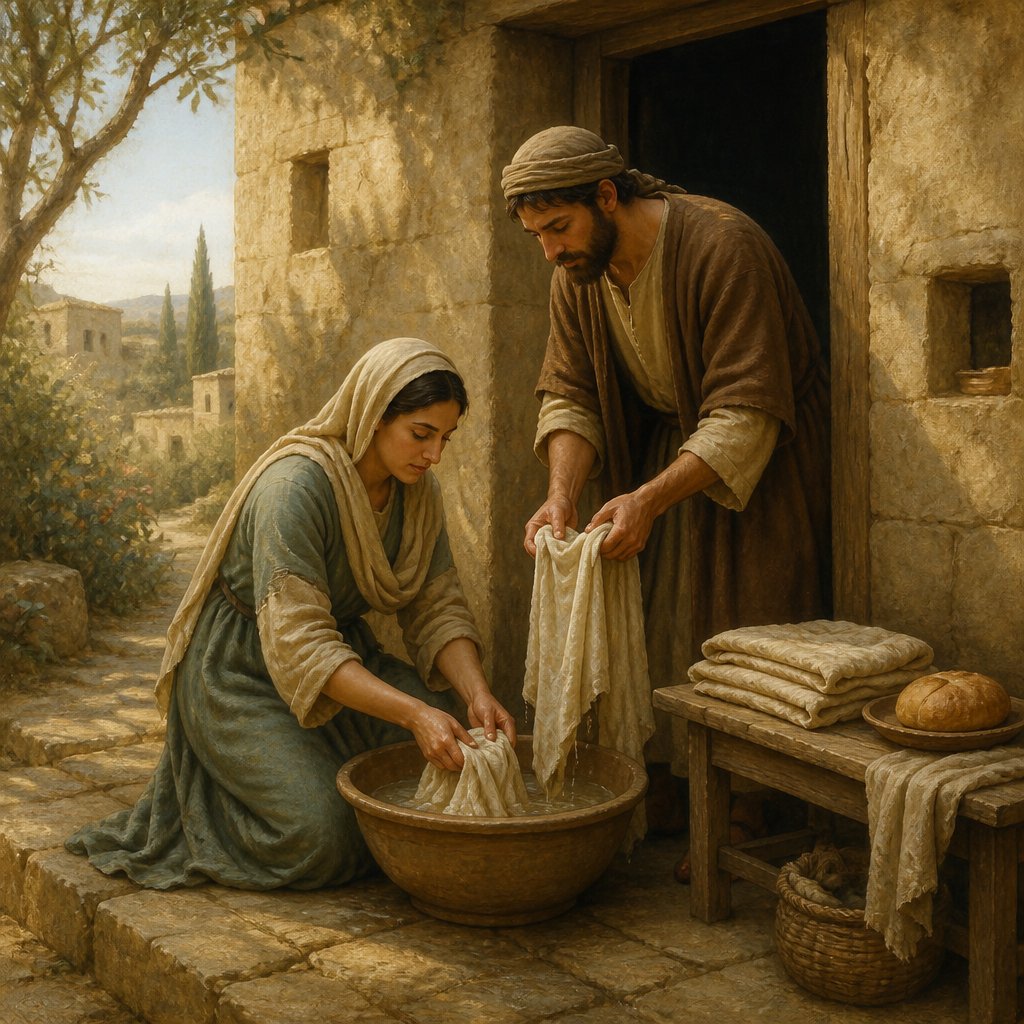
Leviticus 14:47 (KJV) states: "And he that lieth in the house shall wash his clothes; and he that eateth in the house shall wash his clothes."
The book of Leviticus is the third book of the Hebrew Bible and the Old Testament. It primarily deals with the laws and regulations of the Levites, the priestly tribe of Israel. The verse in question is part of a larger passage that outlines the process for cleansing a house that has been infected with mold or mildew. In this context, the verse emphasizes the importance of cleanliness and purity in all aspects of life, both physical and spiritual.
The broader context of Leviticus 14 is significant for understanding the specific meaning of verse 47. The chapter deals with the purification rituals for people and objects that have been afflicted with skin diseases, mold, or other forms of uncleanness. The detailed instructions for these rituals demonstrate the Israelites' belief in the importance of cleanliness and holiness before God. This emphasis on cleanliness reflects the broader theme of purity and separation from impurity that permeates the book of Leviticus.
In the specific case of verse 47, the command to wash clothes after being in a contaminated house is part of the purification process outlined in the previous verses. The act of washing clothes was a symbolic way of removing impurity and restoring cleanliness. This requirement emphasized the importance of maintaining personal purity and spiritual cleanliness, especially in the face of external uncleanness.
The verse also highlights the communal nature of the Israelite community's relationship with uncleanness. The requirement for both the person residing in the house and the one eating there to wash their clothes underscores the interconnectedness of individuals within the community. It also emphasizes the potential spread of impurity from person to person and the need for everyone to maintain personal purity to prevent the contagion of uncleanness.
Beyond its immediate context, Leviticus 14:47 can be understood in a broader theological and symbolic sense. The emphasis on washing clothes as part of the purification process serves as a metaphor for the internal cleansing of the soul. Throughout the Bible, washing is often used as a symbolic act of purification and renewal. In this case, the act of washing clothes represents the spiritual cleansing of the individual, removing impurity and restoring holiness.
The verse also carries implications for the importance of personal responsibility in maintaining purity. The requirement to wash clothes after being in a contaminated house places the onus on the individual to actively participate in their own purification. This underscores the idea that individuals are accountable for their own spiritual cleanliness and cannot rely solely on external rituals or communal ceremonies to achieve purity.
In addition, the command to wash clothes resonates with the broader biblical theme of holiness. The act of washing clothes serves as a tangible reminder of the Israelites' call to be a holy people, set apart for God's purposes. By emphasizing the importance of cleanliness and purity, the verse reinforces the idea that holiness permeates all aspects of life, including the mundane tasks of daily living.
In summary, Leviticus 14:47 conveys important theological and symbolic messages about the relationship between physical cleanliness and spiritual purity. Within its immediate context, the verse underscores the importance of personal responsibility for maintaining purity and the interconnectedness of individuals within the community. In a broader theological sense, the command to wash clothes serves as a metaphor for the internal cleansing of the soul and the call to holiness. Overall, the verse serves as a reminder of the paramount importance of purity and holiness in the lives of the Israelites and carries enduring spiritual significance for believers today.
Get our apps


Artwork for Leviticus 14:47

Leviticus 14:47 - "And he that lieth in the house shall wash his clothes; and he that eateth in the house shall wash his clothes."
"And he that lieth in the house shall wash his clothes; and he that eateth in the house shall wash his clothes." - Leviticus 14:47

Leviticus 13:47 - "¶ The garment also that the plague of leprosy is in, whether it be a woollen garment, or a linen garment;"

Philemon 1:4-7

Leviticus 11:47 - "To make a difference between the unclean and the clean, and between the beast that may be eaten and the beast that may not be eaten."
Leviticus 25:47 - "¶ And if a sojourner or stranger wax rich by thee, and thy brother that dwelleth by him wax poor, and sell himself unto the stranger or sojourner by thee, or to the stock of the stranger's family:"

"¶ The garment also that the plague of leprosy is in, whether it be a woollen garment, or a linen garment;" - Leviticus 13:47

Mark 14:47 - "And one of them that stood by drew a sword, and smote a servant of the high priest, and cut off his ear."

Leviticus 14:51

Genesis 47:14 - "And Joseph gathered up all the money that was found in the land of Egypt, and in the land of Canaan, for the corn which they bought: and Joseph brought the money into Pharaoh's house."
"To make a difference between the unclean and the clean, and between the beast that may be eaten and the beast that may not be eaten." - Leviticus 11:47

Leviticus 14:55 - "And for the leprosy of a garment, and of a house,"

Leviticus 14:56 - "And for a rising, and for a scab, and for a bright spot:"

Leviticus 14:1 - "And the LORD spake unto Moses, saying,"

Leviticus 11:14 - "And the vulture, and the kite after his kind;"
Leviticus 5:14 - "¶ And the LORD spake unto Moses, saying,"

Isaiah 47:14 - "Behold, they shall be as stubble; the fire shall burn them; they shall not deliver themselves from the power of the flame: there shall not be a coal to warm at, nor fire to sit before it."

Leviticus 14:54 - "This is the law for all manner of plague of leprosy, and scall,"

Leviticus 26:14 - "¶ But if ye will not hearken unto me, and will not do all these commandments;"

Leviticus 14:33 - "¶ And the LORD spake unto Moses and unto Aaron, saying,"

Ezekiel 47:14 - "And ye shall inherit it, one as well as another: concerning the which I lifted up mine hand to give it unto your fathers: and this land shall fall unto you for inheritance."

Leviticus 14:57 - "To teach when it is unclean, and when it is clean: this is the law of leprosy."

"And for the leprosy of a garment, and of a house," - Leviticus 14:55

Leviticus 13:14 - "But when raw flesh appeareth in him, he shall be unclean."

Leviticus 14:26 - "And the priest shall pour of the oil into the palm of his own left hand:"

Leviticus 14:30 - "And he shall offer the one of the turtledoves, or of the young pigeons, such as he can get;"

"And for a rising, and for a scab, and for a bright spot:" - Leviticus 14:56

Leviticus 14:50 - "And he shall kill the one of the birds in an earthen vessel over running water:"

Leviticus 9:14 - "And he did wash the inwards and the legs, and burnt them upon the burnt offering on the altar."

Leviticus 14:5 - "And the priest shall command that one of the birds be killed in an earthen vessel over running water:"