What does Leviticus 15:11 mean?
“And whomsoever he toucheth that hath the issue, and hath not rinsed his hands in water, he shall wash his clothes, and bathe himself in water, and be unclean until the even.” — Leviticus 15:11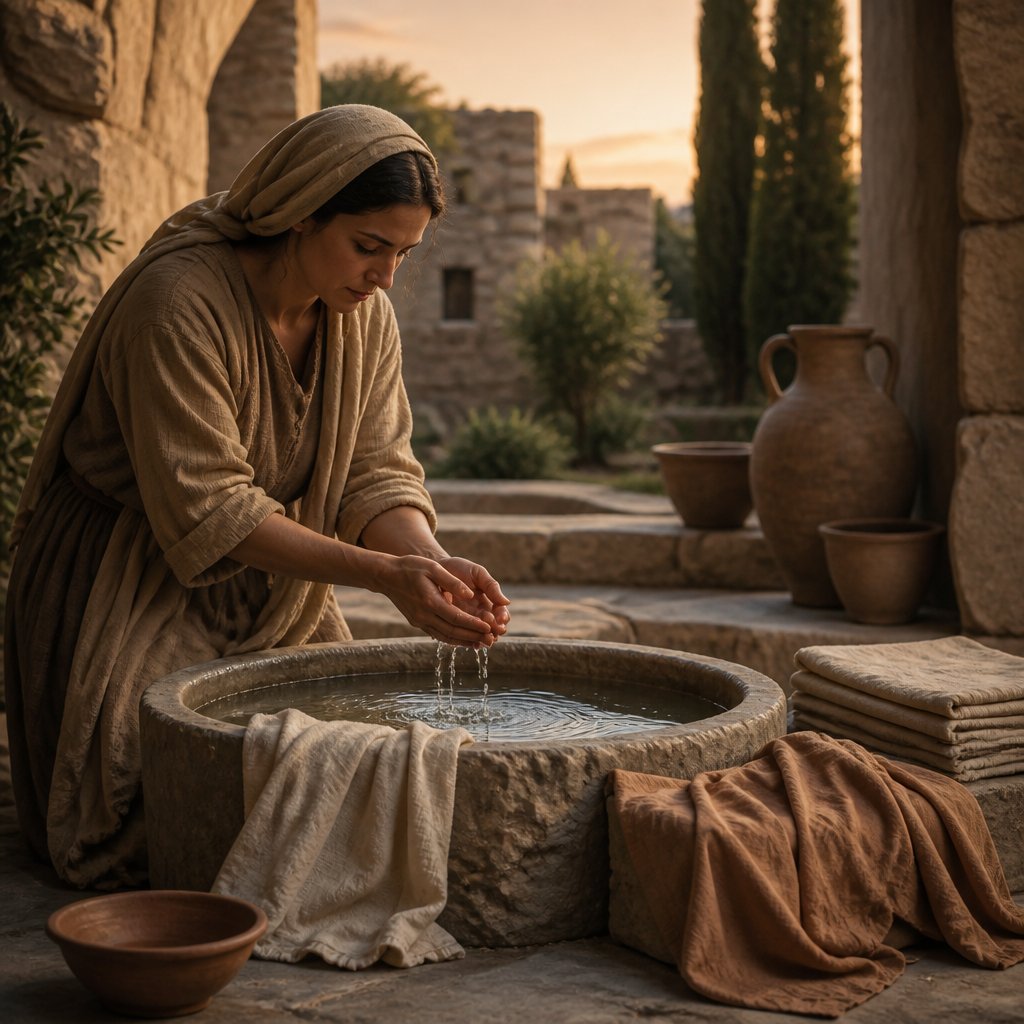
Leviticus 15:11 (KJV) reads, "And whomsoever he toucheth that hath the issue, and hath not rinsed his hands in water, he shall wash his clothes, and bathe himself in water, and be unclean until the even."
In order to fully understand the meaning and significance of this verse, it is important to provide some context. Leviticus is the third book of the Hebrew Bible and the Old Testament, and its name is derived from the Latin word for "pertaining to the Levites". The book primarily deals with laws and rituals given to the Israelites by God through Moses. In this particular verse, the topic being addressed is the cleansing rituals for those who have bodily discharges, such as emissions of blood or other bodily fluids. These rules were important for maintaining purity and holiness in the community, as well as for preventing the spread of disease.
The verse begins with the statement "And whomsoever he toucheth that hath the issue." This indicates that if anyone comes into contact with someone who has a bodily discharge, they would also become unclean. The word "issue" is used here to describe the discharge. It is important to note that in the cultural and historical context in which Leviticus was written, issues of bodily discharges were considered unclean and were therefore subject to specific cleanliness regulations. The verse then describes the required actions for someone who has come into contact with a person experiencing a bodily discharge and has not rinsed their hands in water.
The first requirement is to wash their clothes. This is a physical act of cleansing and it is significant because clothing was a symbol of one's identity and status in the ancient world. Dirty or soiled clothing was seen as a reflection of impurity, and washing them symbolized the casting off of impurity and the restoration of cleanliness. The act of washing one's clothes was symbolic of a spiritual cleansing, and it indicated a desire to be ritually pure before God.
The next requirement is to bathe oneself in water. This is another physical act of cleansing, which was common in ancient cultures as a means of maintaining hygiene and purity. In the context of Leviticus 15:11, bathing in water served as a way to remove any impurities or contaminants that may have been transferred through contact with the person experiencing the bodily discharge. It was also a way of symbolically washing away any spiritual impurity that may have been acquired through the contact.
The verse concludes with the declaration that the person would remain unclean until the evening. The concept of being unclean in the Old Testament was not synonymous with sinfulness, but rather with a state of ritual impurity that required specific actions to be rectified. The time frame of remaining unclean until the evening indicates a temporary state of impurity that could be resolved through the prescribed acts of cleansing.
In terms of symbolism, Leviticus 15:11 carries several layers of meaning. On a practical level, the verse demonstrates the importance of cleanliness and hygiene in the ancient Israelite community. The regulations for bodily discharges were meant to prevent the spread of disease and maintain the overall health and well-being of the community. Symbolically, the requirements for washing one's clothes and bathing in water conveyed a deeper spiritual significance. They represented a desire for purity and holiness before God, as well as a willingness to follow the prescribed rituals in order to maintain that state of purity.
In a broader theological context, Leviticus 15:11 serves as a reminder of the importance of spiritual and physical purity in the eyes of God. It emphasizes the need for repentance and cleansing in order to approach God in a state of holiness. The verse also points to the concept of ritual purity as a means of maintaining a close relationship with God and avoiding spiritual contamination.
In conclusion, Leviticus 15:11 provides important insights into the cultural, historical, and theological context of the Old Testament. It demonstrates the significance of cleanliness and purity within the Israelite community, while also pointing to the deeper spiritual symbolism of these rituals. Through its regulations for bodily discharges and the required acts of cleansing, the verse conveys the importance of maintaining purity and holiness before God.
Get our apps


Artwork for Leviticus 15:11

Leviticus 15:11 - "And whomsoever he toucheth that hath the issue, and hath not rinsed his hands in water, he shall wash his clothes, and bathe himself in water, and be unclean until the even."
"And whomsoever he toucheth that hath the issue, and hath not rinsed his hands in water, he shall wash his clothes, and bathe himself in water, and be unclean until the even." - Leviticus 15:11

Leviticus 11:15 - "Every raven after his kind;"

"Every raven after his kind;" - Leviticus 11:15

John 1:1-5

John 1:1-5
Leviticus 11:22

Leviticus 23:15-22
Leviticus 11:18 - "And the swan, and the pelican, and the gier eagle,"

Leviticus 15:1 - "And the LORD spake unto Moses and to Aaron, saying,"
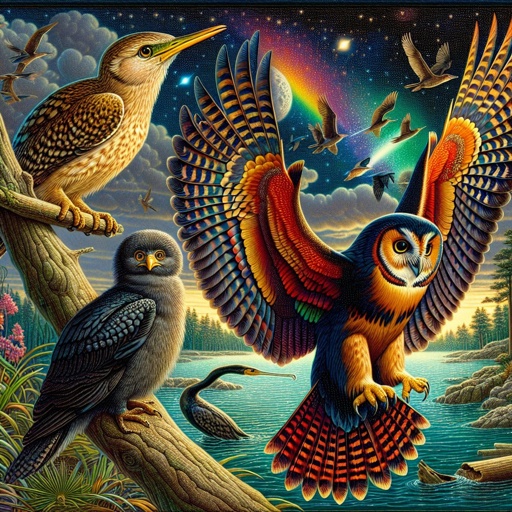
Leviticus 11:17 - "And the little owl, and the cormorant, and the great owl,"

Leviticus 11:14 - "And the vulture, and the kite after his kind;"

Leviticus 11:30 - "And the ferret, and the chameleon, and the lizard, and the snail, and the mole."

Leviticus 11:19 - "And the stork, the heron after her kind, and the lapwing, and the bat."

Leviticus 15:15 - "And the priest shall offer them, the one for a sin offering, and the other for a burnt offering; and the priest shall make an atonement for him before the LORD for his issue."

Leviticus 9:11 - "And the flesh and the hide he burnt with fire without the camp."

Leviticus 11:1 - "And the LORD spake unto Moses and to Aaron, saying unto them,"

Leviticus 11:16 - "And the owl, and the night hawk, and the cuckow, and the hawk after his kind,"

Exodus 4:1-5

Leviticus 15:9 - "And what saddle soever he rideth upon that hath the issue shall be unclean."

Leviticus 2:15 - "And thou shalt put oil upon it, and lay frankincense thereon: it is a meat offering."

Leviticus 22:15 - "And they shall not profane the holy things of the children of Israel, which they offer unto the LORD;"

1 Timothy 1:5

Leviticus 11:41 - "And every creeping thing that creepeth upon the earth shall be an abomination; it shall not be eaten."

Leviticus 19:11 - "¶ Ye shall not steal, neither deal falsely, neither lie one to another."

Leviticus 7:11 - "And this is the law of the sacrifice of peace offerings, which he shall offer unto the LORD."

"And the swan, and the pelican, and the gier eagle," - Leviticus 11:18

Leviticus 11:12 - "Whatsoever hath no fins nor scales in the waters, that shall be an abomination unto you."

Leviticus 11:8 - "Of their flesh shall ye not eat, and their carcase shall ye not touch; they are unclean to you."

Leviticus 26:11 - "And I will set my tabernacle among you: and my soul shall not abhor you."