What does Leviticus 15:15 mean?
“And the priest shall offer them, the one for a sin offering, and the other for a burnt offering; and the priest shall make an atonement for him before the LORD for his issue.” — Leviticus 15:15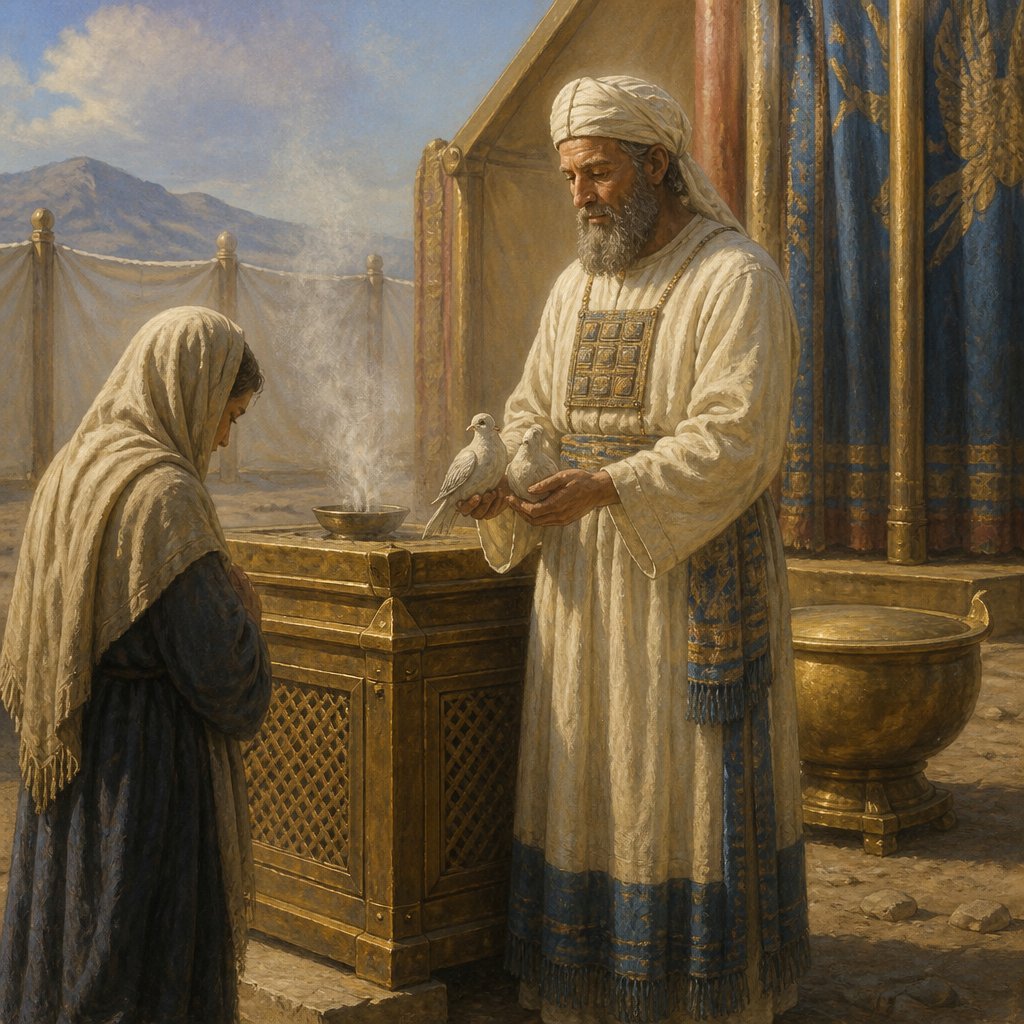
Leviticus 15:15 from the King James Version of the Bible states, "And the priest shall offer them, the one for a sin offering, and the other for a burnt offering; and the priest shall make an atonement for him before the LORD for his issue." This verse comes from the book of Leviticus, which is the third book of the Old Testament and the Torah. It is a book of laws and regulations given to the Israelites by God through Moses. Leviticus is considered to be a part of the Pentateuch, or the first five books of the Bible, which are also known as the books of Moses.
The context of Leviticus 15:15 is important in understanding its meaning. The chapter as a whole deals with issues of ritual impurity, specifically in the context of bodily discharges. It lays out regulations for when a man has a discharge from his body, and the rituals and offerings that must be performed in order to become ritually clean again. This particular verse describes the process for the priest to make atonement for the person who has had the discharge, through the offering of a sin offering and a burnt offering.
One of the key themes in Leviticus 15:15 is the importance of ritual purity and atonement in the eyes of the Lord. In the ancient Israelite society, ritual impurity was a serious matter, and it was believed to separate individuals from the presence of God. Through the rituals and offerings described in this verse, the individual would be able to be restored to a state of purity and be reconciled with God.
Another important theme in this verse is the role of the priest as an intermediary between the people and God. The priest was responsible for carrying out the rituals and offerings on behalf of the individual seeking atonement. This highlights the significance of the priesthood in ancient Israelite society, and the role of the priest as a spiritual leader and guide.
Symbolism is also present in this verse, particularly in the offerings of the sin offering and the burnt offering. The sin offering was meant to atone for the sins or impurities of the individual, while the burnt offering was a way to symbolize complete dedication and surrender to God. The act of offering these sacrifices was a physical manifestation of the individual's desire for spiritual renewal and reconciliation with God.
In a broader theological context, Leviticus 15:15 can be seen as a foreshadowing of the ultimate atonement provided by Jesus Christ in the New Testament. In the Christian faith, Jesus is seen as the ultimate, perfect sacrifice for the atonement of sins. His death on the cross is understood as the fulfillment of the sacrificial system described in the Old Testament, and through faith in him, believers are reconciled to God.
In conclusion, Leviticus 15:15 is a verse that speaks to the importance of ritual purity and atonement in the context of ancient Israelite society. It highlights the role of the priesthood and the significance of offerings and rituals in maintaining a relationship with God. It also carries symbolic meaning and foreshadows the ultimate atonement provided by Jesus Christ in the Christian faith. While the specific regulations and practices described in this verse may not be directly applicable to modern-day believers, its underlying themes of spiritual renewal and reconciliation with God remain relevant.
Get our apps


Artwork for Leviticus 15:15

Leviticus 15:15 - "And the priest shall offer them, the one for a sin offering, and the other for a burnt offering; and the priest shall make an atonement for him before the LORD for his issue."
"And the priest shall offer them, the one for a sin offering, and the other for a burnt offering; and the priest shall make an atonement for him before the LORD for his issue." - Leviticus 15:15

Leviticus 23:15-22

Leviticus 11:15 - "Every raven after his kind;"

Leviticus 15:1 - "And the LORD spake unto Moses and to Aaron, saying,"

Leviticus 15:9 - "And what saddle soever he rideth upon that hath the issue shall be unclean."

Leviticus 2:15 - "And thou shalt put oil upon it, and lay frankincense thereon: it is a meat offering."

Leviticus 22:15 - "And they shall not profane the holy things of the children of Israel, which they offer unto the LORD;"

Leviticus 15:17 - "And every garment, and every skin, whereon is the seed of copulation, shall be washed with water, and be unclean until the even."

Leviticus 14:15 - "And the priest shall take some of the log of oil, and pour it into the palm of his own left hand:"

Leviticus 13:15 - "And the priest shall see the raw flesh, and pronounce him to be unclean: for the raw flesh is unclean: it is a leprosy."

"Every raven after his kind;" - Leviticus 11:15

Leviticus 21:15 - "Neither shall he profane his seed among his people: for I the LORD do sanctify him."

Leviticus 15:21 - "And whosoever toucheth her bed shall wash his clothes, and bathe himself in water, and be unclean until the even."

Leviticus 15:33 - "And of her that is sick of her flowers, and of him that hath an issue, of the man, and of the woman, and of him that lieth with her that is unclean."

Proverbs 1:5

Proverbs 1:5

Proverbs 1:5

Proverbs 1:5

Proverbs 1:5

Genesis 1:5

Proverbs 1:5

Genesis 1:5

Psalm 1:5

Proverbs 1:5

Proverbs 1:5

Psalm 1:5

Proverbs 1:5

Genesis 1:5

Proverbs 1:5