What does Leviticus 15:17 mean?
“And every garment, and every skin, whereon is the seed of copulation, shall be washed with water, and be unclean until the even.” — Leviticus 15:17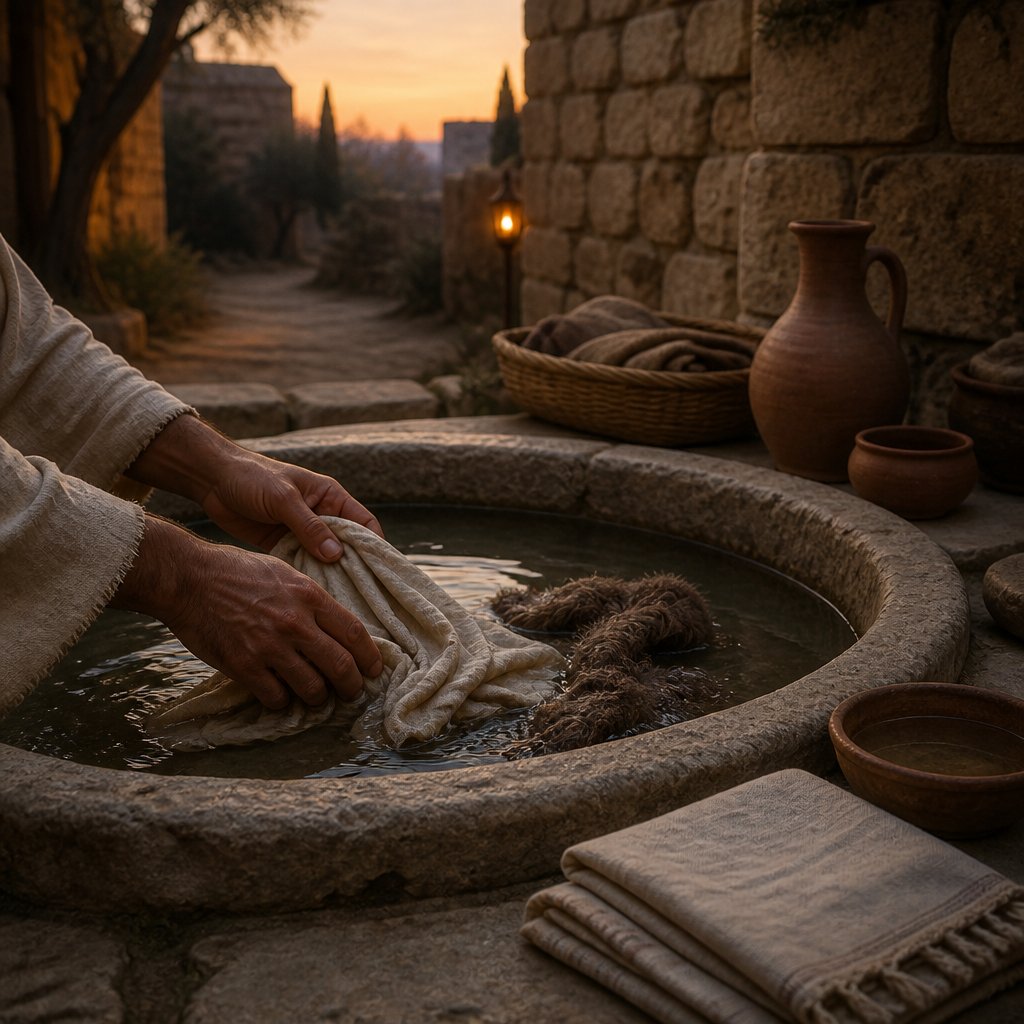
Leviticus 15:17 in the King James Version of the Bible reads, "And every garment, and every skin, whereon is the seed of copulation, shall be washed with water, and be unclean until the even."
This verse comes from the book of Leviticus in the Old Testament, which is a part of the Torah and the Pentateuch. Leviticus is a book of laws and regulations given by God to the Israelites through Moses, and it covers various aspects of religious and moral conduct, as well as laws related to cleanliness, purity, and sacrifice.
In the context of Leviticus 15, the passage deals with the laws concerning bodily discharges and their implications for ritual purity. The verse specifically addresses the issue of bodily emissions on clothing and skin and outlines the necessary purification rituals to restore purity.
The theme of ritual purity and cleanliness is central to the book of Leviticus and is deeply rooted in the Israelite religious and cultural practices. The concept of impurity resulting from bodily emissions, including semen, was a common belief in the ancient world, and the Israelites were instructed to adhere to specific purification rites to maintain their ritual purity.
The symbolism in Leviticus 15:17 reflects the Israelites' understanding of the connection between physical cleanliness and spiritual purity. The ritual of washing with water symbolizes the cleansing of impurity and the restoration of holiness. The emphasis on waiting until evening for the impurity to be removed signifies the completion of a day, which is a symbolic representation of completion and renewal.
Furthermore, the verse also underscores the importance of maintaining cleanliness and purity in all aspects of life, including mundane activities such as laundering garments. It highlights the holistic approach to purity and moral conduct that the Israelites were expected to uphold.
One must also consider the cultural and historical context of the Israelites at the time these laws were given. The Israelites were a nomadic and agrarian people, and hygiene and cleanliness were essential for their health and well-being. By adhering to these laws, the Israelites were also promoting good health practices and preventing the spread of disease within their communities.
In a broader theological sense, Leviticus 15:17 can be interpreted as a metaphor for the restoration of spiritual purity through repentance and purification. The act of washing with water can be seen as a symbolic representation of the cleansing of sin and the renewal of one's spiritual state. The waiting until evening can be understood as a period of reflection and repentance, followed by the assurance of renewal and restoration.
It is important to approach this verse with sensitivity and understanding of its historical and cultural context. While the laws and practices outlined in Leviticus may seem foreign or outdated to modern readers, they were deeply significant and meaningful to the Israelites at the time. Through diligent study and interpretation, one can gain a deeper appreciation for the theological and moral principles conveyed in this verse and the broader book of Leviticus.
Get our apps


Artwork for Leviticus 15:17

Leviticus 15:17 - "And every garment, and every skin, whereon is the seed of copulation, shall be washed with water, and be unclean until the even."
"And every garment, and every skin, whereon is the seed of copulation, shall be washed with water, and be unclean until the even." - Leviticus 15:17

Leviticus 17:7
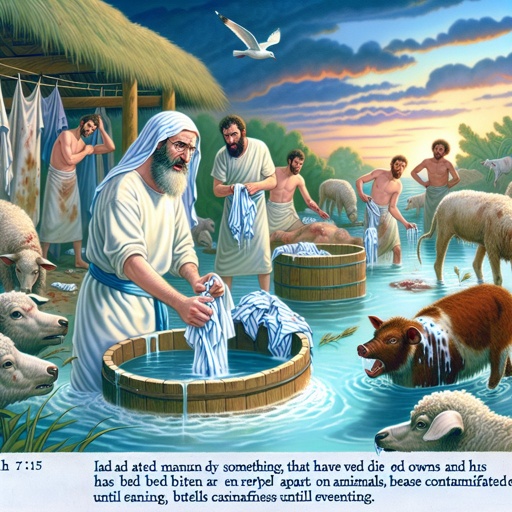
Leviticus 17:15 - "And every soul that eateth that which died of itself, or that which was torn with beasts, whether it be one of your own country, or a stranger, he shall both wash his clothes, and bathe himself in water, and be unclean until the even: then shall he be clean."

Leviticus 23:17-22

Leviticus 11:17 - "And the little owl, and the cormorant, and the great owl,"

Leviticus 22:17 - "¶ And the LORD spake unto Moses, saying,"

Leviticus 23:15-22

Leviticus 17:1 - "And the LORD spake unto Moses, saying,"

Leviticus 11:15 - "Every raven after his kind;"

Leviticus 15:1 - "And the LORD spake unto Moses and to Aaron, saying,"

Leviticus 7:17 - "But the remainder of the flesh of the sacrifice on the third day shall be burnt with fire."

Leviticus 24:17 - "¶ And he that killeth any man shall surely be put to death."

Leviticus 15:15 - "And the priest shall offer them, the one for a sin offering, and the other for a burnt offering; and the priest shall make an atonement for him before the LORD for his issue."

Genesis 17-15

Provers 15:17

Acts 17:15

Genesis 15:17

Leviticus 15:9 - "And what saddle soever he rideth upon that hath the issue shall be unclean."

Leviticus 2:15 - "And thou shalt put oil upon it, and lay frankincense thereon: it is a meat offering."

Leviticus 22:15 - "And they shall not profane the holy things of the children of Israel, which they offer unto the LORD;"

Leviticus 17:3 - "What man soever there be of the house of Israel, that killeth an ox, or lamb, or goat, in the camp, or that killeth it out of the camp,"

"¶ And the LORD spake unto Moses, saying," - Leviticus 22:17

"And the LORD spake unto Moses, saying," - Leviticus 17:1

"And the little owl, and the cormorant, and the great owl," - Leviticus 11:17

Leviticus 27:17 - "If he sanctify his field from the year of jubile, according to thy estimation it shall stand."

Leviticus 17:16 - "But if he wash them not, nor bathe his flesh; then he shall bear his iniquity."

Leviticus 9:17 - "And he brought the meat offering, and took an handful thereof, and burnt it upon the altar, beside the burnt sacrifice of the morning."

Leviticus 13:15 - "And the priest shall see the raw flesh, and pronounce him to be unclean: for the raw flesh is unclean: it is a leprosy."

Leviticus 14:15 - "And the priest shall take some of the log of oil, and pour it into the palm of his own left hand:"