What does Leviticus 16:29 mean?
"And this shall be a statute for ever unto you: that in the seventh month, on the tenth day of the month, ye shall afflict your souls, and do no work at all, whether it be one of your own country, or a stranger that sojourneth among you:" - Leviticus 16:29
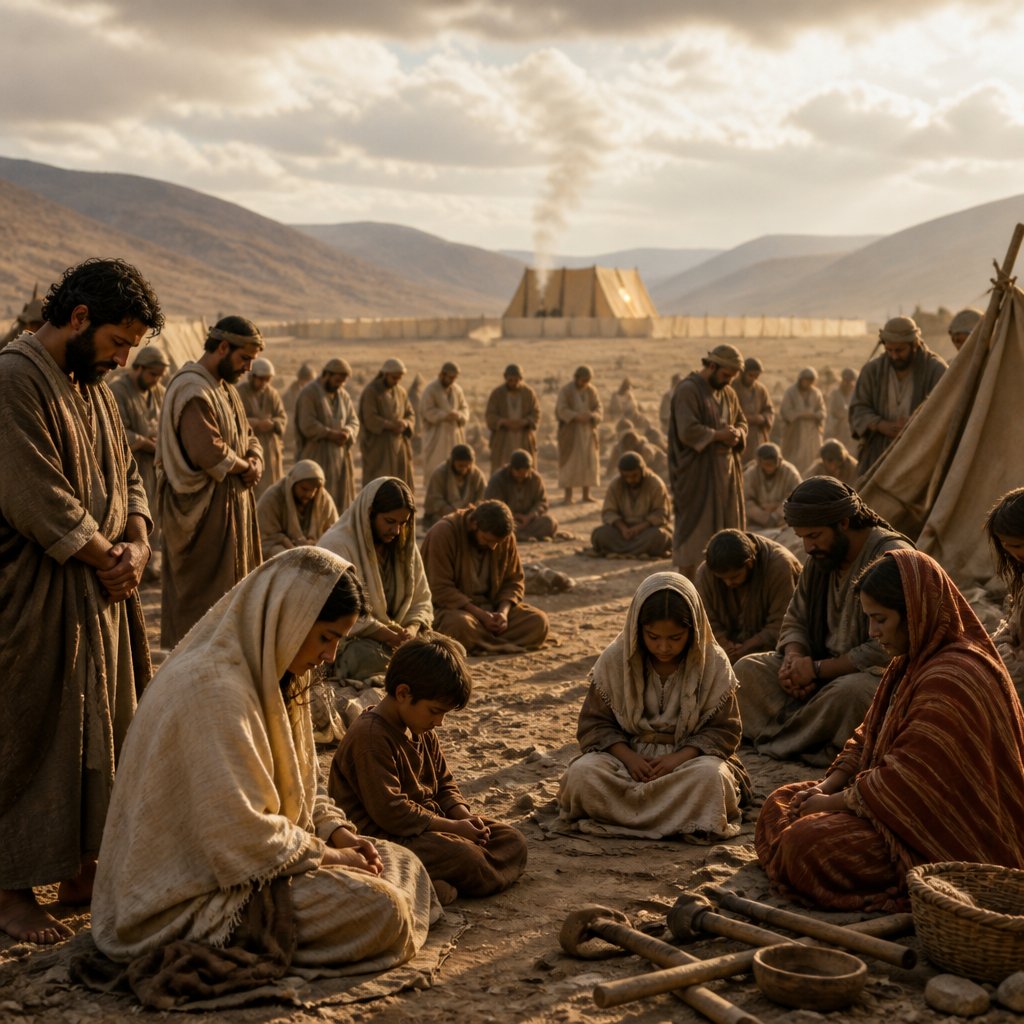
The Bible verse Leviticus 16:29 from the King James Version states, "And this shall be a statute for ever unto you: that in the seventh month, on the tenth day of the month, ye shall afflict your souls, and do no work at all, whether it be one of your own country, or a stranger that sojourneth among you." This verse is part of the instructions given to the Israelites for the observance of the Day of Atonement, which was a solemn and sacred day for the people of Israel. In order to truly understand the significance of this verse, it is important to explore its historical, cultural, and theological context.
The Day of Atonement, or Yom Kippur, was the most important and holy day in the Jewish calendar. It was a day of fasting, prayer, and repentance, when the people of Israel sought forgiveness for their sins and reconciliation with God. The instructions given in Leviticus 16:29 emphasize the solemnity and gravity of this day, as the people were commanded to afflict their souls and abstain from work as a sign of their deep contrition and devotion.
The seventh month, on the tenth day, was the specific date set aside for the observance of the Day of Atonement. This time frame was chosen for its symbolic significance, as the number seven often represents completion or perfection in the Bible, while the tenth day holds its own significance in Jewish tradition. The combination of these numbers underscores the importance and completeness of the atonement process.
The command to afflict their souls signifies the need for genuine repentance and inward reflection. The act of afflicting one's soul could include fasting, wearing sackcloth, or engaging in self-denial as a way to show humility and remorse for one's sins. By refraining from work, the people were able to fully focus on their spiritual state and relationship with God, allowing them to engage in prayer and seek atonement with undivided attention.
The verse also emphasizes the inclusivity of the Day of Atonement, as it applies to both the Israelites and the strangers among them. This demonstrates that the opportunity for forgiveness and reconciliation with God is available to all, regardless of their background or nationality. It underscores the universal and compassionate nature of God's mercy and forgiveness, which extends to all who sincerely seek it.
In a broader theological context, the Day of Atonement was a foreshadowing of the ultimate atonement provided by Jesus Christ. In the New Testament, Jesus is described as the ultimate atoning sacrifice, whose death and resurrection provided the means for humanity to be reconciled with God. The rituals and practices outlined in Leviticus 16 pointed forward to the redemption and forgiveness made possible through Christ's sacrifice on the cross.
Symbolically, the Day of Atonement represents the cleansing of sin and the restoration of fellowship with God. It serves as a reminder of the need for repentance, forgiveness, and reconciliation in the life of every believer. The affliction of the soul and the cessation of work serve as tangible expressions of devotion and reverence, demonstrating the depth of one's commitment to seeking and maintaining a close relationship with God.
In conclusion, Leviticus 16:29 carries deep spiritual and symbolic significance within the context of the Day of Atonement. It underscores the solemnity and universality of this sacred day, emphasizing the need for genuine repentance, humility, and devotion. As believers reflect on this verse, they are reminded of the profound grace and mercy of God, as well as the ultimate atonement provided through Jesus Christ. It serves as a timeless and powerful reminder of the redemptive work of God and the call to seek reconciliation with Him.
Have questions about Leviticus 16:29?
Dive deeper into this scripture with Bible Chat — an AI-powered tool for exploring God's Word through conversation. Ask questions, get context, and grow in your understanding of the Bible.
Get Our Apps


Leviticus 16:29 Artwork
Leviticus 16:29 - "¶ And this shall be a statute for ever unto you: that in the seventh month, on the tenth day of the month, ye shall afflict your souls, and do no work at all, whether it be one of your own country, or a stranger that sojourneth among you:"
"¶ And this shall be a statute for ever unto you: that in the seventh month, on the tenth day of the month, ye shall afflict your souls, and do no work at all, whether it be one of your own country, or a stranger that sojourneth among you:" - Leviticus 16:29

Leviticus 13:29 - "¶ If a man or woman have a plague upon the head or the beard;"

Leviticus 16:8

Leviticus 6:29 - "All the males among the priests shall eat thereof: it is most holy."

Leviticus 22:29 - "And when ye will offer a sacrifice of thanksgiving unto the LORD, offer it at your own will."

leviticus 16:7-10

Genesis 29:16-35

Leviticus 21:16 - "¶ And the LORD spake unto Moses, saying,"

Leviticus 23:29 - "For whatsoever soul it be that shall not be afflicted in that same day, he shall be cut off from among his people."

Leviticus 8:29 - "And Moses took the breast, and waved it for a wave offering before the LORD: for of the ram of consecration it was Moses' part; as the LORD commanded Moses."

Leviticus 19:29 - "¶ Do not prostitute thy daughter, to cause her to be a whore; lest the land fall to whoredom, and the land become full of wickedness."

Leviticus 18:29 - "For whosoever shall commit any of these abominations, even the souls that commit them shall be cut off from among their people."

Leviticus 4:29 - "And he shall lay his hand upon the head of the sin offering, and slay the sin offering in the place of the burnt offering."

Leviticus 9:16 - "And he brought the burnt offering, and offered it according to the manner."

Leviticus 14:29 - "And the rest of the oil that is in the priest's hand he shall put upon the head of him that is to be cleansed, to make an atonement for him before the LORD."
"¶ If a man or woman have a plague upon the head or the beard;" - Leviticus 13:29

Leviticus 4:16 - "And the priest that is anointed shall bring of the bullock's blood to the tabernacle of the congregation:"

Leviticus 11:16 - "And the owl, and the night hawk, and the cuckow, and the hawk after his kind,"

Leviticus 16:25 - "And the fat of the sin offering shall he burn upon the altar."

Leviticus 11:29 - "¶ These also shall be unclean unto you among the creeping things that creep upon the earth; the weasel, and the mouse, and the tortoise after his kind,"

Leviticus 18:16 - "Thou shalt not uncover the nakedness of thy brother's wife: it is thy brother's nakedness."

Proverbs 16:29 - "A violent man enticeth his neighbour, and leadeth him into the way that is not good."

Proverbs 29:16 - "When the wicked are multiplied, transgression increaseth: but the righteous shall see their fall."

Leviticus 15:29 - "And on the eighth day she shall take unto her two turtles, or two young pigeons, and bring them unto the priest, to the door of the tabernacle of the congregation."

Leviticus 27:29 - "None devoted, which shall be devoted of men, shall be redeemed; but shall surely be put to death." The image should not depict explicit or offensive content but be symbolic.

Genesis 29:16 - "And Laban had two daughters: the name of the elder was Leah, and the name of the younger was Rachel."

Leviticus 25:29 - "And if a man sell a dwelling house in a walled city, then he may redeem it within a whole year after it is sold; within a full year may he redeem it."

Job 29:16 - "I was a father to the poor: and the cause which I knew not I searched out."

Acts 16:29 - "Then he called for a light, and sprang in, and came trembling, and fell down before Paul and Silas,"