What does Leviticus 19:10 mean?
"And thou shalt not glean thy vineyard, neither shalt thou gather every grape of thy vineyard; thou shalt leave them for the poor and stranger: I am the LORD your God." - Leviticus 19:10
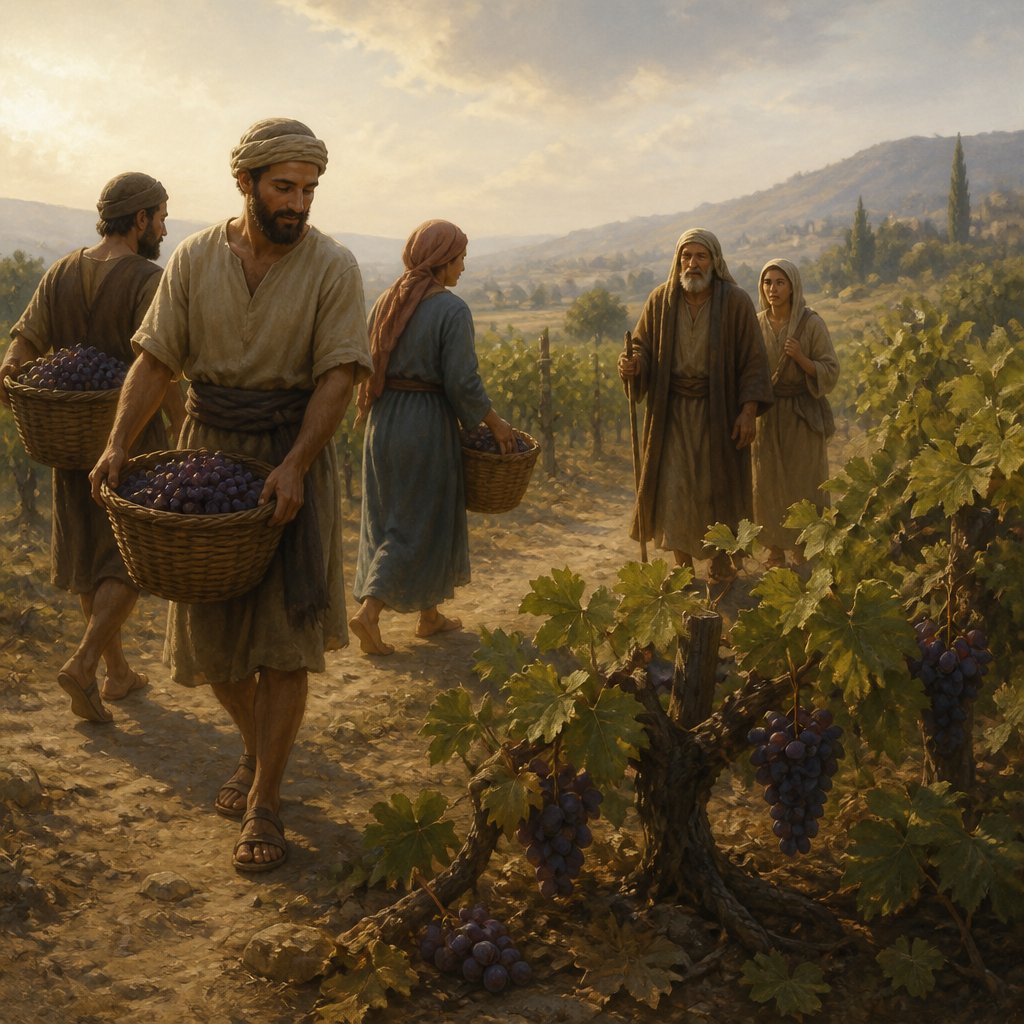
Leviticus 19:10 in the King James Version of the Bible reads, "And thou shalt not glean thy vineyard, neither shalt thou gather every grape of thy vineyard; thou shalt leave them for the poor and stranger: I am the Lord your God."
This verse is found in the book of Leviticus, which is the third book of the Old Testament and is part of the Torah, the first five books of the Hebrew Bible, also known as the Pentateuch. Leviticus is primarily concerned with laws and regulations for worship, as well as moral and ethical conduct for the Israelites. Chapter 19 specifically addresses various laws and instructions for ethical living and treating others with kindness and fairness.
The verse in question speaks to the concept of gleaning, which was a practice in ancient times where landowners would leave behind some of the produce of their fields or vineyards for the poor to collect. This practice was an important aspect of the social welfare system in ancient Israel, where the poor and foreigners were provided for by allowing them to gather food from the fields and vineyards of those who owned land.
The deeper meaning behind this verse is the importance of compassion, generosity, and social justice. By instructing the Israelites not to glean their vineyards completely, but to leave some of the produce for the poor and the stranger, it emphasizes the obligation to care for those in need and to share the resources that have been provided by God. This instruction is a reminder that the wealth and abundance that the Israelites had were to be shared and used for the benefit of others, particularly those who were less fortunate.
Additionally, this verse reflects the idea of stewardship and the recognition that ultimately, all possessions and resources belong to God. By leaving the gleanings for the poor and the stranger, the Israelites are not only practicing charity and generosity but also acknowledging that they are merely stewards of the land and its produce, and that ultimately it all belongs to God.
The inclusion of the phrase "I am the Lord your God" at the end of the verse further emphasizes the divine mandate behind this instruction. It serves as a reminder to the Israelites that these laws and commands are ordained by God and that obeying them is an act of faith and obedience to Him.
In a broader context, Leviticus 19:10 is connected to the theme of social justice and care for the marginalized and vulnerable members of society. The concept of leaving gleanings for the poor and the stranger demonstrates the value of inclusivity and compassion for those who may not have the same level of resources or support. It also highlights the importance of community and solidarity, as it is through the collective efforts of the community that the needs of the less fortunate are met.
Symbolically, the act of leaving gleanings for the poor can be seen as a tangible expression of love and kindness. It represents a willingness to sacrifice and share, as well as an acknowledgment of the interconnectedness of all members of society. This act of leaving behind some of the harvest also reflects the idea of trusting in God's provision, as it requires faith that there will be enough for both the landowner and the poor even when it seems like resources are limited.
In conclusion, Leviticus 19:10 carries a powerful message about the importance of generosity, compassion, and social justice. It serves as a reminder of our responsibility to care for those who are in need and to recognize that all that we have ultimately belongs to God. It encourages us to look beyond our own interests and to consider the well-being of others, particularly those who may be marginalized or overlooked. This verse continues to provide valuable insight and guidance for how we should live and interact with others in a just and compassionate manner.
Have questions about Leviticus 19:10?
Dive deeper into this scripture with Bible Chat — an AI-powered tool for exploring God's Word through conversation. Ask questions, get context, and grow in your understanding of the Bible.
Get Our Apps


Leviticus 19:10 Artwork

Leviticus 19:10 - "And thou shalt not glean thy vineyard, neither shalt thou gather every grape of thy vineyard; thou shalt leave them for the poor and stranger: I am the LORD your God."
"And thou shalt not glean thy vineyard, neither shalt thou gather every grape of thy vineyard; thou shalt leave them for the poor and stranger: I am the LORD your God." - Leviticus 19:10

Leviticus 10:19 - "And Aaron said unto Moses, Behold, this day have they offered their sin offering and their burnt offering before the LORD; and such things have befallen me: and if I had eaten the sin offering to day, should it have been accepted in the sight of the LORD?"

Leviticus 21:19 - "Or a man that is brokenfooted, or brokenhanded,"

Leviticus 6:19 - "¶ And the LORD spake unto Moses, saying,"

Leviticus 19:1 - "And the LORD spake unto Moses, saying,"

Leviticus 10:10 - "And that ye may put difference between holy and unholy, and between unclean and clean;"

Leviticus 11:19 - "And the stork, the heron after her kind, and the lapwing, and the bat."

Leviticus 19:7 - "And if it be eaten at all on the third day, it is abominable; it shall not be accepted."

leviticus 16:7-10

"Or a man that is brokenfooted, or brokenhanded," - Leviticus 21:19

Leviticus 5:19 - "It is a trespass offering: he hath certainly trespassed against the LORD."

Leviticus 19:35 - "¶ Ye shall do no unrighteousness in judgment, in meteyard, in weight, or in measure."

Leviticus 10:20 - "And when Moses heard that, he was content."
Leviticus 10:8 - "¶ And the LORD spake unto Aaron, saying,"

Leviticus 8:19 - "And he killed it; and Moses sprinkled the blood upon the altar round about."

Leviticus 19:33 - "¶ And if a stranger sojourn with thee in your land, ye shall not vex him."

Leviticus 19:11 - "¶ Ye shall not steal, neither deal falsely, neither lie one to another."

Leviticus 19:24 - "But in the fourth year all the fruit thereof shall be holy to praise the LORD withal."

Leviticus 13:19 - "And in the place of the boil there be a white rising, or a bright spot, white, and somewhat reddish, and it be shewed to the priest;"

Leviticus 22:19 - "Ye shall offer at your own will a male without blemish, of the beeves, of the sheep, or of the goats."

Leviticus 9:19 - "And the fat of the bullock and of the ram, the rump, and that which covereth the inwards, and the kidneys, and the caul above the liver:"

Leviticus 4:19 - "And he shall take all his fat from him, and burn it upon the altar."

Leviticus 19:30 - "¶ Ye shall keep my sabbaths, and reverence my sanctuary: I am the LORD."

Leviticus 19:5 - "¶ And if ye offer a sacrifice of peace offerings unto the LORD, ye shall offer it at your own will."

Leviticus 24:19 - "And if a man cause a blemish in his neighbour; as he hath done, so shall it be done to him;"

"And the LORD spake unto Moses, saying," - Leviticus 19:1

"¶ And the LORD spake unto Moses, saying," - Leviticus 6:19

Luke 10:18-19

Luke 10:18-19