What does Leviticus 1:15 mean?
“And the priest shall bring it unto the altar, and wring off his head, and burn it on the altar; and the blood thereof shall be wrung out at the side of the altar:” — Leviticus 1:15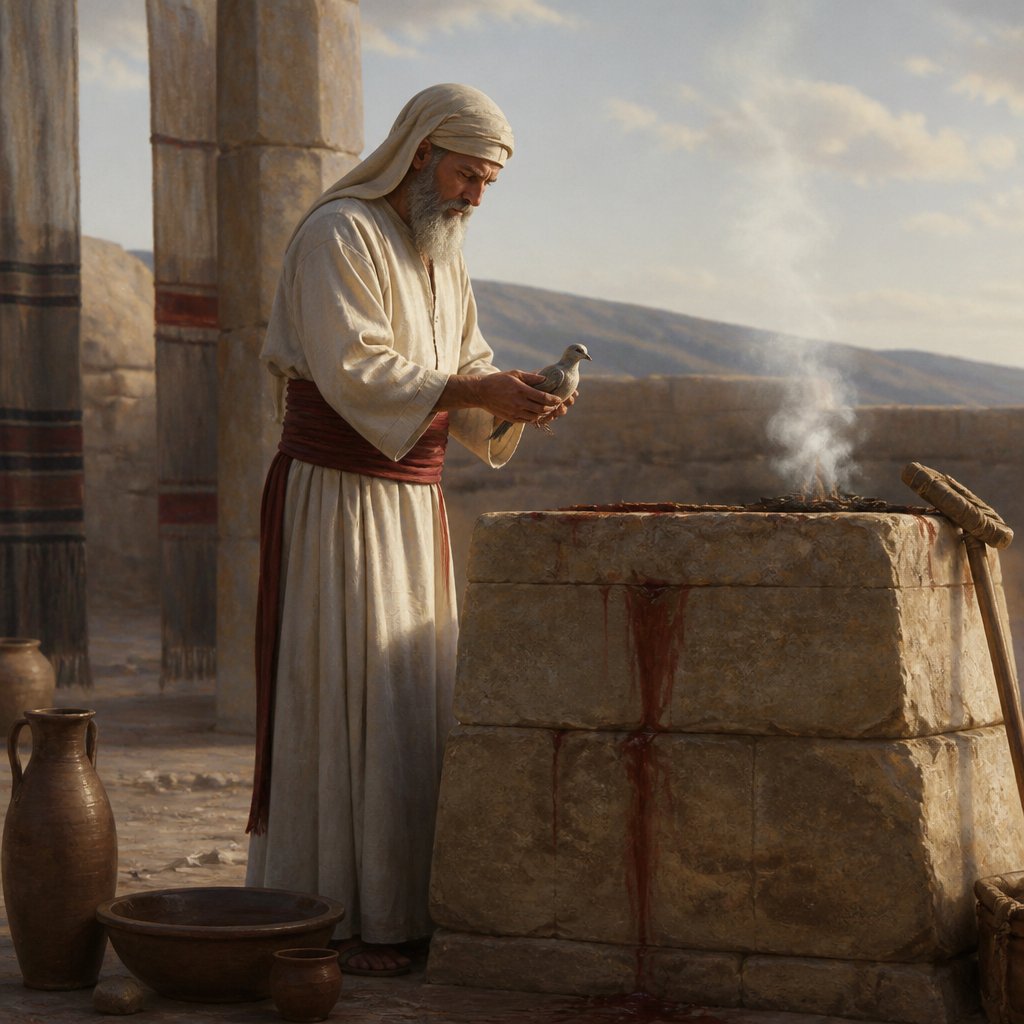
Leviticus 1:15 from the King James Version (KJV) reads, "And he shall slay it on the side of the altar northward before the Lord: and the priests, Aaron's sons, shall sprinkle his blood round about upon the altar."
This verse is from the book of Leviticus, which is the third book of the Hebrew Bible and the Old Testament. The book of Leviticus is a part of the Torah, the first five books of the Bible, and it is a central text in both Judaism and Christianity. It contains laws and rituals for the Israelites to follow, particularly regarding the priests, sacrifices, and the tabernacle.
The specific verse, Leviticus 1:15, is part of instructions for the burnt offering, which was a voluntary sacrifice of a male animal, either a bull, sheep, or goat, without blemish. The burnt offering was intended to demonstrate devotion and dedication to God, as well as to seek atonement for sin. In this context, the verse outlines the procedure for sacrificing the animal and sprinkling its blood on the altar.
The symbolism and themes in Leviticus 1:15 are significant in understanding the religious and cultural practices of the ancient Israelites, as well as the theological implications for contemporary believers.
The act of slaughtering the animal on the north side of the altar before the Lord signifies the solemnity and sacredness of the sacrifice. The positioning of the sacrifice is intentional and symbolic, as the north side may have been associated with the divine presence or holiness. Furthermore, the involvement of the priests, who are identified as Aaron's sons, emphasizes the role of the religious hierarchy and the importance of proper ritual conduct.
The act of sprinkling the blood around the altar holds profound symbolism in the Israelite sacrificial system. Blood was considered a powerful symbol of life and was believed to carry the essence of the creature. By sprinkling the blood on the altar, the priests were symbolically offering the life of the animal to God, acknowledging His sovereignty and seeking His favor and forgiveness.
Moreover, the imagery of blood and sacrifice in Leviticus 1:15 foreshadows the theme of atonement and redemption that runs throughout the Bible. The shedding of blood for the forgiveness of sins is a consistent motif in both the Old and New Testaments, culminating in the ultimate sacrifice of Jesus Christ on the cross. The sprinkling of blood in Leviticus 1:15 thus prefigures the cleansing and atoning power of Christ's sacrificial death, highlighting the continuity and fulfillment of God's redemptive plan throughout history.
In a broader theological context, Leviticus 1:15 underscores the significance of worship and offering in the relationship between humanity and the divine. The act of sacrifice was central to the Israelite religious life, serving as a means of communion with God, repentance, and thanksgiving. The rituals prescribed in Leviticus were not merely external practices but were intended to cultivate a reverent and obedient heart before God. This theme of genuine worship and personal devotion resonates with believers today, as it reminds us of the importance of authentic faith and wholehearted surrender to God.
In conclusion, Leviticus 1:15, with its detailed instructions for the burnt offering, conveys profound theological and symbolic meanings that enrich our understanding of ancient Israelite worship and the broader biblical themes of sacrifice, atonement, and worship. Through this verse, we glean insights into the depth of God's redemptive plan and the call to sincere worship and obedience. As we contemplate the significance of Leviticus 1:15, we are invited to reflect on the timeless truths it conveys and to embrace the underlying spiritual principles it embodies.
Get our apps


Artwork for Leviticus 1:15

Leviticus 1:15 - "And the priest shall bring it unto the altar, and wring off his head, and burn it on the altar; and the blood thereof shall be wrung out at the side of the altar:"
"And the priest shall bring it unto the altar, and wring off his head, and burn it on the altar; and the blood thereof shall be wrung out at the side of the altar:" - Leviticus 1:15

Leviticus 23:15-22

Leviticus 15:1 - "And the LORD spake unto Moses and to Aaron, saying,"
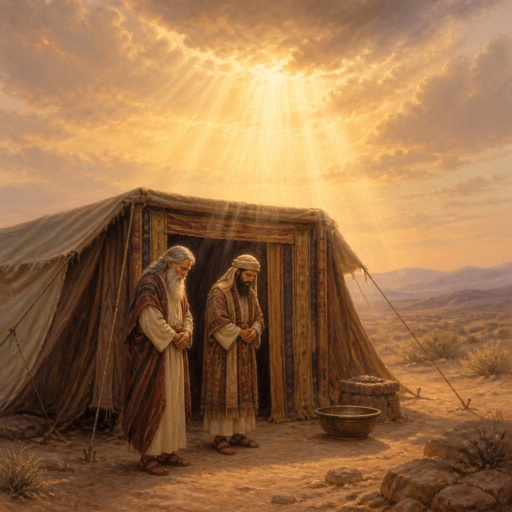
"And the LORD spake unto Moses and to Aaron, saying," - Leviticus 15:1

Leviticus 1:5 - "And he shall kill the bullock before the LORD: and the priests, Aaron's sons, shall bring the blood, and sprinkle the blood round about upon the altar that is by the door of the tabernacle of the congregation."

Leviticus 11:15 - "Every raven after his kind;"

Leviticus 15:15 - "And the priest shall offer them, the one for a sin offering, and the other for a burnt offering; and the priest shall make an atonement for him before the LORD for his issue."

Leviticus 15:9 - "And what saddle soever he rideth upon that hath the issue shall be unclean."

Leviticus 2:15 - "And thou shalt put oil upon it, and lay frankincense thereon: it is a meat offering."

Leviticus 22:15 - "And they shall not profane the holy things of the children of Israel, which they offer unto the LORD;"

Leviticus 15:17 - "And every garment, and every skin, whereon is the seed of copulation, shall be washed with water, and be unclean until the even."

Leviticus 14:15 - "And the priest shall take some of the log of oil, and pour it into the palm of his own left hand:"

Leviticus 13:15 - "And the priest shall see the raw flesh, and pronounce him to be unclean: for the raw flesh is unclean: it is a leprosy."

"Every raven after his kind;" - Leviticus 11:15

Leviticus 21:15 - "Neither shall he profane his seed among his people: for I the LORD do sanctify him."

Leviticus 15:21 - "And whosoever toucheth her bed shall wash his clothes, and bathe himself in water, and be unclean until the even."

Leviticus 15:33 - "And of her that is sick of her flowers, and of him that hath an issue, of the man, and of the woman, and of him that lieth with her that is unclean."

Leviticus 15:12 - "And the vessel of earth, that he toucheth which hath the issue, shall be broken: and every vessel of wood shall be rinsed in water."

Leviticus 15:4 - "Every bed, whereon he lieth that hath the issue, is unclean: and every thing, whereon he sitteth, shall be unclean."

Leviticus 3:15 - "And the two kidneys, and the fat that is upon them, which is by the flanks, and the caul above the liver, with the kidneys, it shall he take away."

Leviticus 24:15 - "And thou shalt speak unto the children of Israel, saying, Whosoever curseth his God shall bear his sin."

Leviticus 15:23 - "And if it be on her bed, or on any thing whereon she sitteth, when he toucheth it, he shall be unclean until the even."

Leviticus 9:15 - "¶ And he brought the people's offering, and took the goat, which was the sin offering for the people, and slew it, and offered it for sin, as the first."

Leviticus 15:28 - "But if she be cleansed of her issue, then she shall number to herself seven days, and after that she shall be clean."

Leviticus 15:5 - "And whosoever toucheth his bed shall wash his clothes, and bathe himself in water, and be unclean until the even."

Leviticus 27:15 - "And if he that sanctified it will redeem his house, then he shall add the fifth part of the money of thy estimation unto it, and it shall be his."

Leviticus 15:18 - "The woman also with whom man shall lie with seed of copulation, they shall both bathe themselves in water, and be unclean until the even."

Leviticus 18:15 - "Thou shalt not uncover the nakedness of thy daughter in law: she is thy son's wife; thou shalt not uncover her nakedness."

Leviticus 4:15 - "And the elders of the congregation shall lay their hands upon the head of the bullock before the LORD: and the bullock shall be killed before the LORD."