What does Leviticus 1:2-4 mean?
"Speak unto the children of Israel, and say unto them, If any man of you bring an offering unto the Lord, ye shall bring your offering of the cattle, even of the herd, and of the flock. If his offering be a burnt sacrifice of the herd, let him offer a male without blemish: he shall offer it of his own voluntary will at the door of the tabernacle of the congregation before the Lord. And he shall put his hand upon the head of the burnt offering; and it shall be accepted for him to make atonement for him." - Leviticus 1:2-4
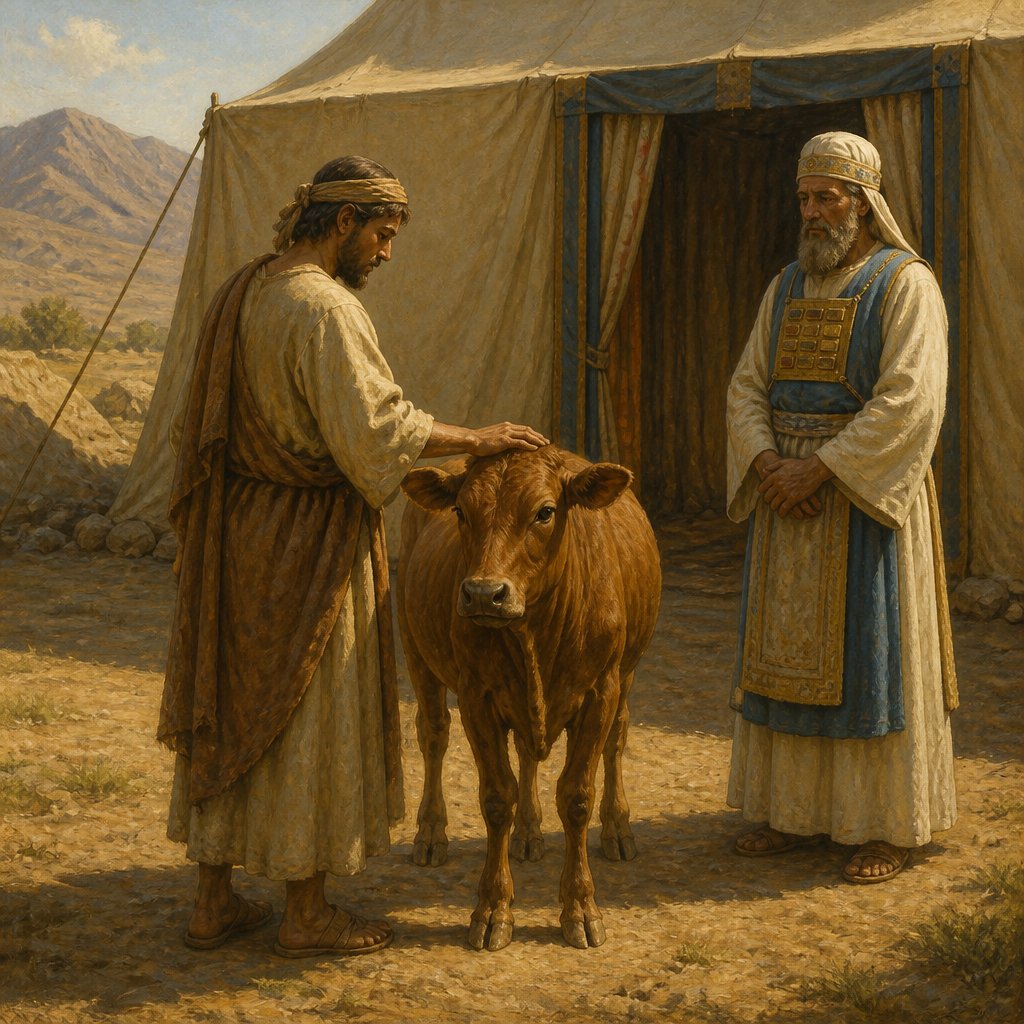
Leviticus 1:2-4 from the King James Version of the Bible reads: "Speak unto the children of Israel, and say unto them, If any man of you bring an offering unto the Lord, ye shall bring your offering of the cattle, even of the herd, and of the flock. If his offering be a burnt sacrifice of the herd, let him offer a male without blemish: he shall offer it of his own voluntary will at the door of the tabernacle of the congregation before the Lord. And he shall put his hand upon the head of the burnt offering; and it shall be accepted for him to make atonement for him."
These verses are found within the book of Leviticus, which is the third book of the Hebrew Bible and the Old Testament. The book is named after the Levites, the tribe of priests who were responsible for performing rituals and sacrifices in ancient Israel. It is a book of laws and regulations given by God to Moses for the people of Israel to follow in order to maintain a holy and pure relationship with God.
The verses in question deal with the instructions for making burnt offerings to the Lord. Burnt offerings were a common form of sacrifice in the ancient Near East, and they were offered to seek God's forgiveness, express gratitude, or make requests. In the context of Leviticus, the burnt offerings were a way for the Israelites to atone for their sins and seek forgiveness from God.
The specific details outlined in these verses are significant, as they lay out the requirements for the type of animal that could be offered as a burnt sacrifice—namely, cattle from the herd or the flock. The animal had to be a male without blemish, emphasizing the importance of offering only the best and most perfect animals to God. This requirement reflects the idea of giving one's best to God and offering sacrifices with a pure heart.
The act of offering the burnt sacrifice was also an act of voluntary worship and submission to God. It was not an obligation, but rather a personal choice to seek a closer relationship with God. The offeror would lay his hand on the head of the animal, symbolizing the transfer of his sins to the animal, which would then be killed and burned on the altar. This act of laying hands on the animal represents the transfer of sin and guilt, acknowledging the offeror's need for atonement and reconciliation with God.
The significance of these verses extends beyond the specific instructions for making burnt offerings. They also convey the themes of obedience, purity, and atonement. The Israelites were required to follow these instructions precisely, demonstrating their obedience to God's commands. The requirement for an unblemished male animal underscores the importance of offering the best to God and the need for purity in their worship. Additionally, the act of atonement through the burnt offering emphasizes the Israelites' recognition of their sinfulness and their desire for reconciliation with God.
Symbolically, these verses represent the concept of substitutionary atonement—that is, the idea that an innocent sacrifice can serve as a substitute for the guilty party, taking on their sins and paying the price for them. This concept foreshadows the ultimate atonement provided by Jesus Christ in the New Testament, who is described as the "Lamb of God" and the ultimate sacrifice for the sins of humanity.
In conclusion, Leviticus 1:2-4 provides detailed instructions for making burnt offerings to the Lord, which were an important part of the sacrificial system in ancient Israel. The verses convey the themes of obedience, purity, and atonement, and they serve as a reminder of the Israelites' need for reconciliation with God. Symbolically, these verses also point to the ultimate atonement provided by Jesus Christ in the New Testament. They remind believers of the importance of seeking a pure and obedient relationship with God, and the need for atonement for their sins.
Have questions about Leviticus 1:2-4?
Dive deeper into this scripture with Bible Chat — an AI-powered tool for exploring God's Word through conversation. Ask questions, get context, and grow in your understanding of the Bible.
Get Our Apps


Leviticus 1:2-4 Artwork
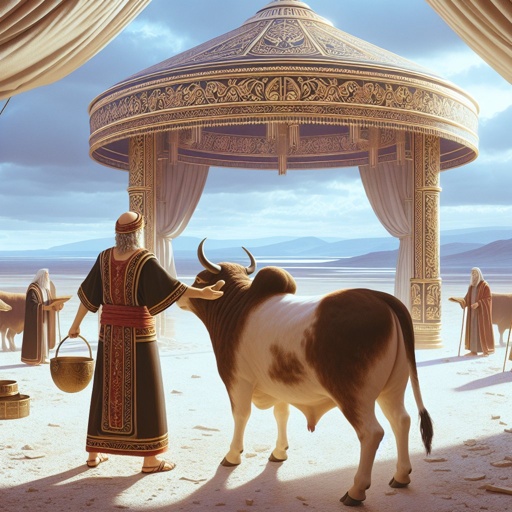
Leviticus 1:2-4 - "Speak to the Israelites and say to them: ‘When anyone among you brings an offering to the Lord, bring as your offering an animal from either the herd or the flock. If the offering is a burnt offering from the herd, you are to offer a male without defect. You must present it at the entrance to the tent of meeting so that it will be acceptable to the Lord. Lay your hand on the head of the burnt offering, and it will be accepted on your behalf to make atonement for you."
"Speak to the Israelites and say to them: ‘When anyone among you brings an offering to the Lord, bring as your offering an animal from either the herd or the flock. If the offering is a burnt offering from the herd, you are to offer a male without defect. You must present it at the entrance to the tent of meeting so that it will be acceptable to the Lord. Lay your hand on the head of the burnt offering, and it will be accepted on your behalf to make atonement for you." - Leviticus 1:2-4

James 1:2-4

James 1: 2-4

Joel 1:2-4, 13-20

Leviticus 4:1 - "And the LORD spake unto Moses, saying,"

2 Samuel 1:2-4 David is shocked the man is scared image in color

2 Samuel 1:2-4 David is shocked the man is scared image in color
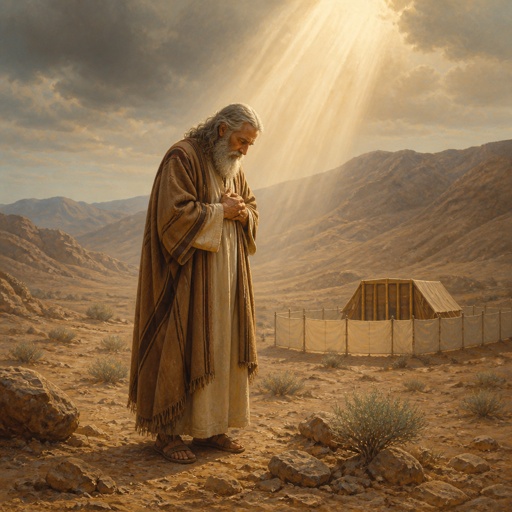
"And the LORD spake unto Moses, saying," - Leviticus 4:1

Leviticus 1:2 - "Speak unto the children of Israel, and say unto them, If any man of you bring an offering unto the LORD, ye shall bring your offering of the cattle, even of the herd, and of the flock."

Leviticus 1:4 - "And he shall put his hand upon the head of the burnt offering; and it shall be accepted for him to make atonement for him."

Leviticus 2:4 - "¶ And if thou bring an oblation of a meat offering baken in the oven, it shall be unleavened cakes of fine flour mingled with oil, or unleavened wafers anointed with oil."

2 Samuel 1:2-4 David is shocked the man is scared image in color less details

James 2:2-4
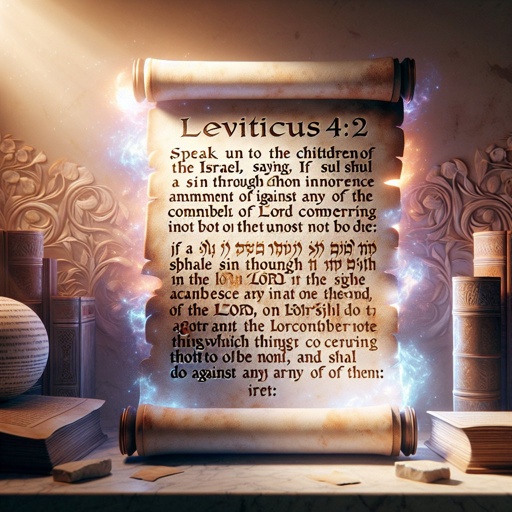
Leviticus 4:2 - "Speak unto the children of Israel, saying, If a soul shall sin through ignorance against any of the commandments of the LORD concerning things which ought not to be done, and shall do against any of them:"

Romans 2:4

Leviticus 26: 4-6

1 Corinthians 4:1-2

Leviticus 26: 4-6

Leviticus 26: 4-6

Mark 2:4

2 Chronicles 4:22

2 Corinthians 4:18

Ephesians 4:1-2

Ephesians 4:1-2

Ephesians 4:1-2

Ephesians 4:1-2

2 Timothy 4 7

Ephesians 4:1-2

Ephesians 4:1-2