What does Leviticus 21:22 mean?
“He shall eat the bread of his God, both of the most holy, and of the holy.” — Leviticus 21:22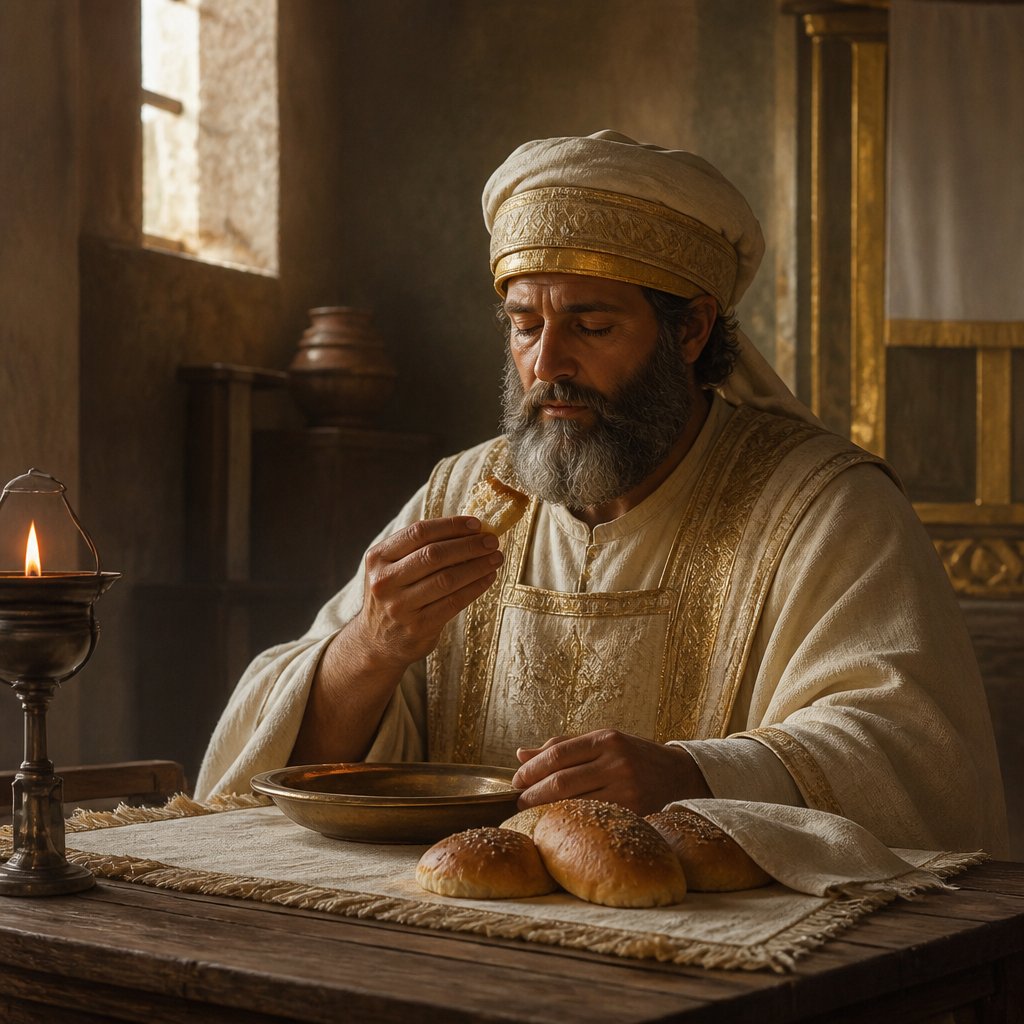
Leviticus 21:22 from the King James Version of the Bible states, "He shall eat the bread of his God, both of the most holy, and of the holy." This verse is found within the context of a larger passage outlining the instructions for the selection and duties of the sons of Aaron, who were chosen to serve as priests in the Israelite community. The verse signifies the privileged status of the priest in being able to partake in the most holy and sacred offerings to God.
In order to truly grasp the essence and significance of this verse, it is important to understand the historical and cultural context in which it was written. During the time of Ancient Israel, the role of the priest was of utmost importance in the religious and communal life of the people. The priests were responsible for leading the people in worship, offering sacrifices, and serving as mediators between God and the people. As such, they were to be held to a higher standard of purity and sanctity, as they were representing the people before God.
The verse emphasizes the idea that the priests were to partake in the most holy and sacred offerings to God. This demonstrates the close relationship and communion between the priests and God. By eating the bread of his God, the priest was not only nourishing his physical body, but also nourishing his spiritual connection to the divine. This act symbolized the priest's dedication and devotion to serving God and fulfilling his sacred duties.
The themes present in Leviticus 21:22 are central to the broader themes of holiness, purity, and the divine-human relationship found within the book of Leviticus. The entire book is dedicated to outlining the laws and rituals that were to govern the life of the Israelites, particularly in matters of worship and religious observance. It emphasizes the importance of maintaining purity and sanctity in every aspect of life, as a means of honoring and revering God.
The verse also holds symbolic significance in its portrayal of the priest as a representative of the people before God. By partaking in the most holy offerings, the priest was not only fulfilling his own spiritual needs, but also acting on behalf of the community. This serves as a reminder of the interconnectedness and interdependence of the community and the individual in matters of faith and worship.
Furthermore, the verse serves as a reminder of the privilege and responsibility that comes with being chosen as a priest. The act of eating the most holy bread served as a constant reminder to the priest of his sacred duty and role within the community. It also emphasized the need for the priest to maintain a high standard of moral and spiritual integrity, as he was representing the people before God.
In conclusion, Leviticus 21:22 holds deep symbolic and spiritual significance within the broader context of the book of Leviticus and the religious practices of the ancient Israelites. It serves as a reminder of the importance of holiness, purity, and the sacred duty of the priesthood, as well as the close relationship between the priests and God. The verse emphasizes themes of devotion, representation, and spiritual nourishment, and serves as a timeless reminder of the divine-human relationship and the pursuit of holiness in the service of God.
Get our apps


Artwork for Leviticus 21:22

Leviticus 21:22 - "He shall eat the bread of his God, both of the most holy, and of the holy."
"He shall eat the bread of his God, both of the most holy, and of the holy." - Leviticus 21:22

Leviticus 22:21 - "And whosoever offereth a sacrifice of peace offerings unto the LORD to accomplish his vow, or a freewill offering in beeves or sheep, it shall be perfect to be accepted; there shall be no blemish therein."
Leviticus 11:22

Leviticus 23:21

Leviticus 23:21

Leviticus 23:21

Leviticus 23:21

Leviticus 23:21

Leviticus 23:21

Leviticus 21:19 - "Or a man that is brokenfooted, or brokenhanded,"

Leviticus 23:15-22

Leviticus 23:17-22

Leviticus 22:17 - "¶ And the LORD spake unto Moses, saying,"

Leviticus 7:22 - "¶ And the LORD spake unto Moses, saying,"

Leviticus 22:1 - "And the LORD spake unto Moses, saying,"

Leviticus 22:26 - "¶ And the LORD spake unto Moses, saying,"

Leviticus 21:16 - "¶ And the LORD spake unto Moses, saying,"

Leviticus 18:22 - "Thou shalt not lie with mankind, as with womankind: it is abomination."

Leviticus 21:13 - "And he shall take a wife in her virginity."

Matthew 9:21-22

Matthew 9:21-22

Matthew 9:21-22

Matthew 9:21-22

Matthew 9:21-22

Leviticus 20:22-26 simple picture

Picture to summarize Leviticus 20:22-26

"Or a man that is brokenfooted, or brokenhanded," - Leviticus 21:19

Genesis 21:22

Genesis 22-21