What does Leviticus 22:13 mean?
"But if the priest's daughter be a widow, or divorced, and have no child, and is returned unto her father's house, as in her youth, she shall eat of her father's meat: but there shall no stranger eat thereof." - Leviticus 22:13
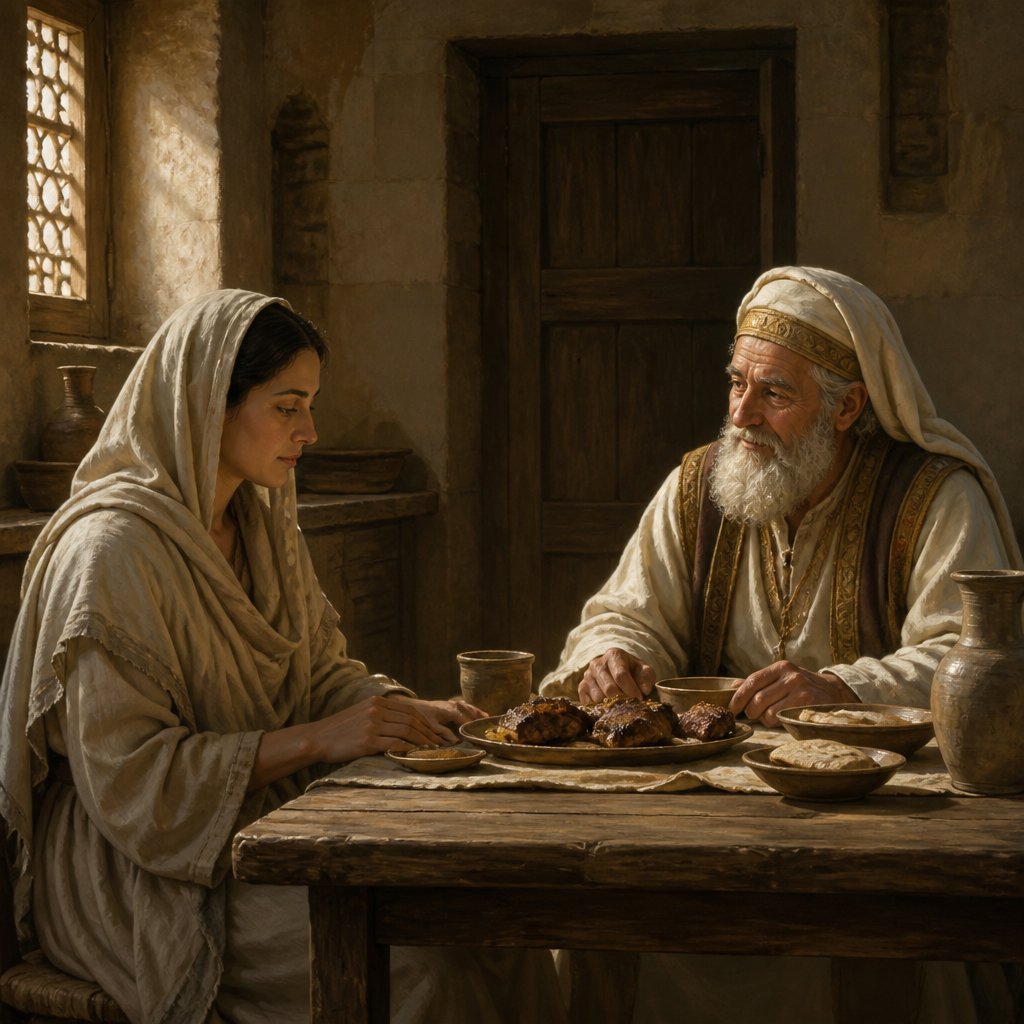
Leviticus 22:13 in the King James Version of the Bible states, "But if the priest's daughter be a widow, or divorced, and have no child, and is returned unto her father's house, as in her youth, she shall eat of her father's meat: but there shall no stranger eat thereof."
This verse is taken from the book of Leviticus, which is part of the Torah and the Old Testament. The book of Leviticus contains a collection of laws and regulations that were given to Moses by God for the people of Israel to follow. These laws cover various aspects of religious, moral, and civil life, and are intended to guide the Israelites in their worship and daily conduct.
In this specific verse, the focus is on the priest's daughter who is either a widow or a divorcee and has no children. The verse specifies that she is allowed to eat of her father's meat, but no stranger is permitted to eat thereof. This law reveals the importance of family and the responsibilities of the community towards its members, particularly those who may be in vulnerable situations.
The significance of this verse can be understood in the context of the societal norms and values of ancient Israel. In this patriarchal society, the status and well-being of women were often determined by their marital and maternal status. A widow or divorcee without children was particularly vulnerable, as she may not have had the means to support herself. Therefore, the law outlined in this verse serves as a form of protection for such women, ensuring that they are provided for within their father's household.
On a deeper level, this verse also reflects the idea of familial love and care within the community. It emphasizes the responsibility of the family, especially the father, to take care of his daughter in times of need. This resonates with the broader biblical theme of compassion and justice for the disadvantaged and marginalized members of society.
Furthermore, the exclusion of strangers from partaking in the priest's daughter's meat highlights the sense of belonging and community that is inherent in the Israelite society. It reinforces the boundaries of the community and the duties of its members to one another, while also emphasizing the distinction between insiders and outsiders.
Symbolically, this verse can be seen as a representation of God's concern for the well-being and protection of all members of the community, especially those who are vulnerable and in need. It underscores the value of familial support and the importance of providing for those who may be marginalized or disadvantaged.
In a broader sense, this verse also points to the concepts of purity and sanctity within the religious context of the Israelite community. The priest's daughter is to eat of her father's meat, which may symbolize the sustenance and spiritual nourishment that comes from within the family and the community. By abstaining from allowing strangers to partake in the meat, the law reinforces the idea of maintaining the sanctity and purity of the family and its offerings.
In conclusion, Leviticus 22:13 holds significant implications for understanding the societal norms, familial responsibilities, and communal values of ancient Israel. It underscores the importance of caring for vulnerable members of the community, while also emphasizing the sacredness of familial ties and the boundaries that define the community. This verse serves as a reminder of the divine concern for the well-being of all members of society and the importance of compassion, justice, and inclusion within the community.
Have questions about Leviticus 22:13?
Dive deeper into this scripture with Bible Chat — an AI-powered tool for exploring God's Word through conversation. Ask questions, get context, and grow in your understanding of the Bible.
Get Our Apps


Leviticus 22:13 Artwork

Leviticus 22:13 - "But if the priest's daughter be a widow, or divorced, and have no child, and is returned unto her father's house, as in her youth, she shall eat of her father's meat: but there shall no stranger eat thereof."
"But if the priest's daughter be a widow, or divorced, and have no child, and is returned unto her father's house, as in her youth, she shall eat of her father's meat: but there shall no stranger eat thereof." - Leviticus 22:13

Leviticus 13:22 - "And if it spread much abroad in the skin, then the priest shall pronounce him unclean: it is a plague."
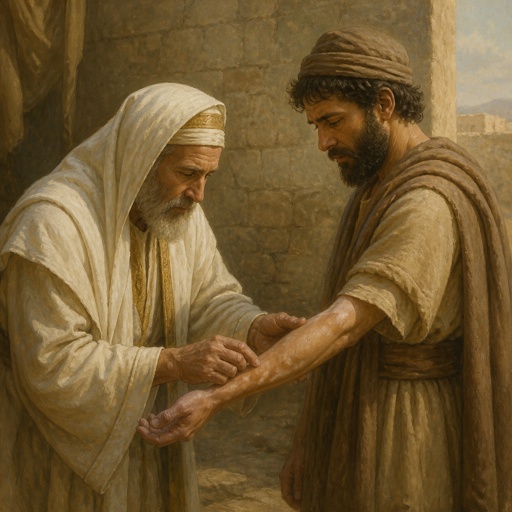
"And if it spread much abroad in the skin, then the priest shall pronounce him unclean: it is a plague." - Leviticus 13:22
Leviticus 11:22

Leviticus 23:15-22

Leviticus 23:17-22

Leviticus 22:17 - "¶ And the LORD spake unto Moses, saying,"

Leviticus 7:22 - "¶ And the LORD spake unto Moses, saying,"

Leviticus 22:1 - "And the LORD spake unto Moses, saying,"

Leviticus 22:26 - "¶ And the LORD spake unto Moses, saying,"

Leviticus 18:22 - "Thou shalt not lie with mankind, as with womankind: it is abomination."

Leviticus 20:22-26 simple picture

Picture to summarize Leviticus 20:22-26

Leviticus 24:13 - "And the LORD spake unto Moses, saying,"

Leviticus 22:20 - "But whatsoever hath a blemish, that shall ye not offer: for it shall not be acceptable for you."

Leviticus 21:13 - "And he shall take a wife in her virginity."

Leviticus 13:1 - "And the LORD spake unto Moses and Aaron, saying,"

Leviticus 21:22 - "He shall eat the bread of his God, both of the most holy, and of the holy."

Leviticus 22:33 - "That brought you out of the land of Egypt, to be your God: I am the LORD."

Leviticus 22:29 - "And when ye will offer a sacrifice of thanksgiving unto the LORD, offer it at your own will."

Leviticus 22:15 - "And they shall not profane the holy things of the children of Israel, which they offer unto the LORD;"

Leviticus 13:35 - "But if the scall spread much in the skin after his cleansing;"

Leviticus 22:22 - "Blind, or broken, or maimed, or having a wen, or scurvy, or scabbed, ye shall not offer these unto the LORD, nor make an offering by fire of them upon the altar unto the LORD."

Leviticus 13:29 - "¶ If a man or woman have a plague upon the head or the beard;"

Leviticus 22:19 - "Ye shall offer at your own will a male without blemish, of the beeves, of the sheep, or of the goats."

Leviticus 22:31 - "Therefore shall ye keep my commandments, and do them: I am the LORD."

Leviticus 22:28 - "And whether it be cow or ewe, ye shall not kill it and her young both in one day."

Leviticus 13:18 - "¶ The flesh also, in which, even in the skin thereof, was a boil, and is healed,"

Leviticus 13:14 - "But when raw flesh appeareth in him, he shall be unclean."