What does Leviticus 22:18 mean?
“Speak unto Aaron, and to his sons, and unto all the children of Israel, and say unto them, Whatsoever he be of the house of Israel, or of the strangers in Israel, that will offer his oblation for all his vows, and for all his freewill offerings, which they will offer unto the LORD for a burnt offering;” — Leviticus 22:18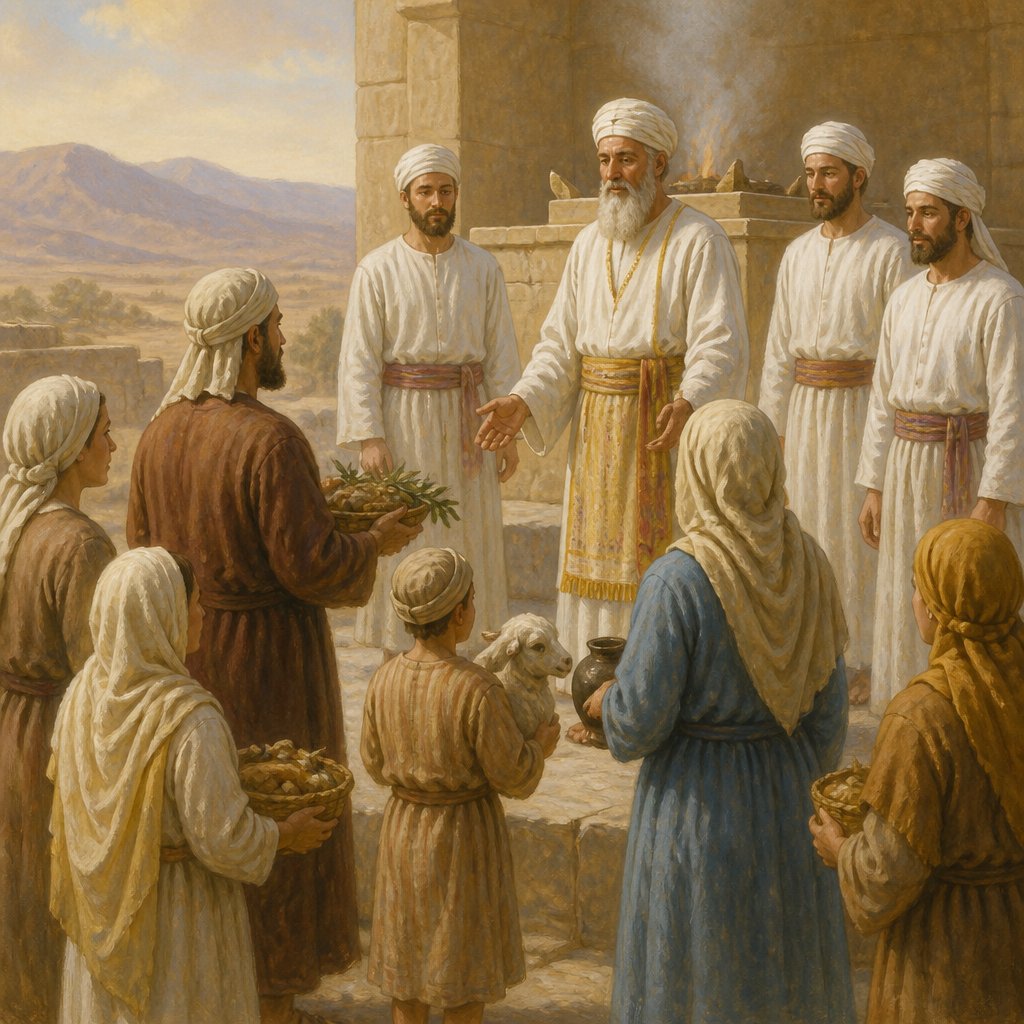
Leviticus 22:18 in the King James Version of the Bible states, "Speak unto Aaron, and to his sons, and unto all the children of Israel, and say unto them, Whatsoever he be of the house of Israel, or of the strangers in Israel, that will offer his oblation for all his vows, and for all his freewill offerings, which they will offer unto the Lord for a burnt offering." This verse is part of a larger passage in the book of Leviticus that outlines the standards and regulations for the offerings that the Israelites were to present to the Lord.
The book of Leviticus is primarily concerned with the practices and rituals of the Israelites in relation to their worship of God and their relationships with one another. It is a key text in the Old Testament that provides a framework for understanding the importance of holiness, purity, and obedience in the lives of God's chosen people.
In Leviticus 22:18, the focus is on the obligation for all members of the community, including both Israelites and strangers living among them, to offer their vows and freewill offerings to the Lord. This underscores the inclusive nature of the Israelite community, emphasizing that all individuals, regardless of their status or background, are expected to participate in the worship and offerings to the Lord.
The verse specifically mentions the burnt offering, which was a significant part of the sacrificial system in ancient Israel. The burnt offering was a voluntary act of worship, symbolizing the complete surrender and dedication of the worshiper to God. By presenting these offerings, individuals expressed their gratitude, devotion, and commitment to the Lord, acknowledging His sovereignty and seeking His favor.
The language and instructions in this verse also highlight the responsibility of the priests, specifically Aaron and his sons, in guiding and facilitating the worship practices of the people. The priests were entrusted with the sacred duties of overseeing the offerings, ensuring that they were presented according to the prescribed regulations, and making intercession on behalf of the people before God.
In a broader theological context, Leviticus 22:18 emphasizes the themes of obedience, stewardship, and community worship. It reflects the idea that the act of offering sacrifices and gifts to God is a communal responsibility, requiring the participation and accountability of all members of the community, regardless of their social standing or heritage. This communal worship served as a means of strengthening the bonds of the Israelite society and reinforcing their covenant relationship with the Lord.
Furthermore, the verse highlights the significance of the principle of freewill offerings, which was not only a demonstration of individual commitment and gratitude but also a reflection of the Israelites' understanding of God's grace and provision in their lives. By freely giving of their resources and possessions, the people acknowledged God as the ultimate source of their blessings and demonstrated their willingness to honor Him with their material wealth.
Symbolically, the burnt offering and other sacrifices served as a powerful visual representation of the Israelites' spiritual devotion and their desire to be reconciled with God. These offerings foreshadowed the ultimate sacrifice of Jesus Christ, who, as the perfect and final atonement for sin, fulfilled the requirements of the Mosaic law and inaugurated a new covenant between God and humanity.
In conclusion, Leviticus 22:18 carries significant theological and practical implications for the Israelites and for contemporary readers. It serves as a reminder of the importance of worship, stewardship, and communal responsibility in the life of faith, while also pointing forward to the redemptive work of Christ. The verse invites believers to consider the ways in which they can offer their lives as living sacrifices to God, demonstrating their gratitude, devotion, and commitment to Him.
Get our apps


Artwork for Leviticus 22:18

Leviticus 22:18 - "Speak unto Aaron, and to his sons, and unto all the children of Israel, and say unto them, Whatsoever he be of the house of Israel, or of the strangers in Israel, that will offer his oblation for all his vows, and for all his freewill offerings, which they will offer unto the LORD for a burnt offering;"
"Speak unto Aaron, and to his sons, and unto all the children of Israel, and say unto them, Whatsoever he be of the house of Israel, or of the strangers in Israel, that will offer his oblation for all his vows, and for all his freewill offerings, which they will offer unto the LORD for a burnt offering;" - Leviticus 22:18

Leviticus 18:22 - "Thou shalt not lie with mankind, as with womankind: it is abomination."

"Thou shalt not lie with mankind, as with womankind: it is abomination." - Leviticus 18:22
Leviticus 11:22

Leviticus 23:15-22

Leviticus 23:17-22

Leviticus 22:17 - "¶ And the LORD spake unto Moses, saying,"
Leviticus 11:18 - "And the swan, and the pelican, and the gier eagle,"

Leviticus 7:22 - "¶ And the LORD spake unto Moses, saying,"

Leviticus 22:1 - "And the LORD spake unto Moses, saying,"

Leviticus 22:26 - "¶ And the LORD spake unto Moses, saying,"

Leviticus 18:1 - "And the LORD spake unto Moses, saying,"

Leviticus 20:22-26 simple picture

Picture to summarize Leviticus 20:22-26

Leviticus 18:18 - "Neither shalt thou take a wife to her sister, to vex her, to uncover her nakedness, beside the other in her life time."

Leviticus 13:18 - "¶ The flesh also, in which, even in the skin thereof, was a boil, and is healed,"

Leviticus 22:20 - "But whatsoever hath a blemish, that shall ye not offer: for it shall not be acceptable for you."

Leviticus 24:18 - "And he that killeth a beast shall make it good; beast for beast."

Genesis 22-18

Psalm 22:18

Mathew 18:22

Psalm 22:18

Leviticus 13:22 - "And if it spread much abroad in the skin, then the priest shall pronounce him unclean: it is a plague."

Leviticus 21:22 - "He shall eat the bread of his God, both of the most holy, and of the holy."

Genesis 18-22

Revelation 22:18

Psalm 22:18

Psalm 22:18

Leviticus 22:33 - "That brought you out of the land of Egypt, to be your God: I am the LORD."