What does Leviticus 22:5 mean?
“Or whosoever toucheth any creeping thing, whereby he may be made unclean, or a man of whom he may take uncleanness, whatsoever uncleanness he hath;” — Leviticus 22:5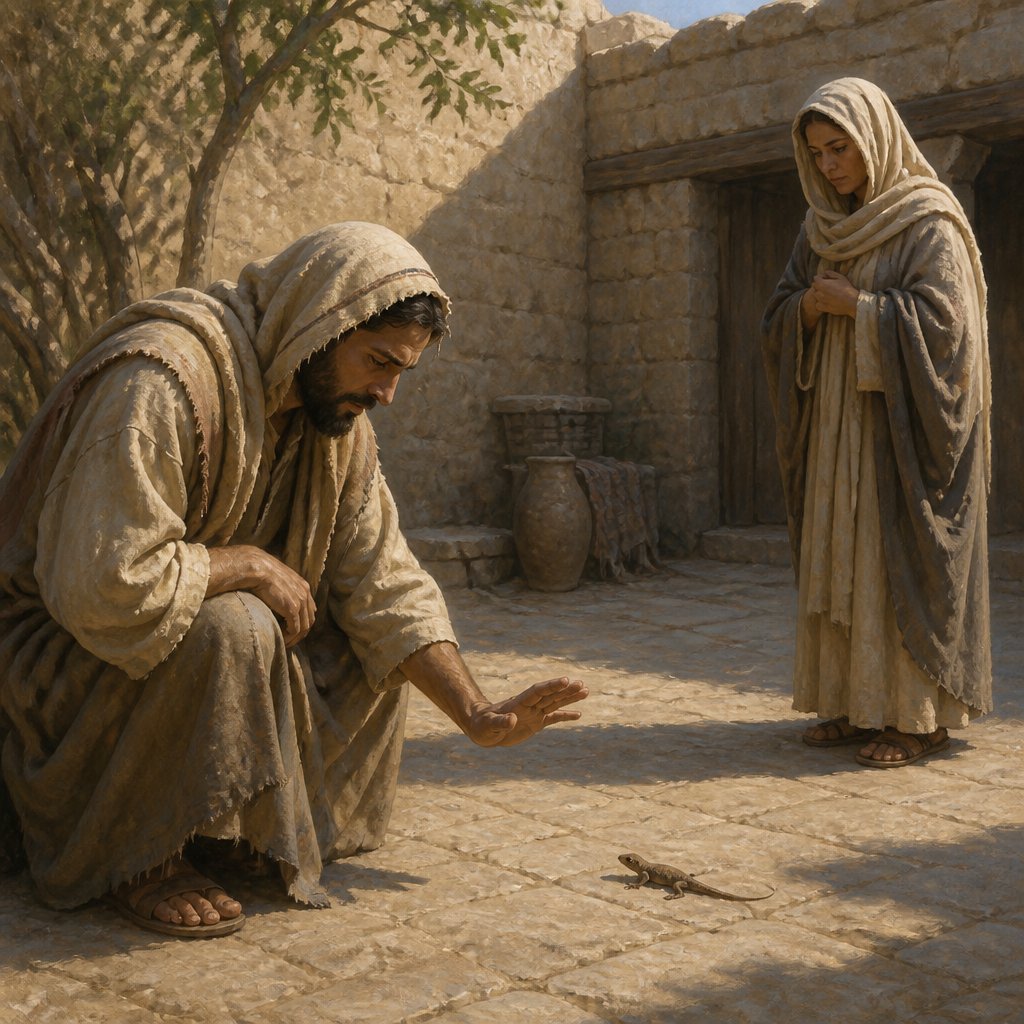
Leviticus 22:5 (KJV)
“Or whosoever toucheth any creeping thing, whereby he may be made unclean, or a man of whom he may take uncleanness, whatsoever uncleanness he hath;”
The book of Leviticus is the third book of the Bible, part of the Pentateuch or the Torah, and it contains laws and regulations that the ancient Israelites were to follow in order to maintain their holiness. Leviticus 22:5 is just one of many verses within this book that illustrates the strict guidelines for the Israelites to avoid contact with anything unclean or impure.
The verse begins with the mention of “whosoever toucheth any creeping thing,” which refers to the various creatures considered unclean by the Israelites, as outlined in Leviticus 11. These included animals like snakes, lizards, and other small creatures that were deemed impure and could make a person ceremonially unclean if touched. This idea of cleanliness and purity was of utmost importance to the Israelites, as it was a reflection of their commitment to being set apart as God’s chosen people.
The verse goes on to state “or a man of whom he may take uncleanness, whatsoever uncleanness he hath.” This part of the verse emphasizes the contagious nature of uncleanness. Just as touching unclean animals could make a person unclean, so too could coming into contact with another individual who was unclean. This emphasizes the need for separation and purification in order to maintain one’s own holiness.
In its broader context, Leviticus 22 is concerned with the regulations for the priests and the offerings that were to be presented at the tabernacle. The chapter ensures that the offerings brought before God are without blemish or defect and that the priests themselves are ceremonially clean. This emphasis on purity and holiness serves to highlight the Israelites’ need for spiritual cleanliness in order to be in the presence of God.
This verse is also symbolic of the broader spiritual concepts of cleanliness and purity found throughout the Bible. In the New Testament, Jesus speaks about the importance of inner purity and being cleansed from sin. In Matthew 15:11, Jesus says, “It is not what goes into the mouth that defiles a person, but what comes out of the mouth; this defiles a person.” This illustrates the shift from external rituals and regulations to the internal state of the heart. Similarly, in 1 Corinthians 3:16-17, the apostle Paul speaks of the body as a temple of the Holy Spirit and warns against defiling it.
From a thematic standpoint, Leviticus 22:5 speaks to the broader theme of holiness and separation. The Israelites were called to be set apart from the surrounding nations as a holy people dedicated to God. This involved adhering to various laws and regulations that set them apart, including dietary restrictions, cleanliness rituals, and moral commandments. By maintaining their purity and avoiding anything unclean, the Israelites demonstrated their obedience to God and their commitment to being a holy people.
In conclusion, Leviticus 22:5 serves as a reminder to the Israelites of the importance of maintaining purity and avoiding anything unclean. It reflects the broader theme of holiness and separation from the surrounding cultures, emphasizing the Israelites’ commitment to being set apart as God’s chosen people. While the specific regulations may not directly apply to modern-day Christians, the underlying principles of purity and holiness remain relevant, reminding believers of the importance of maintaining cleanliness and purity in both their physical and spiritual lives.
Get our apps


Artwork for Leviticus 22:5
Leviticus 22:5 - "Or whosoever toucheth any creeping thing, whereby he may be made unclean, or a man of whom he may take uncleanness, whatsoever uncleanness he hath;"
"Or whosoever toucheth any creeping thing, whereby he may be made unclean, or a man of whom he may take uncleanness, whatsoever uncleanness he hath;" - Leviticus 22:5
Leviticus 11:22

Leviticus 23:15-22

Leviticus 23:17-22

Leviticus 22:17 - "¶ And the LORD spake unto Moses, saying,"

Leviticus 7:22 - "¶ And the LORD spake unto Moses, saying,"

Leviticus 22:1 - "And the LORD spake unto Moses, saying,"

Leviticus 22:26 - "¶ And the LORD spake unto Moses, saying,"

Leviticus 18:22 - "Thou shalt not lie with mankind, as with womankind: it is abomination."

Leviticus 20:22-26 simple picture

Picture to summarize Leviticus 20:22-26

Leviticus 22:20 - "But whatsoever hath a blemish, that shall ye not offer: for it shall not be acceptable for you."

Leviticus 13:22 - "And if it spread much abroad in the skin, then the priest shall pronounce him unclean: it is a plague."

Leviticus 21:22 - "He shall eat the bread of his God, both of the most holy, and of the holy."

Leviticus 22:33 - "That brought you out of the land of Egypt, to be your God: I am the LORD."

Leviticus 22:29 - "And when ye will offer a sacrifice of thanksgiving unto the LORD, offer it at your own will."

Leviticus 22:15 - "And they shall not profane the holy things of the children of Israel, which they offer unto the LORD;"
Leviticus 5:14 - "¶ And the LORD spake unto Moses, saying,"

Leviticus 22:22 - "Blind, or broken, or maimed, or having a wen, or scurvy, or scabbed, ye shall not offer these unto the LORD, nor make an offering by fire of them upon the altar unto the LORD."

Leviticus 22:19 - "Ye shall offer at your own will a male without blemish, of the beeves, of the sheep, or of the goats."

Leviticus 22:31 - "Therefore shall ye keep my commandments, and do them: I am the LORD."

Leviticus 22:28 - "And whether it be cow or ewe, ye shall not kill it and her young both in one day."

Leviticus 5:5 - "And it shall be, when he shall be guilty in one of these things, that he shall confess that he hath sinned in that thing:"

"¶ And the LORD spake unto Moses, saying," - Leviticus 7:22

Leviticus 22:12 - "If the priest's daughter also be married unto a stranger, she may not eat of an offering of the holy things."

"¶ And the LORD spake unto Moses, saying," - Leviticus 22:17
"¶ And the LORD spake unto Moses, saying," - Leviticus 22:26
"And the LORD spake unto Moses, saying," - Leviticus 22:1

Leviticus 23:5 - "In the fourteenth day of the first month at even is the LORD'S passover."