What does Leviticus 23:34 mean?
“Speak unto the children of Israel, saying, The fifteenth day of this seventh month shall be the feast of tabernacles for seven days unto the LORD.” — Leviticus 23:34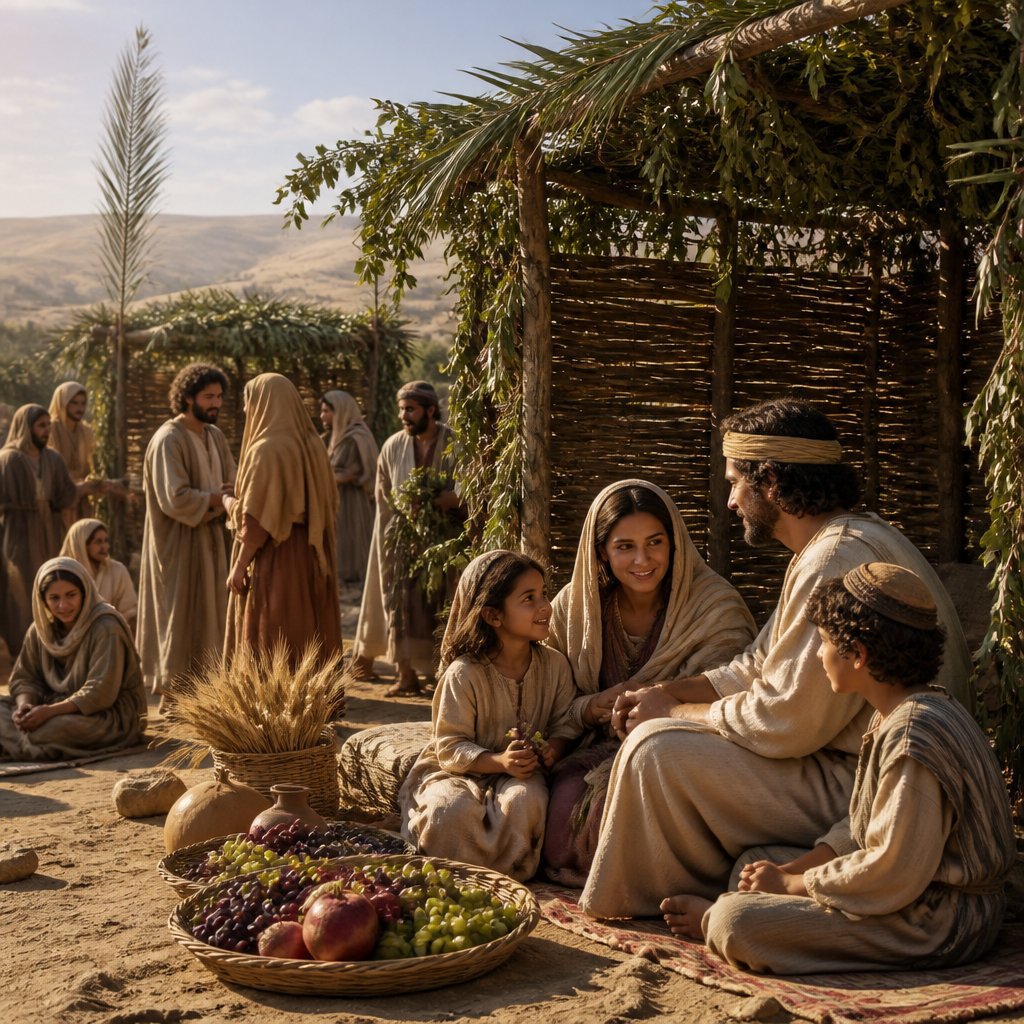
Leviticus 23:34 (KJV) states, "Speak unto the children of Israel, saying, The fifteenth day of this seventh month shall be the feast of tabernacles for seven days unto the Lord." This verse is part of a larger passage detailing the various feasts and holy days that were to be observed by the people of Israel as prescribed by God.
The Feast of Tabernacles, also known as Sukkot, was one of the three pilgrimage festivals in Judaism, along with Passover and Shavuot. It was a week-long celebration that took place in the fall, starting on the 15th day of the seventh month, and it was a time for the people to gather together, dwell in temporary shelters, and give thanks for the harvest and God's provision.
The context of this verse is important for understanding its significance. The book of Leviticus is primarily concerned with the rituals and practices of the Israelite priests and the people's relationship with God. The feasts and holy days that are outlined in Leviticus 23 are essential components of Israelite worship and religious life, and they are meant to serve as reminders of God's faithfulness, provision, and sovereignty.
The Feast of Tabernacles has several important themes and symbols that are worth exploring. Firstly, the temporary shelters, or sukkahs, that the people were to dwell in during the festival serve as a reminder of the Israelites' time in the wilderness after the exodus from Egypt. The sukkahs symbolize the transitory nature of human life and the need for reliance on God's provision and protection.
Additionally, the Feast of Tabernacles is a time of celebration and thanksgiving for the harvest. It is a reminder of God's faithfulness in providing sustenance for His people, and it serves as an opportunity for them to express gratitude and joy for the abundance of the land.
Another important aspect of the Feast of Tabernacles is the communal aspect of the celebration. The people were instructed to gather together and rejoice as a community, emphasizing the importance of unity, fellowship, and mutual support within the Israelite society.
In the New Testament, the significance of the Feast of Tabernacles is further emphasized. In the Gospel of John, Jesus uses the imagery of water, which was a central element of the Feast, to symbolize the outpouring of the Holy Spirit. This connects the themes of the Feast of Tabernacles to the spiritual renewal and refreshment that comes from God's presence and provision.
From a broader theological perspective, the Feast of Tabernacles can be seen as a foreshadowing of the ultimate fulfillment of God's promises in the coming of Jesus Christ. In the book of Revelation, the imagery of the Feast of Tabernacles is employed to depict the dwelling of God with His people in the new heavens and earth, highlighting the eschatological hope and the eternal joy that awaits believers.
In conclusion, Leviticus 23:34 and the Feast of Tabernacles carry rich symbolism, themes, and theological significance. They serve as reminders of God's faithfulness, provision, and presence, as well as opportunities for communal celebration, thanksgiving, and spiritual renewal. The observance of this feast was a tangible way for the Israelites to honor and remember God's goodness, and it continues to hold spiritual significance for believers today.
Get our apps


Artwork for Leviticus 23:34

Leviticus 23:34 - "Speak unto the children of Israel, saying, The fifteenth day of this seventh month shall be the feast of tabernacles for seven days unto the LORD."
"Speak unto the children of Israel, saying, The fifteenth day of this seventh month shall be the feast of tabernacles for seven days unto the LORD." - Leviticus 23:34

Matthew 2:3-4

Matthew 2:3-4

Matthew 2:3-4

Matthew 2:3-4

Leviticus 23:23 - "¶ And the LORD spake unto Moses, saying,"

Leviticus 25:34 - "But the field of the suburbs of their cities may not be sold; for it is their perpetual possession."

Matthew 18:23-34

Matthew 18:23-34

Matthew 18:23-34

Leviticus 27:34 - "These are the commandments, which the LORD commanded Moses for the children of Israel in mount Sinai."

Leviticus 23:21

Leviticus 23:21

Matthew 18:23-34

Leviticus 23:21

Leviticus 23:21

Leviticus 23:21

Leviticus 23:20

Leviticus 23:21

Leviticus 8:34 - "As he hath done this day, so the LORD hath commanded to do, to make an atonement for you."

Leviticus 23:15-22

Leviticus 23:17-22

Leviticus 24:20-23

"¶ And the LORD spake unto Moses, saying," - Leviticus 23:23

Leviticus 23:26 - "¶ And the LORD spake unto Moses, saying,"

Leviticus 23:1 - "And the LORD spake unto Moses, saying,"

Leviticus 23:33 - "¶ And the LORD spake unto Moses, saying,"
Leviticus 23:9 - "¶ And the LORD spake unto Moses, saying,"
Numbers 34:23 - "The prince of the children of Joseph, for the tribe of the children of Manasseh, Hanniel the son of Ephod."