What does Leviticus 25:30 mean?
“And if it be not redeemed within the space of a full year, then the house that is in the walled city shall be established for ever to him that bought it throughout his generations: it shall not go out in the jubile.” — Leviticus 25:30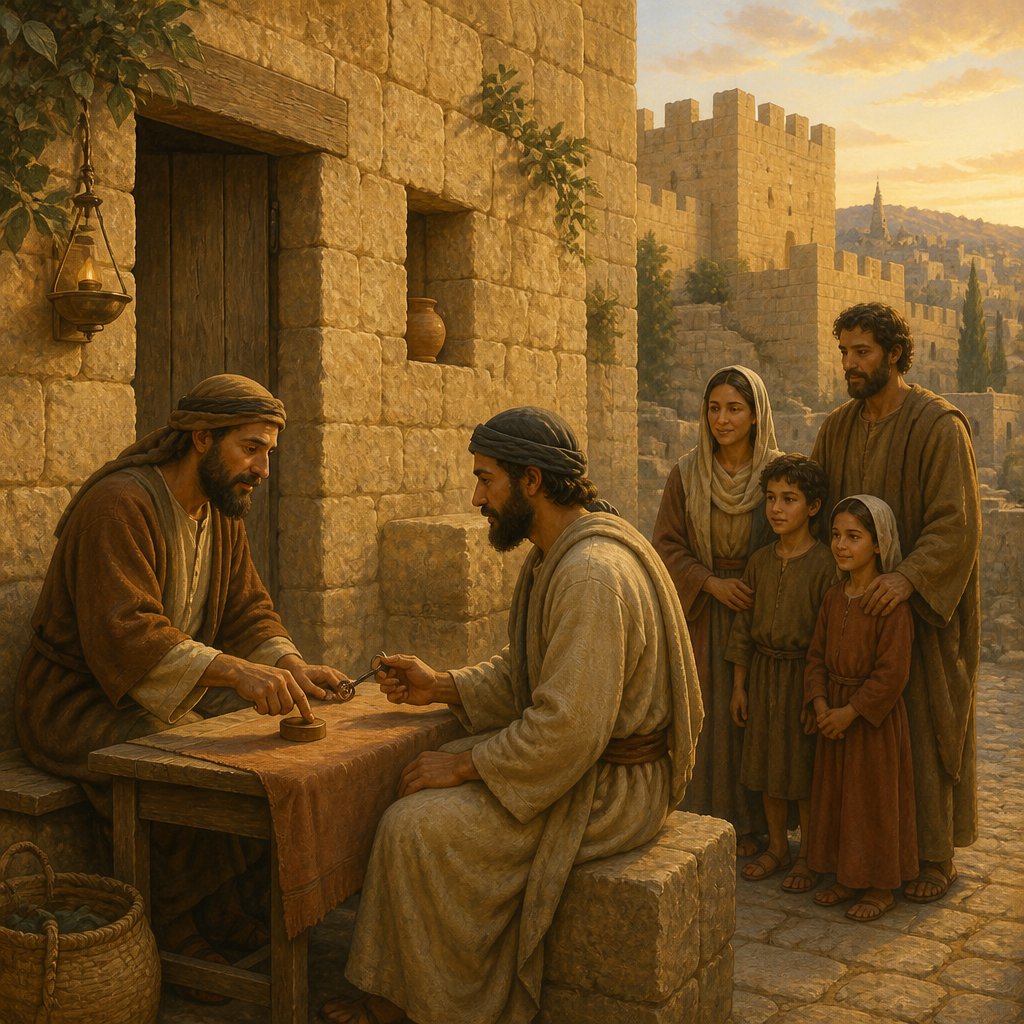
Leviticus 25:30 (KJV) states, "And if it be not redeemed within the space of a full year, then the house that is in the walled city shall be established for ever to him that bought it throughout his generations: it shall not go out in the jubile."
This verse is part of the laws and regulations pertaining to the redemption of property in the Old Testament. In this specific verse, the text speaks to the redemption of houses in walled cities. The verse outlines the provision for the redemption of the house within a year and if it is not redeemed, it shall be established as the permanent property of the buyer.
To fully understand the significance of this verse, it is important to consider the context in which it was written. Leviticus is the third book of the Hebrew Bible and the third of five books of the Torah. It primarily deals with laws and regulations given by God to the Israelites through Moses. The book of Leviticus is often seen as a guide for holiness and worship for the Israelites. The laws given in Leviticus cover a wide range of issues including sacrifices, cleanliness, morality, and relationships.
The specific laws regarding property redemption are found in Leviticus 25, which is known as the Year of Jubilee. This chapter outlines the laws concerning the Sabbath year and the Year of Jubilee, which occurred every 50 years. During the Year of Jubilee, all debts were to be forgiven, and all Israelite slaves were to be set free. Furthermore, any ancestral land that had been sold was to be returned to its original owner. The purpose of these regulations was to prevent the Israelites from permanently losing their inheritance and to promote social and economic justice within society.
The verse Leviticus 25:30 falls within the section of the chapter that deals with the redemption of property. It specifically addresses the redemption of houses within walled cities. The verse states that if a house is not redeemed within a year, it shall be established as the permanent property of the buyer and cannot be reclaimed during the Year of Jubilee.
The theme of redemption is central to this verse. It emphasizes the importance of redeeming property within a specified time frame, or else it will be permanently lost. This serves as a reminder to the Israelites to act responsibly and ensure that they do not forfeit their inheritance. The concept of redemption is also significant in the broader context of the Bible, as it foreshadows the ultimate redemption provided through Jesus Christ. The New Testament repeatedly speaks of redemption through Christ's sacrifice, highlighting the biblical theme of redemption as a central aspect of God's plan for humanity.
Furthermore, the verse also carries a message of responsibility and accountability. It encourages the Israelites to take proactive measures to redeem their property and not allow it to be lost due to neglect or complacency. This concept of responsibility aligns with the broader theme of obedience and faithfulness found throughout the Old Testament. The Israelites were called to obey God's laws and commandments, and this verse reflects the importance of adhering to the regulations set forth by God.
Symbolically, the laws regarding property redemption can be seen as a reflection of God's faithfulness and provision for his people. The Year of Jubilee served as a tangible expression of God's mercy and justice, ensuring that each person had the opportunity to reclaim their inheritance and start anew. This concept of restoration and renewal is a powerful symbol of God's grace and his desire to see his people flourish.
In conclusion, Leviticus 25:30 addresses the redemption of houses in walled cities within the context of the broader laws and regulations outlined in Leviticus. The verse emphasizes the importance of redeeming property within a specific time frame and carries themes of responsibility, obedience, and the symbolism of redemption. As part of the Old Testament, this verse provides valuable insights into the biblical principles of justice, mercy, and the overarching theme of redemption that is fulfilled in Jesus Christ.
Get our apps


Artwork for Leviticus 25:30

Leviticus 25:30 - "And if it be not redeemed within the space of a full year, then the house that is in the walled city shall be established for ever to him that bought it throughout his generations: it shall not go out in the jubile."
"And if it be not redeemed within the space of a full year, then the house that is in the walled city shall be established for ever to him that bought it throughout his generations: it shall not go out in the jubile." - Leviticus 25:30

Leviticus 8:30

Leviticus 11:30 - "And the ferret, and the chameleon, and the lizard, and the snail, and the mole."

Leviticus 14:30 - "And he shall offer the one of the turtledoves, or of the young pigeons, such as he can get;"

Leviticus 25:26 - "And if the man have none to redeem it, and himself be able to redeem it;"

Leviticus 25:34 - "But the field of the suburbs of their cities may not be sold; for it is their perpetual possession."

Leviticus 25:1 - "And the LORD spake unto Moses in mount Sinai, saying,"

Leviticus 16:25 - "And the fat of the sin offering shall he burn upon the altar."

Proverbs 30:25 - "The ants are a people not strong, yet they prepare their meat in the summer;"

Leviticus 19:30 - "¶ Ye shall keep my sabbaths, and reverence my sanctuary: I am the LORD."

Leviticus 27:30 - "And all the tithe of the land, whether of the seed of the land, or of the fruit of the tree, is the LORD'S: it is holy unto the LORD."

"And the ferret, and the chameleon, and the lizard, and the snail, and the mole." - Leviticus 11:30

Leviticus 25:24 - "And in all the land of your possession ye shall grant a redemption for the land."

Job 30:25 - "Did not I weep for him that was in trouble? was not my soul grieved for the poor?"

Exodus 25:30 - "And thou shalt set upon the table shewbread before me alway."

Leviticus 25:13 - "In the year of this jubile ye shall return every man unto his possession."

Leviticus 25:23 - "¶ The land shall not be sold for ever: for the land is mine; for ye are strangers and sojourners with me."

Leviticus 25:7 - "And for thy cattle, and for the beast that are in thy land, shall all the increase thereof be meat."
Leviticus 25:43 - "Thou shalt not rule over him with rigour; but shalt fear thy God."

Leviticus 25:32 - "Notwithstanding the cities of the Levites, and the houses of the cities of their possession, may the Levites redeem at any time."

Leviticus 27:25 - "And all thy estimations shall be according to the shekel of the sanctuary: twenty gerahs shall be the shekel."

Matthew 25:30 - "And cast ye the unprofitable servant into outer darkness: there shall be weeping and gnashing of teeth."

Leviticus 25:25 - "¶ If thy brother be waxen poor, and hath sold away some of his possession, and if any of his kin come to redeem it, then shall he redeem that which his brother sold."

Leviticus 22:30 - "On the same day it shall be eaten up; ye shall leave none of it until the morrow: I am the LORD."

1 Chronicles 25:30 - "The three and twentieth to Mahazioth, he, his sons, and his brethren, were twelve:"

Leviticus 25:12 - "For it is the jubile; it shall be holy unto you: ye shall eat the increase thereof out of the field."

Leviticus 25:40 - "But as an hired servant, and as a sojourner, he shall be with thee, and shall serve thee unto the year of jubile:"

Cycle of sabbath rest year. Leviticus 25:1-7

Leviticus 23:30 - "And whatsoever soul it be that doeth any work in that same day, the same soul will I destroy from among his people."