What does Leviticus 25:35 mean?
“And if thy brother be waxen poor, and fallen in decay with thee; then thou shalt relieve him: yea, though he be a stranger, or a sojourner; that he may live with thee.” — Leviticus 25:35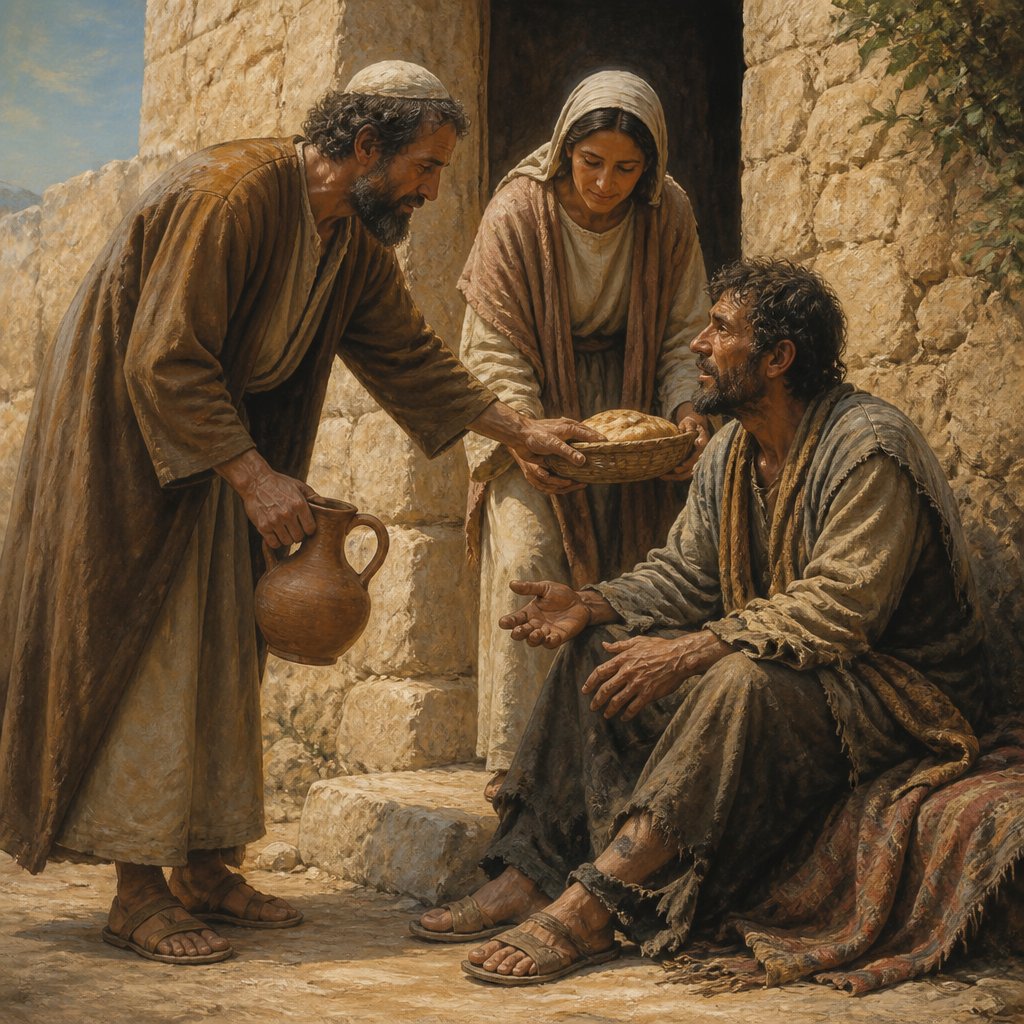
Leviticus 25:35 in the King James Version of the Bible reads, "And if thy brother be waxen poor, and fallen in decay with thee; then thou shalt relieve him: yea, though he be a stranger, or a sojourner; that he may live with thee."
This verse is found in the book of Leviticus, which is the third book of the Hebrew Bible and of the Old Testament. It is attributed to Moses and deals with the law, including the moral, ceremonial, and judiciary laws given to the Israelites by God. The verse in question falls within a broader context of the Year of Jubilee, an important aspect of the Israelite religious and social life.
The Year of Jubilee was a special year of remission of sins and universal pardon celebrated every 50 years. It was a time when property was returned to its original owners, slaves were set free, and debts were forgiven. In this verse, the focus is on the social implications of the Year of Jubilee. It instructs the Israelites to care for their poor and needy brethren, whether they are fellow citizens or foreigners.
The verse begins with the scenario of a brother (fellow Israelite) who has become poor and fallen into decay. The term "waxen poor" signifies a progressive and devastating poverty that has left the individual in a state of desperation. In such a case, the Israelites are commanded to relieve their brother, providing assistance and support to help him out of his impoverished state. This demonstrates the compassion and care that God expects His people to show to those in need.
Furthermore, the verse emphasizes that this act of kindness should extend even to strangers and sojourners among the Israelites. This inclusivity is significant as it highlights the universal application of God's command to care for the vulnerable in society. It challenges the notion of exclusivity and calls for the Israelites to extend their compassion beyond their own community.
The underlying theme of this verse is social justice and compassion for the less fortunate. It reflects the principle of loving one's neighbor as oneself, as reiterated in the New Testament by Jesus Christ. The command to provide for the poor and destitute aligns with God's concern for the marginalized and oppressed, and it emphasizes the communal responsibility to care for those in need.
Symbolically, this verse can be interpreted as a reflection of God's character and His heart for the downtrodden. It points to the divine attribute of compassion and mercy, which is to be mirrored by God's people. The act of relieving the poor and disadvantaged is not merely a charitable deed but a reflection of the divine mandate to uphold justice and righteousness in society.
In a broader theological context, this verse also carries implications for the Christian understanding of care for the marginalized and oppressed. It aligns with the teachings of Jesus, who identified with the poor and marginalized and called His followers to do likewise. The principle of caring for the poor is deeply embedded in the moral and ethical teachings of Christianity, and it finds its roots in passages such as Leviticus 25:35.
In conclusion, Leviticus 25:35 conveys a powerful message about social justice, compassion, and communal responsibility. It challenges the Israelites to care for their impoverished brethren and extends this mandate to include strangers and sojourners. This verse reflects the divine concern for the vulnerable in society and calls for God's people to embody His compassion and mercy. Its timeless message continues to resonate with believers today, serving as a reminder of the moral imperative to care for the oppressed and marginalized in our midst.
Get our apps


Artwork for Leviticus 25:35

Leviticus 25:35 - "¶ And if thy brother be waxen poor, and fallen in decay with thee; then thou shalt relieve him: yea, though he be a stranger, or a sojourner; that he may live with thee."
"¶ And if thy brother be waxen poor, and fallen in decay with thee; then thou shalt relieve him: yea, though he be a stranger, or a sojourner; that he may live with thee." - Leviticus 25:35

Leviticus 13:35 - "But if the scall spread much in the skin after his cleansing;"

Leviticus 19:35 - "¶ Ye shall do no unrighteousness in judgment, in meteyard, in weight, or in measure."

Genesis 35:25 - "And the sons of Bilhah, Rachel's handmaid; Dan, and Naphtali:"

Leviticus 23:35 - "On the first day shall be an holy convocation: ye shall do no servile work therein."

Leviticus 14:35 - "And he that owneth the house shall come and tell the priest, saying, It seemeth to me there is as it were a plague in the house:"

Jeremiah 25:35 - "And the shepherds shall have no way to flee, nor the principal of the flock to escape."

Leviticus 26:35 - "As long as it lieth desolate it shall rest; because it did not rest in your sabbaths, when ye dwelt upon it."

Leviticus 25:26 - "And if the man have none to redeem it, and himself be able to redeem it;"

Leviticus 25:34 - "But the field of the suburbs of their cities may not be sold; for it is their perpetual possession."

Leviticus 25:1 - "And the LORD spake unto Moses in mount Sinai, saying,"

"But if the scall spread much in the skin after his cleansing;" - Leviticus 13:35

Leviticus 16:25 - "And the fat of the sin offering shall he burn upon the altar."

Leviticus 25:24 - "And in all the land of your possession ye shall grant a redemption for the land."
"And the sons of Bilhah, Rachel's handmaid; Dan, and Naphtali:" - Genesis 35:25

"¶ Ye shall do no unrighteousness in judgment, in meteyard, in weight, or in measure." - Leviticus 19:35

Leviticus 25:13 - "In the year of this jubile ye shall return every man unto his possession."

Leviticus 25:23 - "¶ The land shall not be sold for ever: for the land is mine; for ye are strangers and sojourners with me."

Leviticus 25:7 - "And for thy cattle, and for the beast that are in thy land, shall all the increase thereof be meat."

Leviticus 25:43 - "Thou shalt not rule over him with rigour; but shalt fear thy God."

Leviticus 25:32 - "Notwithstanding the cities of the Levites, and the houses of the cities of their possession, may the Levites redeem at any time."

Leviticus 27:25 - "And all thy estimations shall be according to the shekel of the sanctuary: twenty gerahs shall be the shekel."

Leviticus 25:25 - "¶ If thy brother be waxen poor, and hath sold away some of his possession, and if any of his kin come to redeem it, then shall he redeem that which his brother sold."

Leviticus 8:35 - "Therefore shall ye abide at the door of the tabernacle of the congregation day and night seven days, and keep the charge of the LORD, that ye die not: for so I am commanded."

Matthew 25:35 - "For I was an hungred, and ye gave me meat: I was thirsty, and ye gave me drink: I was a stranger, and ye took me in:"

Leviticus 25:12 - "For it is the jubile; it shall be holy unto you: ye shall eat the increase thereof out of the field."

Leviticus 25:40 - "But as an hired servant, and as a sojourner, he shall be with thee, and shall serve thee unto the year of jubile:"

Cycle of sabbath rest year. Leviticus 25:1-7

Leviticus 7:35 - "¶ This is the portion of the anointing of Aaron, and of the anointing of his sons, out of the offerings of the LORD made by fire, in the day when he presented them to minister unto the LORD in the priest's office;"