What does Leviticus 25:46 mean?
“And ye shall take them as an inheritance for your children after you, to inherit them for a possession; they shall be your bondmen for ever: but over your brethren the children of Israel, ye shall not rule one over another with rigour.” — Leviticus 25:46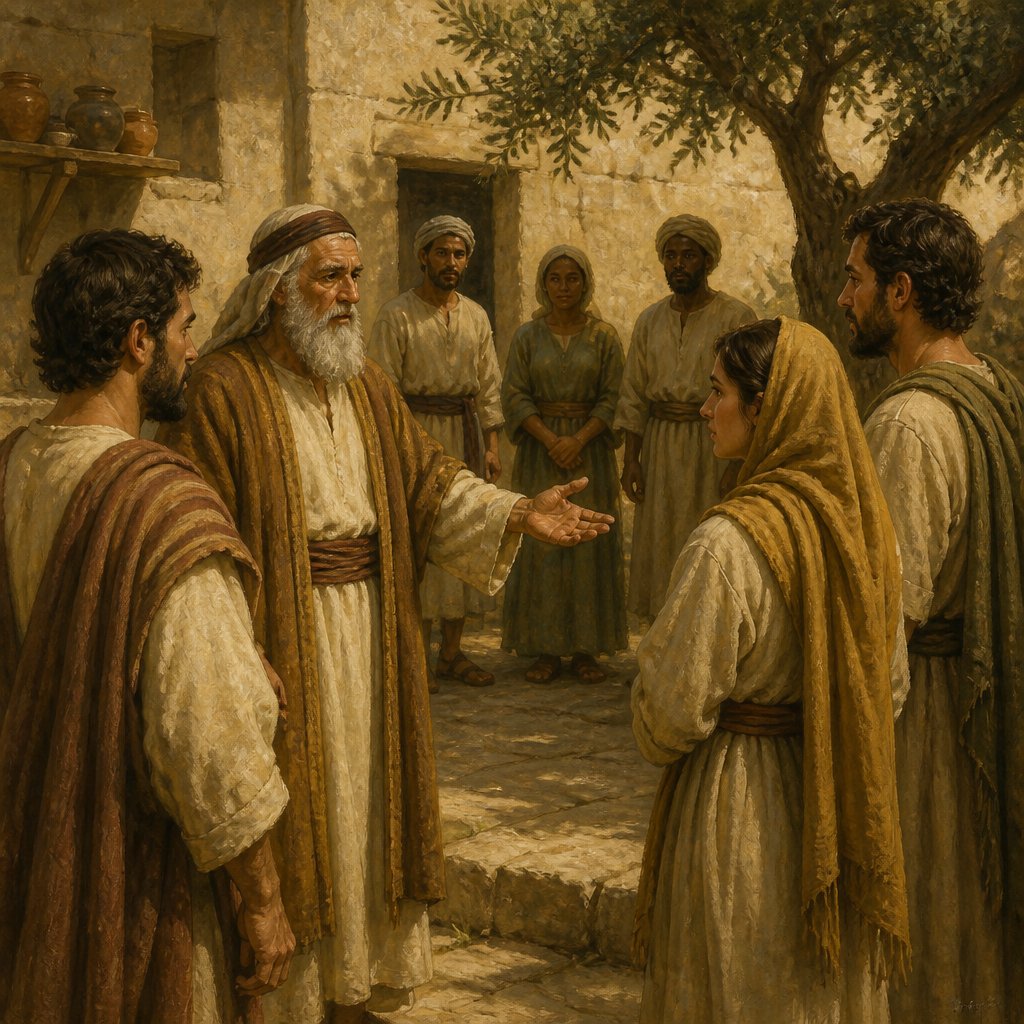
Leviticus 25:46 from the King James Version of the Bible reads, "And ye shall take them as an inheritance for your children after you, to inherit them for a possession; they shall be your bondmen forever: but over your brethren the children of Israel, ye shall not rule one over another with rigour."
This verse comes from the book of Leviticus, which is the third book of the Bible and a part of the Pentateuch, the first five books of the Hebrew Bible. The book of Leviticus is primarily concerned with laws and regulations governing the Israelites' worship and conduct. In this particular verse, the focus is on the treatment of bondservants or slaves.
The context of this verse is crucial for understanding its meaning. In ancient Israelite society, it was not uncommon for individuals to become bondservants or slaves due to poverty or debt. According to the laws outlined in Leviticus, a fellow Israelite could become a bondservant for a maximum of six years, after which they were to be released in the seventh year, known as the Year of Jubilee. However, if a bondservant chose to stay with their master, a symbolic ritual would be performed, marking the servant as the master's property for life.
In Leviticus 25:46, the verse addresses the treatment of non-Israelite bondservants or slaves. It underscores the difference in treatment between non-Israelite bondservants and fellow Israelites. While fellow Israelite bondservants were to be released in the Year of Jubilee, non-Israelite bondservants could be inherited as property and pass from generation to generation. This concept may seem incompatible with modern moral and ethical standards, as it appears to condone the ownership of individuals from other nations as property.
The verse also sets a standard for the treatment of non-Israelite bondservants. It prohibits the Israelites from ruling over their non-Israelite bondservants with harshness or rigor. This instruction may be seen as an attempt to temper the harsh realities of slavery, emphasizing a degree of compassion and fairness in the treatment of non-Israelite bondservants.
From a historical and cultural perspective, the existence of slavery and bondage was a common aspect of ancient societies, including Israel. The treatment of slaves and bondservants was regulated by laws and social norms that may seem abhorrent by modern standards. It is crucial to consider the historical and cultural context of this verse when interpreting its meaning and significance.
Furthermore, this verse raises important theological and ethical questions. It prompts a critical examination of the nature of God’s justice and the morality of human conduct. The notion of one group of people possessing others as property challenges contemporary beliefs about human dignity and equality. It also invites reflection on the evolution of societal norms and ethical values over time, as well as the ongoing relevance of biblical teachings in the modern world.
In terms of symbolism, Leviticus 25:46 may be understood as a reflection of the complex and often troubling relationship between power, ownership, and human identity. The treatment of bondservants and the distinctions made between Israelite and non-Israelite individuals speak to the broader themes of social hierarchy, marginalization, and the ethical obligations of those in positions of authority.
Interpreting and understanding a verse like Leviticus 25:46 requires a nuanced and multifaceted approach. It demands an appreciation of the historical, cultural, theological, and ethical dimensions of the text. While the verse may seem at odds with contemporary values, it provides an opportunity to engage in critical reflection and dialogue about the complexities of human relationships, societal structures, and the enduring relevance of ancient religious teachings.
Get our apps


Artwork for Leviticus 25:46
Leviticus 25:46 - "And ye shall take them as an inheritance for your children after you, to inherit them for a possession; they shall be your bondmen for ever: but over your brethren the children of Israel, ye shall not rule one over another with rigour."
"And ye shall take them as an inheritance for your children after you, to inherit them for a possession; they shall be your bondmen for ever: but over your brethren the children of Israel, ye shall not rule one over another with rigour." - Leviticus 25:46

Matthew 25:46 - "And these shall go away into everlasting punishment: but the righteous into life eternal."

Leviticus 11:46 - "This is the law of the beasts, and of the fowl, and of every living creature that moveth in the waters, and of every creature that creepeth upon the earth:"

Leviticus 26:46 - "These are the statutes and judgments and laws, which the LORD made between him and the children of Israel in mount Sinai by the hand of Moses."

Leviticus 13:46 - "All the days wherein the plague shall be in him he shall be defiled; he is unclean: he shall dwell alone; without the camp shall his habitation be."

"And these shall go away into everlasting punishment: but the righteous into life eternal." - Matthew 25:46
Genesis 46:25 - "These are the sons of Bilhah, which Laban gave unto Rachel his daughter, and she bare these unto Jacob: all the souls were seven."

Leviticus 25:26 - "And if the man have none to redeem it, and himself be able to redeem it;"

Leviticus 25:34 - "But the field of the suburbs of their cities may not be sold; for it is their perpetual possession."

Leviticus 25:1 - "And the LORD spake unto Moses in mount Sinai, saying,"

Leviticus 16:25 - "And the fat of the sin offering shall he burn upon the altar."

Jeremiah 46:25 - "The LORD of hosts, the God of Israel, saith; Behold, I will punish the multitude of No, and Pharaoh, and Egypt, with their gods, and their kings; even Pharaoh, and all them that trust in him:"
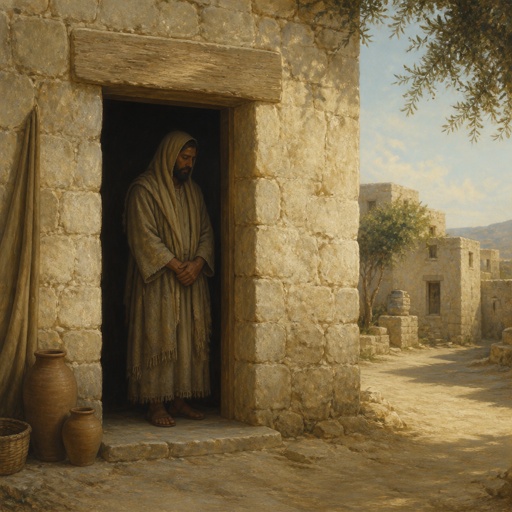
"Moreover he that goeth into the house all the while that it is shut up shall be unclean until the even." - Leviticus 14:46

Leviticus 25:24 - "And in all the land of your possession ye shall grant a redemption for the land."

Leviticus 25:13 - "In the year of this jubile ye shall return every man unto his possession."

Leviticus 25:23 - "¶ The land shall not be sold for ever: for the land is mine; for ye are strangers and sojourners with me."

Leviticus 25:7 - "And for thy cattle, and for the beast that are in thy land, shall all the increase thereof be meat."
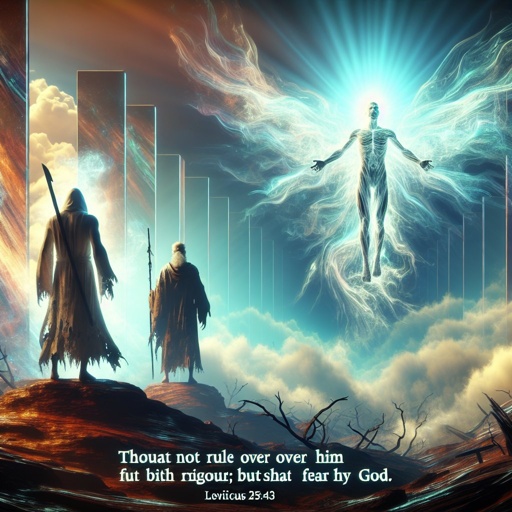
Leviticus 25:43 - "Thou shalt not rule over him with rigour; but shalt fear thy God."

"This is the law of the beasts, and of the fowl, and of every living creature that moveth in the waters, and of every creature that creepeth upon the earth:" - Leviticus 11:46

Leviticus 25:32 - "Notwithstanding the cities of the Levites, and the houses of the cities of their possession, may the Levites redeem at any time."

Leviticus 27:25 - "And all thy estimations shall be according to the shekel of the sanctuary: twenty gerahs shall be the shekel."

Leviticus 25:25 - "¶ If thy brother be waxen poor, and hath sold away some of his possession, and if any of his kin come to redeem it, then shall he redeem that which his brother sold."

Leviticus 25:12 - "For it is the jubile; it shall be holy unto you: ye shall eat the increase thereof out of the field."

Leviticus 25:40 - "But as an hired servant, and as a sojourner, he shall be with thee, and shall serve thee unto the year of jubile:"

Cycle of sabbath rest year. Leviticus 25:1-7

Leviticus 25:42 - "For they are my servants, which I brought forth out of the land of Egypt: they shall not be sold as bondmen."
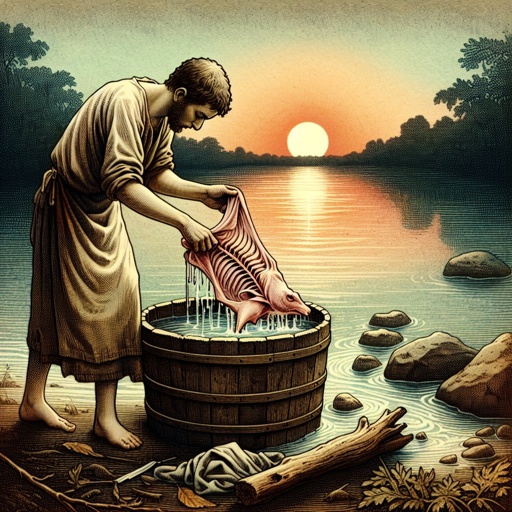
Leviticus 11:25 - "And whosoever beareth ought of the carcase of them shall wash his clothes, and be unclean until the even."

Leviticus 25:48 - "After that he is sold he may be redeemed again; one of his brethren may redeem him:"

Leviticus 25:36 - "Take thou no usury of him, or increase: but fear thy God; that thy brother may live with thee."