What does Leviticus 25:47 mean?
“And if a sojourner or stranger wax rich by thee, and thy brother that dwelleth by him wax poor, and sell himself unto the stranger or sojourner by thee, or to the stock of the stranger’s family:” — Leviticus 25:47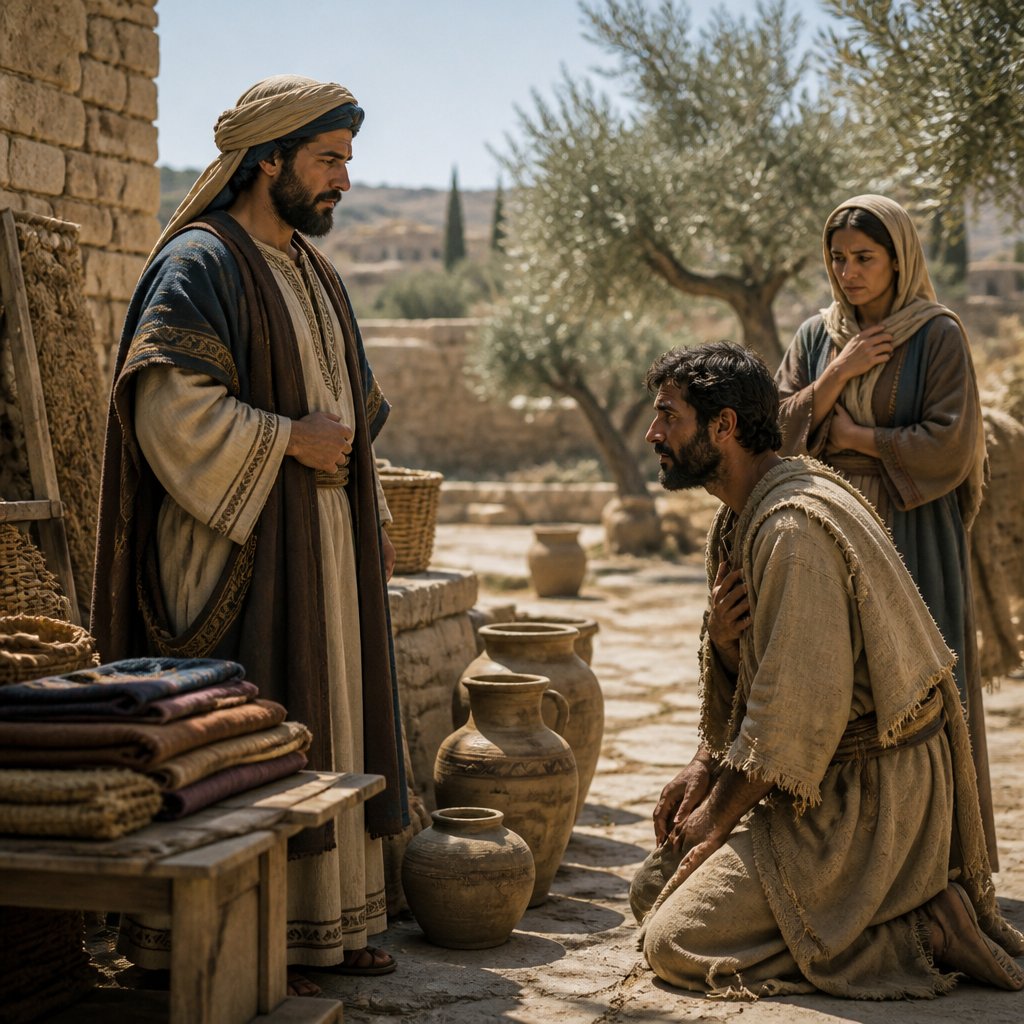
Leviticus 25:47 KJV - "And if a sojourner or stranger wax rich by thee, and thy brother that dwelleth by him wax poor, and sell himself unto the stranger or sojourner by thee, or to the stock of the stranger's family:"
This verse from the book of Leviticus is part of the laws and ordinances given to the Israelites by God through Moses. It addresses the situation where a fellow Israelite becomes poor and sells himself to a sojourner or stranger who has become rich while dwelling among them.
In understanding the meaning and significance of this verse, it is important to consider the historical and cultural context in which it was given. During the time of the Israelites, the concept of slavery and servitude was common in many ancient societies. In this verse, God is providing guidelines for the treatment of fellow Israelites who have fallen into poverty and have to sell themselves into servitude.
The verse reflects the principle of social justice and compassion for those who are less fortunate. It demonstrates that even in the context of servitude, there are guidelines to ensure fairness and protection for the vulnerable. The Israelites were to care for their fellow brethren, even in times of financial hardship, and not take advantage of their situation.
The theme of compassion and social responsibility is central to this verse. It emphasizes the importance of caring for those who are in need, and ensuring that they are not exploited or mistreated. The Israelites were called to act with kindness and empathy towards their fellow brethren, regardless of their economic status or social standing.
Furthermore, this verse also highlights the concept of hospitality and the treatment of sojourners or strangers within the community. The Israelites were reminded to treat those who were living among them with fairness and respect, regardless of their origins. This reflects a broader theme of inclusivity and the importance of treating all individuals with dignity and fairness, regardless of their background or circumstances.
Symbolically, this verse can also be seen as a reflection of the spiritual principles of redemption and liberation. The idea of a fellow Israelite selling themselves into servitude to a stranger can be seen as a representation of the bondage of sin and the need for redemption. In the same way that the Israelites were to care for their brethren in times of need, God offers redemption and liberation to all who are in spiritual bondage.
Overall, Leviticus 25:47 serves as a reminder of the importance of compassion, social responsibility, and inclusivity within the community. It emphasizes the need to care for those who are less fortunate and to treat all individuals with kindness and fairness. It also reflects the spiritual principles of redemption and liberation, highlighting the timeless relevance and significance of these teachings in the context of human relationships and spiritual life.
Get our apps


Artwork for Leviticus 25:47
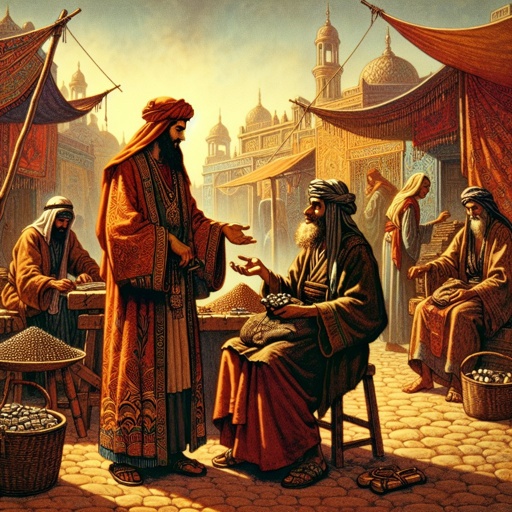
Leviticus 25:47 - "¶ And if a sojourner or stranger wax rich by thee, and thy brother that dwelleth by him wax poor, and sell himself unto the stranger or sojourner by thee, or to the stock of the stranger's family:"
"¶ And if a sojourner or stranger wax rich by thee, and thy brother that dwelleth by him wax poor, and sell himself unto the stranger or sojourner by thee, or to the stock of the stranger's family:" - Leviticus 25:47

Leviticus 13:47 - "¶ The garment also that the plague of leprosy is in, whether it be a woollen garment, or a linen garment;"

Leviticus 11:47 - "To make a difference between the unclean and the clean, and between the beast that may be eaten and the beast that may not be eaten."

Leviticus 14:47 - "And he that lieth in the house shall wash his clothes; and he that eateth in the house shall wash his clothes."

Genesis 47:25 - "And they said, Thou hast saved our lives: let us find grace in the sight of my lord, and we will be Pharaoh's servants."

"¶ The garment also that the plague of leprosy is in, whether it be a woollen garment, or a linen garment;" - Leviticus 13:47

Leviticus 25:26 - "And if the man have none to redeem it, and himself be able to redeem it;"

Leviticus 25:34 - "But the field of the suburbs of their cities may not be sold; for it is their perpetual possession."

Leviticus 25:1 - "And the LORD spake unto Moses in mount Sinai, saying,"

Leviticus 16:25 - "And the fat of the sin offering shall he burn upon the altar."
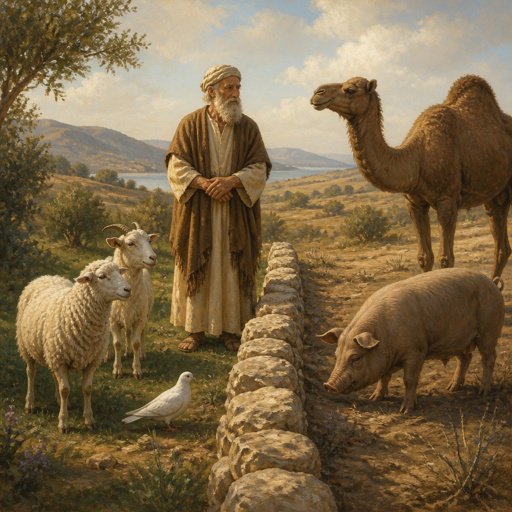
"To make a difference between the unclean and the clean, and between the beast that may be eaten and the beast that may not be eaten." - Leviticus 11:47

Leviticus 25:24 - "And in all the land of your possession ye shall grant a redemption for the land."

Leviticus 25:13 - "In the year of this jubile ye shall return every man unto his possession."

Leviticus 25:23 - "¶ The land shall not be sold for ever: for the land is mine; for ye are strangers and sojourners with me."
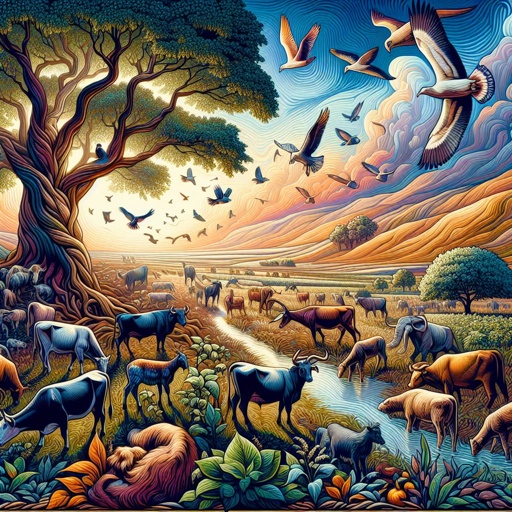
Leviticus 25:7 - "And for thy cattle, and for the beast that are in thy land, shall all the increase thereof be meat."

Leviticus 25:43 - "Thou shalt not rule over him with rigour; but shalt fear thy God."

Leviticus 25:32 - "Notwithstanding the cities of the Levites, and the houses of the cities of their possession, may the Levites redeem at any time."

Leviticus 27:25 - "And all thy estimations shall be according to the shekel of the sanctuary: twenty gerahs shall be the shekel."

Leviticus 25:25 - "¶ If thy brother be waxen poor, and hath sold away some of his possession, and if any of his kin come to redeem it, then shall he redeem that which his brother sold."

Leviticus 25:12 - "For it is the jubile; it shall be holy unto you: ye shall eat the increase thereof out of the field."

Leviticus 25:40 - "But as an hired servant, and as a sojourner, he shall be with thee, and shall serve thee unto the year of jubile:"

Cycle of sabbath rest year. Leviticus 25:1-7
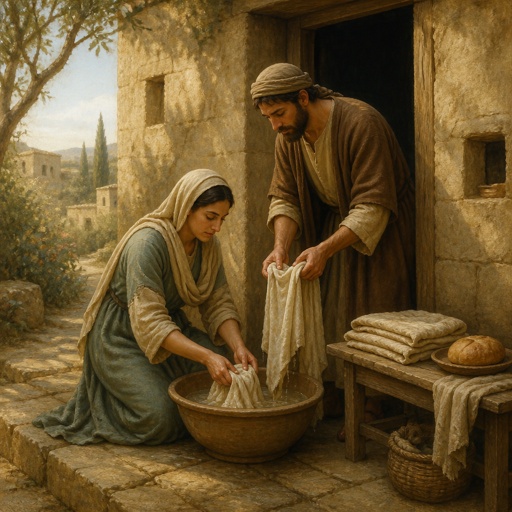
"And he that lieth in the house shall wash his clothes; and he that eateth in the house shall wash his clothes." - Leviticus 14:47

Leviticus 25:42 - "For they are my servants, which I brought forth out of the land of Egypt: they shall not be sold as bondmen."
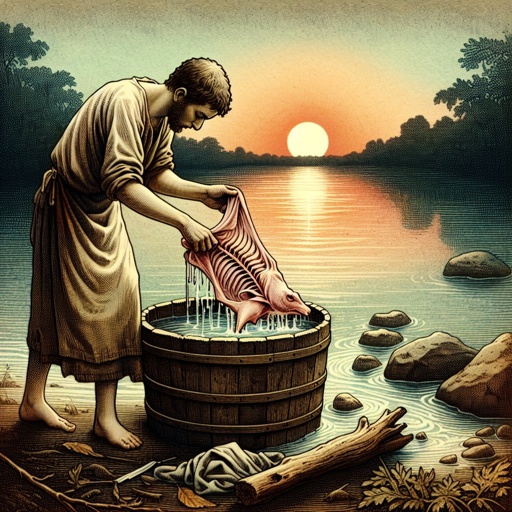
Leviticus 11:25 - "And whosoever beareth ought of the carcase of them shall wash his clothes, and be unclean until the even."

Leviticus 25:48 - "After that he is sold he may be redeemed again; one of his brethren may redeem him:"

Leviticus 25:36 - "Take thou no usury of him, or increase: but fear thy God; that thy brother may live with thee."

Leviticus 25:19 - "And the land shall yield her fruit, and ye shall eat your fill, and dwell therein in safety."

Leviticus 25:21 - "Then I will command my blessing upon you in the sixth year, and it shall bring forth fruit for three years."